 Pocket Botanist
Plant guide
Garden star of Bethlehem.
Ornithogalum umbellatum
Pronounced or-ni-THOG-uh-lum um-bel-LAY-tum
Also known as Garden Star-of-Bethlehem, Nap-at-noon



Scan with your phone's camera to get the app
Or go to pocketbotanist.app/get on your phone
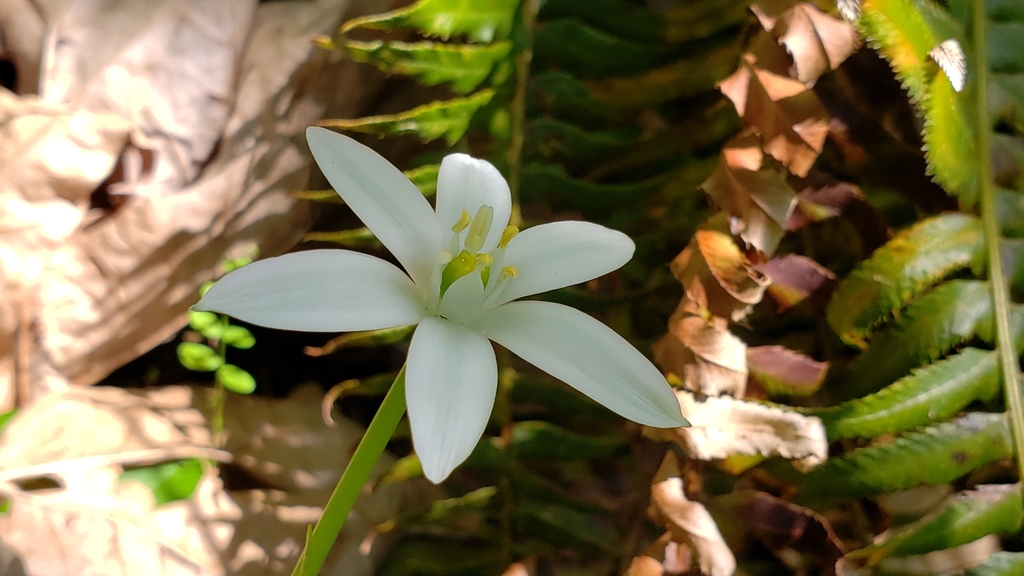
This charming bulbous perennial brings a cheerful touch to your garden with its starry white flowers. It is a hardy plant that naturalizes well in lawns or woodland settings. You will love how it wakes up your landscape in the spring.

At a glance
- Care level
- Easy
- Plant type
- Bulbous perennial
- Light
- Full sun to partial shade
- Indoor light
- Bright indirect
- Water
- Every 7 to 14 days
- Mature size
- 12 inches
- Growth rate
- Medium
- Hardiness
- USDA 4 to 9
- Bloom time
- Mid to late spring
Care
Plant these bulbs in well draining soil during the autumn months. Watch for yellowing leaves as the plant goes dormant, which is a normal part of its cycle. Ensure the area does not stay waterlogged to prevent bulb rot.
- Watering
- Keep the soil consistently moist during the active growing season but allow it to dry out once the foliage dies back.
- Feeding
- Apply a balanced bulb fertilizer once in early spring as new growth emerges.
- Pruning
- Remove spent flower stalks after blooming, but leave the foliage until it turns yellow and dies back naturally.
- Repotting
- Divide overcrowded clumps every few years during the dormant season to maintain plant vigor.
- Soil
- Well draining sandy or loamy soil
- Soil pH
- 6.0 to 7.5
- Temperature
- -20 to 35°C
- Humidity
- 40 to 70%
- Drought tolerance
- Moderate
- Lifespan
- Perennial, typically persists for many years.
- Fragrance
- Light
- Deer and rabbits
- High
Signs it needs repotting
- Roots growing out of the drainage holes.
- Noticeable decline in flowering density.
Safety
- People
- The plant contains alkaloids that can cause significant digestive distress and skin irritation upon contact.
- Pets
- This plant is toxic to cats and dogs if ingested.
- Children
- Keep this plant away from children as the bulbs are toxic if eaten and the sap can irritate skin.
- Contact allergens
- The sap can cause contact dermatitis in sensitive individuals.
- Airborne allergens
- Pollen may trigger mild allergic reactions in some people.
- Edibility
- All parts of this plant are considered toxic if ingested and should not be consumed.
How to identify it
- Star shaped white flowers
- Green stripe on petal backs
- Narrow grass like foliage
- White central flower stripe
- Height
- 0.15 to 0.3m
- Spread
- 0.05 to 0.1m
- Leaves
- green, deciduous
- Flowers
- white, green, 2 to 3cm
Problems to watch for
- Bulb rot · Fungal infection caused by overly wet soil conditions.
Check your garden star of bethlehem from a photo
Pocket Botanist looks at a photo of your plant and tells you what's wrong and what to try first.
Scan with your phone's camera to get the app
Or go to pocketbotanist.app/get on your phone
Growing it
- Propagation
- division, seed
- When to plant
- autumn
- Overwintering
- The bulbs are hardy and do not require special protection in most climates. Just ensure the soil is well drained so they do not sit in freezing water.
- In containers
- It grows well in containers, but ensure the pot has excellent drainage to prevent bulb rot.
Bulb Division
- 1. Dig up the clump after the foliage has died back in late spring.
- 2. Gently separate the small offsets from the main bulb.
- 3. Replant the offsets immediately in a sunny location.
Plant these in areas where you do not mind them spreading, as they are very difficult to contain.
Grows well with
- Grape Hyacinth · They share similar spring blooming times and cultural needs.
- Daffodil · These bulbs provide a nice height contrast in spring beds.
Similar species
- Drooping Star of Bethlehem · It has a similar appearance but with nodding flower spikes.
Science
- Family
- Asparagaceae
- Genus
- Ornithogalum
- Order
- Asparagales
- Class
- Liliopsida
- Native range
- Mediterranean region and parts of Europe.
- Conservation
- It is considered an invasive weed in some regions of North America, so check local regulations before planting.
It thrives in open fields and meadows where it can compete for light during the early spring before taller grasses emerge.
- Value to wildlife
- early nectar source
- Pollinators
- bees, butterflies
- Uses
- rock gardens, naturalizing, spring borders
Through the year
Ecological indicators
- Salinity
- 2/9
- Soil reaction
- 6/9
- Light
- 7/9
- Temperature
- 5/9
- Moisture
- 5/9
- Nutrients
- 5/9
Taxonomy resolved against GBIF.
Questions people ask
- Is this plant invasive?
- Yes, it can be quite aggressive and difficult to remove once established in a garden.
- When should I plant the bulbs?
- Plant them in the autumn to allow for root development before the spring growth cycle.
Where the name comes from
The name Ornithogalum comes from the Greek words for bird and milk, while umbellatum refers to the umbel like cluster of flowers.
Good to know
- The flowers close up tightly during cloudy weather or at night.
- It spreads rapidly through underground offsets.
- The name Star of Bethlehem refers to the star shaped white flowers.
Also in
Keep your garden star of bethlehem growing
This page is a general guide. Save your plant in Pocket Botanist and you get care reminders timed for this plant, plus a care history that shows what worked.
Scan with your phone's camera to get the app
Or go to pocketbotanist.app/get on your phone
This guide was generated with AI on and checked against GBIF taxonomy. It is general information, not horticultural or veterinary advice. Read about how we build these guides.