 Pocket Botanist
Plant guide
Crowpoison.
Nothoscordum bivalve
Pronounced noth-oh-SKOR-dum by-VAL-vee
Also known as Texas False Garlic, crow poison, crow's poison, crow-poison, crowpoison, false garlic, grace garlic



Scan with your phone's camera to get the app
Or go to pocketbotanist.app/get on your phone

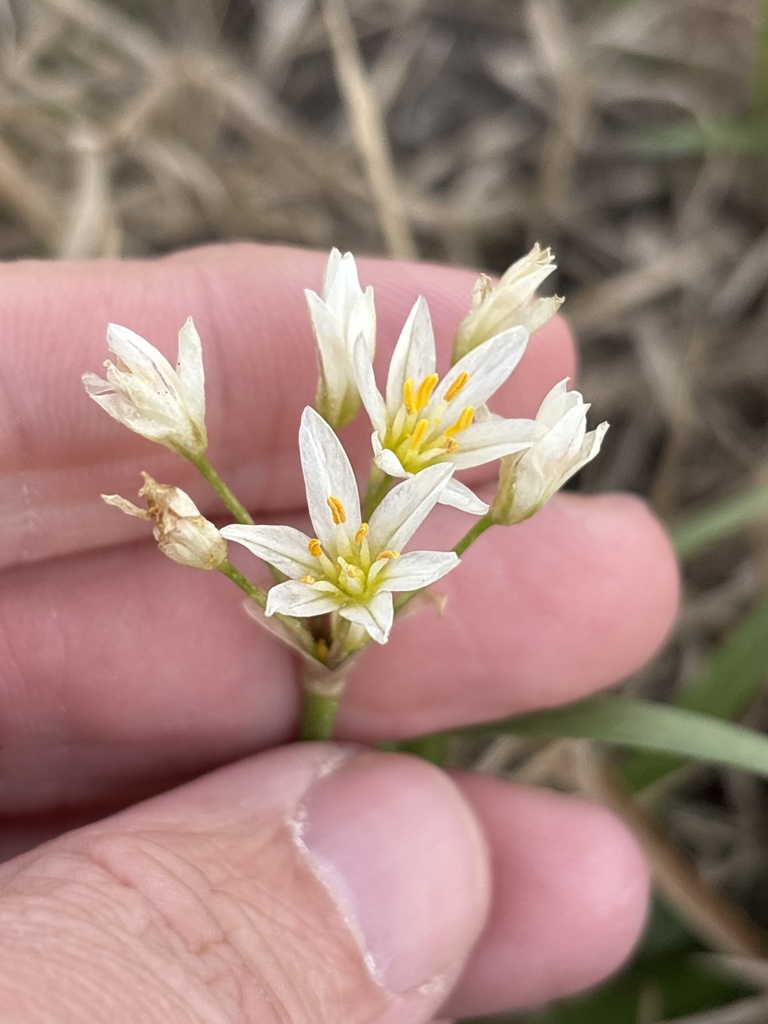
Crowpoison is a charming native bulb that pops up in fields and lawns during the spring. It looks quite a bit like a wild onion but lacks the characteristic garlicky scent. It is a hardy little plant that thrives in open, sunny spaces.
At a glance
- Care level
- Easy
- Plant type
- Perennial bulb
- Light
- Full sun
- Indoor light
- Direct sun
- Water
- Every 7 to 14 days
- Mature size
- 12 inches
- Growth rate
- Medium
- Hardiness
- USDA 6 to 10
- Bloom time
- Early spring to early summer
Care
Plant these bulbs in well draining soil where they can soak up plenty of sun. Watch for yellowing leaves as the plant enters dormancy in the heat of summer. It is a very low maintenance plant that mostly takes care of itself.
- Watering
- Water when the top inch of soil feels dry to the touch.
- Feeding
- Apply a balanced fertilizer once in early spring to support blooming.
- Pruning
- Remove dead foliage only after the leaves have turned brown and withered.
- Repotting
- Repot only when the bulbs become too crowded in their container.
- Soil
- Well draining sandy or loamy soil
- Soil pH
- 6.0 to 7.5
- Temperature
- -23 to 35°C
- Humidity
- 30 to 70%
Safety
- People
- The plant contains compounds that may cause mild irritation if ingested in large quantities.
- Pets
- This plant is considered toxic to cats and dogs if ingested.
- Children
- Keep away from young children as the bulbs can be a choking hazard and ingestion may cause stomach upset.
- Contact allergens
- Handling the bulbs or foliage may cause mild skin irritation in sensitive individuals.
- Airborne allergens
- The pollen can cause mild allergic reactions in some people during the peak bloom period.
- Edibility
- While often called false garlic, it is not recommended for consumption as it can cause digestive upset.
How to identify it
- Narrow grass like leaves
- White star shaped flowers
- Flowers have yellow centers
- Lacks onion scent when crushed
- Small bulbous root system
- Height
- 0.15 to 0.3m
- Spread
- 0.05 to 0.1m
- Leaves
- green, deciduous
- Flowers
- white, yellow, 1 to 2cm
- Fruit
- black, late summer
Problems to watch for
- Bulb rot · Occurs when the soil remains too wet for extended periods.
Check your crowpoison from a photo
Pocket Botanist looks at a photo of your plant and tells you what's wrong and what to try first.
Scan with your phone's camera to get the app
Or go to pocketbotanist.app/get on your phone
Growing it
- Propagation
- seed, division
- When to plant
- autumn, spring
Plant these in groups of five or more to create a naturalized look in a sunny meadow or rock garden.
Grows well with
- Blue-eyed Grass · They share similar moisture and light requirements in meadow settings.
- Prairie Phlox · This plant provides a nice color contrast to the white flowers of the false garlic.
Similar species
- Wild Onion · It looks similar but has a strong onion scent and different flower structure.
Science
- Family
- Amaryllidaceae
- Genus
- Nothoscordum
- Order
- Asparagales
- Class
- Liliopsida
- Native range
- Central and southeastern United States and parts of Mexico.
- Conservation
- It is widespread and common throughout its native range and not of conservation concern.
It survives by forming small bulbs that allow it to persist through dry periods and winter dormancy.
- Value to wildlife
- early season nectar source
- Pollinators
- bees, butterflies
- Uses
- rock gardens, naturalized meadows, pollinator gardens
Through the year
Ecological indicators
- Salinity
- 2/9
- Soil reaction
- 6/9
- Light
- 7/9
- Temperature
- 5/9
- Moisture
- 4/9
- Nutrients
- 3/9
Taxonomy resolved against GBIF.
Questions people ask
- Is this plant invasive?
- It can spread readily by seed in ideal conditions but is generally considered a native wildflower rather than an invasive pest.
- Does it smell like garlic?
- No, unlike true wild onions, this plant lacks the pungent sulfurous odor.
Where the name comes from
The name Nothoscordum comes from the Greek words for false and garlic, referring to its resemblance to Allium species. The specific epithet bivalve refers to the two bracts that enclose the flower buds.
Good to know
- It is commonly known as the false garlic or crow poison.
- The flowers are star shaped and often have a faint, sweet fragrance.
- It is a very resilient plant that can thrive in poor, rocky soils.
- The plant goes dormant during the hottest parts of the summer.
Also in
Keep your crowpoison growing
This page is a general guide. Save your plant in Pocket Botanist and you get care reminders timed for this plant, plus a care history that shows what worked.
Scan with your phone's camera to get the app
Or go to pocketbotanist.app/get on your phone
This guide was generated with AI on and checked against GBIF taxonomy. It is general information, not horticultural or veterinary advice. Read about how we build these guides.