 Pocket Botanist
Plant guide
Raceme catmint.
Nepeta racemosa
Pronounced NEP-eh-tuh ray-se-MO-suh
Also known as Eastern Cat-mint, Raceme Catnip, eastern catmint



Scan with your phone's camera to get the app
Or go to pocketbotanist.app/get on your phone
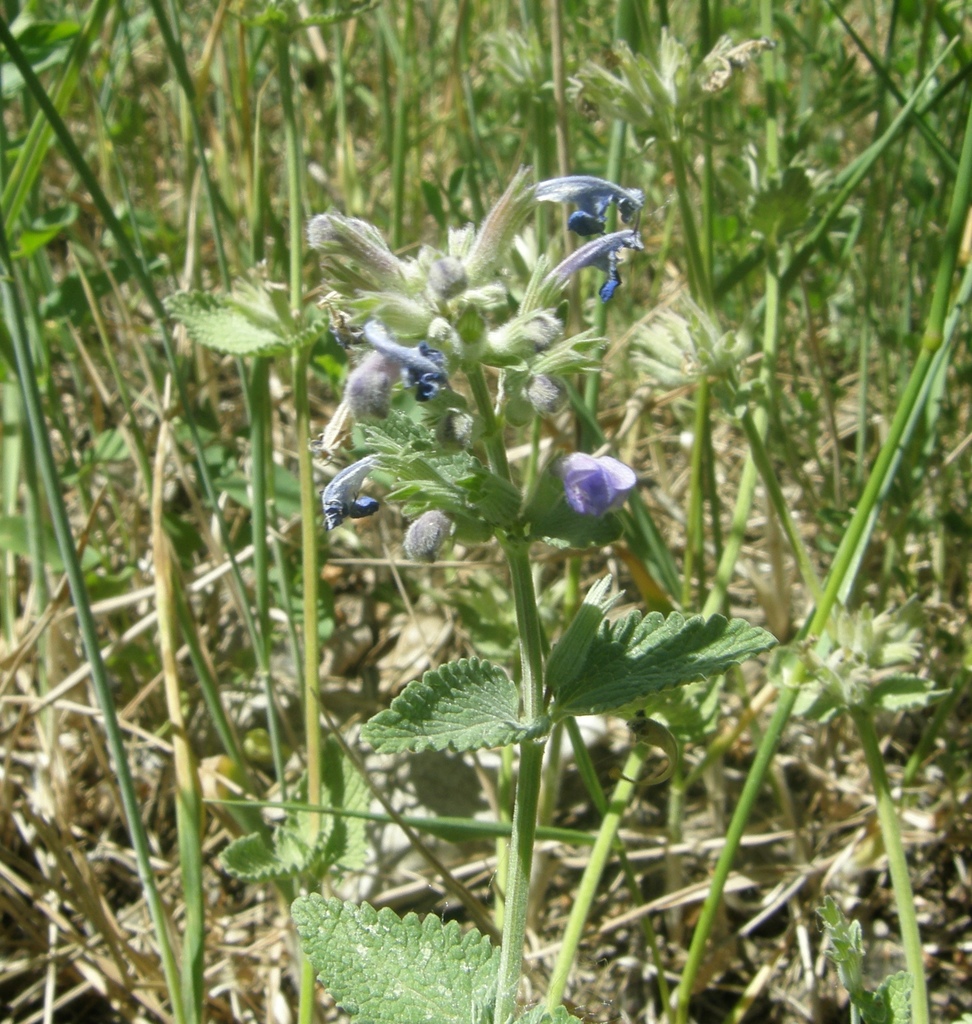
This charming perennial is a favorite for borders and rock gardens. It produces lovely spikes of lavender blue flowers that bees absolutely adore. You will find it is a tough, reliable plant that handles dry spells quite well.

At a glance
- Care level
- Easy
- Plant type
- Herbaceous perennial
- Light
- Full sun to partial shade
- Indoor light
- Direct sun
- Water
- Every 7 to 14 days
- Mature size
- 12 to 18 inches
- Growth rate
- Fast
- Hardiness
- USDA 4 to 8
- Bloom time
- Late spring to early autumn
Care
Plant in well draining soil to prevent root rot. Keep an eye out for powdery mildew if the air circulation is poor. Give it a good trim after the first bloom to encourage a second flush of flowers.
- Watering
- Water deeply once the top inch of soil feels dry to the touch.
- Feeding
- Apply a balanced slow release fertilizer in early spring as new growth appears.
- Pruning
- Shear back the entire plant by half after the first flowering to promote a tidy shape and repeat blooms.
- Repotting
- Divide the clumps every few years in spring to keep the plant vigorous.
- Soil
- Well draining sandy or loamy soil
- Soil pH
- 6.0 to 8.0
- Temperature
- -25 to 35°C
- Humidity
- 30 to 60%
- Drought tolerance
- High
- Lifespan
- Perennial, typically 5 to 10 years
- Fragrance
- Light
- Deer and rabbits
- High
Signs it needs repotting
- Roots growing out of the drainage holes
- Water running straight through the pot
- Stunted growth during the active season
Safety
- People
- It is generally considered non-toxic to humans.
- Children
- The plant is safe for children, though the stems can be slightly brittle.
- Contact allergens
- Some individuals may experience mild skin irritation from the aromatic oils in the leaves.
- Airborne allergens
- The pollen may cause mild reactions in sensitive individuals during peak bloom.
- Edibility
- While often used in herbal teas, consult a professional before consuming as some varieties may cause digestive upset.
How to identify it
- Small aromatic grey green leaves
- Spikes of tubular lavender flowers
- Low growing mounding habit
- Square stems typical of mint family
- Height
- 0.2 to 0.4m
- Spread
- 0.3 to 0.6m
- Leaves
- gray-green, deciduous
- Flowers
- lavender-blue, 1 to 2cm
Problems to watch for
- Powdery mildew · A white fungal growth appears on leaves when air circulation is poor.
Check your raceme catmint from a photo
Pocket Botanist looks at a photo of your plant and tells you what's wrong and what to try first.
Scan with your phone's camera to get the app
Or go to pocketbotanist.app/get on your phone
Growing it
- Propagation
- division, cuttings, seed
- When to plant
- spring, autumn
- Overwintering
- Cut the foliage back to the ground in late autumn after the first frost. Add a light layer of mulch if you live in an area with harsh, freezing winters.
- In containers
- It grows well in containers at least 30 cm wide, provided they have excellent drainage.
Division
- 1. Dig up the entire clump in early spring.
- 2. Use a sharp spade to divide the root ball into smaller sections.
- 3. Replant the sections immediately at the same depth.
Pair this plant with other drought-tolerant perennials to create a low-maintenance garden bed.
Grows well with
- Lavender · They share similar requirements for sun and well-drained soil.
- Coneflower · The contrasting flower shapes create a beautiful visual display.
- Sedum · Both plants tolerate dry conditions and provide late-season interest.
Similar species
- Catmint · It is a close relative but grows much larger and is more attractive to cats.
- Walker's Low Catmint · It is a popular hybrid that offers a longer bloom period.
Science
- Family
- Lamiaceae
- Genus
- Nepeta
- Order
- Lamiales
- Class
- Magnoliopsida
- Native range
- Caucasus and northeastern Turkey.
- Conservation
- This plant is not of conservation concern.
It thrives in rocky, well-drained mountain slopes where it competes well in poor soils.
- Value to wildlife
- nectar source
- Pollinators
- bees, butterflies
- Uses
- ground cover, pollinator garden, edging, rock garden
Through the year
Ecological indicators
- Salinity
- 2/9
- Soil reaction
- 6/9
- Light
- 7/9
- Temperature
- 5/9
- Moisture
- 3/9
- Nutrients
- 3/9
Taxonomy resolved against GBIF.
Questions people ask
- Will cats destroy this plant?
- Cats may roll in it or chew the leaves, but it usually recovers quickly.
- How do I keep it tidy?
- Cut the stems back by half after the first bloom to prevent it from looking leggy.
Where the name comes from
The genus name Nepeta is thought to refer to the ancient Italian city of Nepete, while racemosa describes the raceme-like arrangement of its flowers.
Good to know
- It is a member of the mint family.
- The plant is highly drought tolerant once established.
- Shearing the plant back after the first flush of blooms often encourages a second show of flowers.
Also in
Keep your raceme catmint growing
This page is a general guide. Save your plant in Pocket Botanist and you get care reminders timed for this plant, plus a care history that shows what worked.
Scan with your phone's camera to get the app
Or go to pocketbotanist.app/get on your phone
This guide was generated with AI on and checked against GBIF taxonomy. It is general information, not horticultural or veterinary advice. Read about how we build these guides.