 Pocket Botanist
Plant guide
Flask pitcher plant.
Nepenthes ampullaria
Pronounced neh-PEN-theez am-pull-AIR-ee-uh
Also known as flask-shaped pitcher plant



Scan with your phone's camera to get the app
Or go to pocketbotanist.app/get on your phone
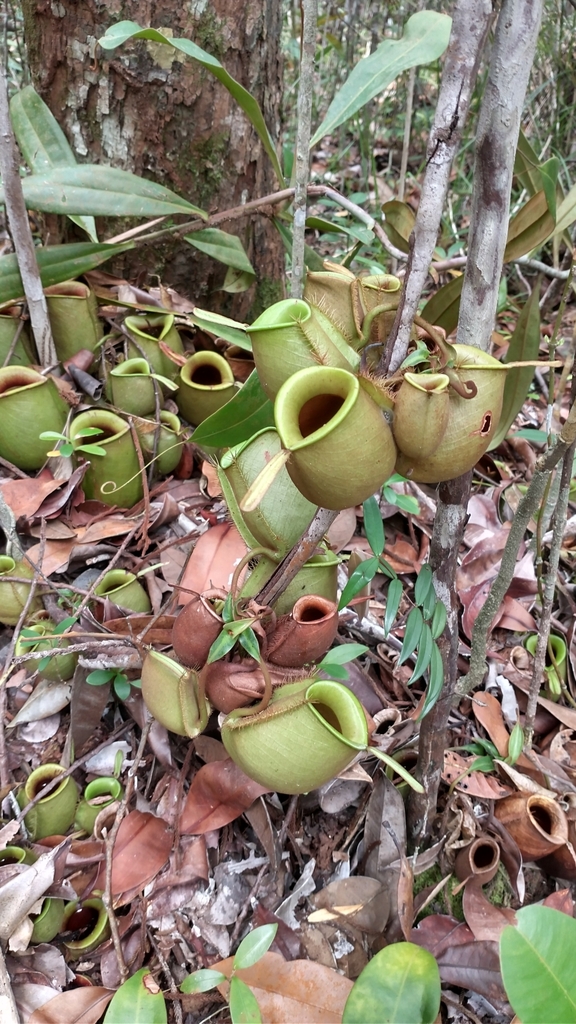
This unique pitcher plant is famous for its clusters of round, squat pitchers that grow right at the base of the plant. It thrives in humid, tropical conditions and is quite different from other species that prefer hanging pitchers. You will love how it creates a lush, mossy carpet effect in a terrarium or greenhouse.

At a glance
- Care level
- Difficult
- Plant type
- Carnivorous tropical pitcher plant
- Light
- Bright indirect light, avoid harsh afternoon sun.
- Indoor light
- Bright indirect
- Water
- Every 1 to 3 days
- Mature size
- 2 to 3 feet
- Growth rate
- Medium
- Hardiness
- USDA 11 to 12
- Bloom time
- Sporadic throughout the year
Care
Keep this plant in a high humidity environment like a terrarium to ensure the pitchers develop properly. Use only distilled, rain, or reverse osmosis water to prevent mineral buildup in the sensitive soil. Watch for shriveled pitchers, which often indicate the air is too dry.
- Watering
- Keep the soil consistently moist but never waterlogged.
- Feeding
- Use a very diluted orchid fertilizer once a month during the growing season.
- Pruning
- Trim away dead or brown pitchers to keep the plant looking tidy.
- Repotting
- Repot only when the moss breaks down or the plant outgrows its container.
- Soil
- Sphagnum moss and perlite mix
- Soil pH
- 4.0 to 5.5
- Temperature
- 15 to 30°C
- Humidity
- 70 to 95%
- Drought tolerance
- Low
- Lifespan
- Perennial, can live for many years with proper care.
- Deer and rabbits
- High
Signs it needs repotting
- Roots growing out of the drainage holes.
- The soil medium has broken down and become compacted.
- The plant has outgrown its current container.
Safety
- People
- The plant is not considered toxic, but the digestive fluid inside the pitchers can cause irritation if it contacts sensitive skin.
- Pets
- This plant is generally considered non toxic to cats and dogs.
- Children
- Keep the plant out of reach of small children to prevent them from drinking the digestive fluid or tipping the pitchers.
- Contact allergens
- The sticky nectar on the peristome may cause mild skin irritation in sensitive individuals.
- Airborne allergens
- There are no known significant respiratory allergens associated with this plant.
- Edibility
- The pitchers contain digestive enzymes and trapped insects, so they are not safe for human consumption.
How to identify it
- Round, squat, flask shaped pitchers
- Pitchers grow in dense ground clusters
- Lid is small and reflexed backward
- Bright green to reddish pitcher coloration
- Leaves are broad and lance shaped
- Height
- 0.2 to 0.5m
- Spread
- 0.3 to 0.6m
- Leaves
- green, evergreen
- Flowers
- green, red, 1 to 2cm
- Fruit
- brown, Late summer
Problems to watch for
- AphidsCommon
- Root RotCommon
- Fungus GnatsUncommon
- MealybugsUncommon
Check your flask pitcher plant from a photo
Pocket Botanist looks at a photo of your plant and tells you what's wrong and what to try first.
Scan with your phone's camera to get the app
Or go to pocketbotanist.app/get on your phone
Growing it
- Propagation
- cuttings, seed
- When to plant
- spring, summer
- Overwintering
- Keep the plant in a warm, humid environment year round as it has no dormant period.
- In containers
- It is excellent for hanging baskets or terrariums where humidity can be easily controlled.
Stem Cuttings
- 1. Take a cutting with at least two nodes.
- 2. Place the cutting in moist sphagnum moss.
- 3. Cover with a clear bag to maintain high humidity.
- 4. Keep in bright, indirect light until roots form.
Group carnivorous plants together to create a microclimate that maintains the high humidity they all crave.
Grows well with
- Sundew · They share similar high humidity and light requirements.
- Butterwort · These plants thrive in the same boggy conditions.
Similar species
- Common Pitcher Plant · It is a related species with similar care needs but different pitcher morphology.
Science
- Family
- Nepenthaceae
- Genus
- Nepenthes
- Order
- Caryophyllales
- Class
- Magnoliopsida
- Native range
- Southeast Asia, including Borneo, Sumatra, and the Malay Peninsula.
- Conservation
- This species is listed under CITES Appendix II, meaning international trade is strictly regulated to protect wild populations.
It thrives in the shaded, humid understory of tropical rainforests where it collects leaf litter.
- Value to wildlife
- nectar source
- Pollinators
- bees, beetles
- Uses
- ornamental, terrarium specimen
Through the year
Ecological indicators
- Salinity
- 1/9
- Soil reaction
- 3/9
- Light
- 4/9
- Temperature
- 8/9
- Moisture
- 8/9
- Nutrients
- 1/9
Taxonomy resolved against GBIF.
Questions people ask
- Can I grow this in a regular pot?
- Yes, but it requires a specialized, well-draining carnivorous plant soil mix and high humidity.
- Do I need to feed the pitchers?
- No, the plant will naturally capture enough nutrients if kept in an appropriate environment.
Where the name comes from
The name ampullaria comes from the Latin word for a flask, referring to the shape of its pitchers.
Good to know
- It is commonly called the flask pitcher plant because of its unique, rounded shape.
- Unlike many other Nepenthes, this species is a detritivore that feeds on falling leaves.
- The pitchers can form dense carpets on the forest floor in their native habitat.
- It requires very high humidity to produce its iconic pitchers.
Keep your flask pitcher plant growing
This page is a general guide. Save your plant in Pocket Botanist and you get care reminders timed for this plant, plus a care history that shows what worked.
Scan with your phone's camera to get the app
Or go to pocketbotanist.app/get on your phone
This guide was generated with AI on and checked against GBIF taxonomy. It is general information, not horticultural or veterinary advice. Read about how we build these guides.