 Pocket Botanist
Plant guide
Forget-me-not.
Myosotis sylvatica
Pronounced my-oh-SO-tis sil-VAT-ih-kuh
Also known as Garden Forget-me-not, Wood Forget-me-not, Woodland Forget-me-not


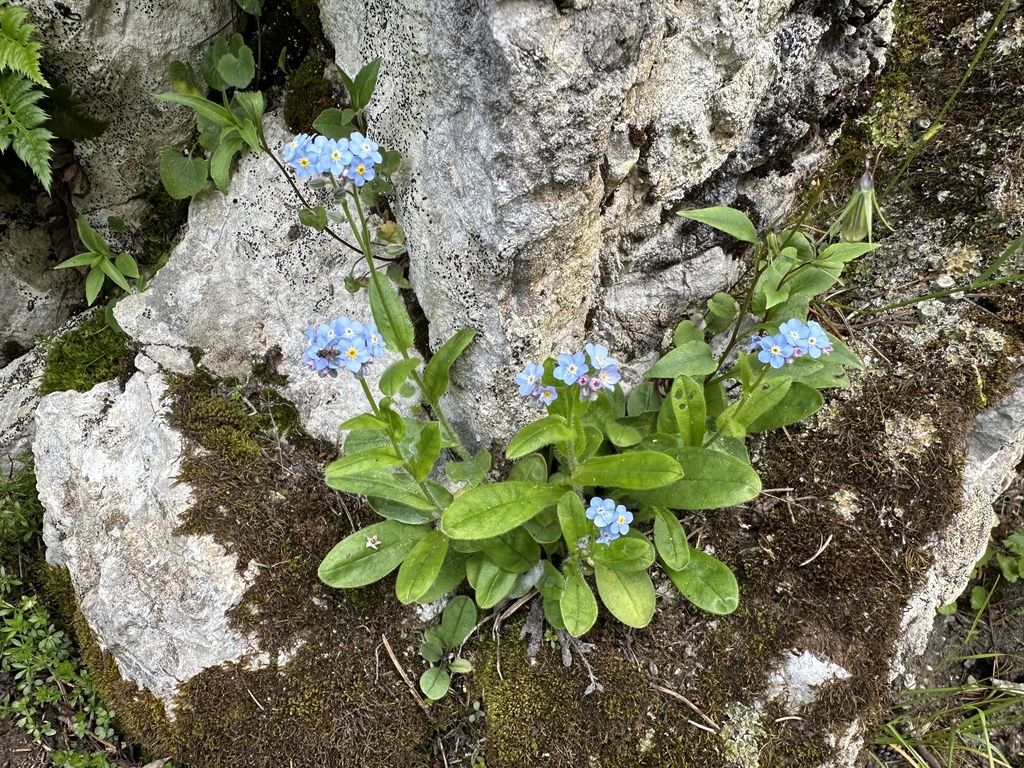
The wood forget-me-not is a charming biennial that brings a soft, blue haze to woodland gardens. It self-seeds readily, often creating a naturalized carpet of color in spring. These plants thrive in cool, moist conditions and pair beautifully with other shade-loving perennials.
At a glance
- Care level
- Easy
- Plant type
- Herbaceous biennial
- Light
- Partial shade to full shade
- Indoor light
- bright-indirect
- Water
- Every 2 to 5 days
- Mature size
- 30cm tall and 30cm wide
- Growth rate
- fast
- Hardiness
- USDA 3 to 9
- Bloom time
- Mid to late spring
Care
Keep the soil consistently moist to prevent wilting during warmer spells. Watch for powdery mildew on the foliage if air circulation is poor. Deadhead spent blooms if you want to limit self-seeding throughout your garden.
- Watering
- Keep the soil evenly moist but not waterlogged.
- Feeding
- Apply a balanced liquid fertilizer once during the active growing season.
- Pruning
- Cut back stems after flowering to tidy the plant and prevent unwanted spread.
- Repotting
- Usually grown in the ground, but if in pots, refresh soil annually.
- Soil
- Humus-rich, moist, well-draining soil
- Soil pH
- Neutral to slightly acidic
- Temperature
- -20 to 25°C
- Humidity
- 40 to 70%
- Drought tolerance
- low
- Lifespan
- Short-lived perennial, typically 2 to 3 years.
- Deer and rabbits
- moderate
Signs it needs repotting
- Roots growing out of the drainage holes.
- Water running straight through the pot without soaking in.
- Plant growth slowing significantly during the active season.
Safety
- People
- The plant is generally considered non-toxic, but ingestion should be avoided due to potential alkaloid content.
- Pets
- This plant is generally considered non-toxic to cats and dogs.
- Children
- The plant is not considered dangerous, but the small, hairy leaves may be irritating if handled frequently by children.
- Contact allergens
- The foliage can cause mild skin irritation in sensitive individuals due to fine, stiff hairs.
- Airborne allergens
- There are no significant reports of respiratory allergies associated with this plant.
- Edibility
- While often called forget-me-nots, some species in the Boraginaceae family contain pyrrolizidine alkaloids that can cause liver damage if consumed in quantity.
How to identify it
- Small five-petaled sky-blue flowers
- Yellow or white central eye
- Hairy lance-shaped green leaves
- Loose branching flowering stems
- Low growing basal foliage rosette
- Height
- 0.15 to 0.3m
- Spread
- 0.15 to 0.3m
- Leaves
- green, deciduous
- Flowers
- blue, white, pink, 0.5 to 1cm
Common problems
- Powdery mildew — A white fungal growth appears on leaves during periods of high humidity and poor air circulation.
- Aphids — Small insects that cluster on new growth and suck plant sap.
Growing it
- Propagation
- seed
- When to plant
- spring, autumn
- Overwintering
- Leave the foliage in place to protect the crown during winter. In very cold areas, a light layer of mulch helps prevent frost heaving.
- In containers
- They grow well in containers if kept consistently moist and out of direct hot sun, using at least a 6 inch pot.
Direct Sowing
- 1. Scatter seeds on prepared soil in late summer or autumn.
- 2. Lightly rake the soil to cover seeds.
- 3. Keep the area moist until germination occurs.
Pair these with taller perennials to provide a living mulch that keeps the soil cool and moist.
Grows well with
Similar species
- Water Forget-me-not — This species prefers even wetter conditions and is often found near pond edges.
- Field Forget-me-not — It is a smaller, more common weed that looks very similar but is less often used in gardens.
Science
- Family
- Boraginaceae
- Genus
- Myosotis
- Order
- Boraginales
- Class
- Magnoliopsida
- Native range
- Europe and parts of Asia.
- Conservation
- It is a common and widespread species not currently under conservation concern.
It thrives in cool, moist woodland environments where it can spread through abundant seed production.
- Value to wildlife
- early season nectar source
- Pollinators
- bees, butterflies
- Uses
- woodland garden groundcover, spring bedding plant, naturalizing in lawns
Through the year
Ecological indicators
- Salinity
- 1/9
- Soil reaction
- 5/9
- Light
- 4/9
- Temperature
- 4/9
- Moisture
- 6/9
- Nutrients
- 5/9
Taxonomy resolved against GBIF.
Questions people ask
- Will they come back every year?
- They are short-lived perennials that often act as biennials, but they self-seed so reliably that they seem permanent.
- Do they need full sun?
- They prefer partial shade and will struggle in the intense heat of full afternoon sun.
Where the name comes from
The genus name Myosotis comes from the Greek for mouse ear, referring to the shape of the leaves. The specific epithet sylvatica means of the woods.
Good to know
- The name forget-me-not is a direct translation from the German Vergissmeinnicht.
- They are prolific self-seeders that can quickly carpet a garden bed.
- The flowers are famously blue, but pink and white varieties also exist.
Is your forget-me-not looking unwell?
This page is a general guide. Pocket Botanist diagnoses problems from a photo of your actual plant, works out watering for your light and conditions, and reminds you when care is due.
This guide was generated with AI and checked against GBIF taxonomy. It is general information, not horticultural or veterinary advice. Read about how we build these guides.