 Pocket Botanist
Plant guide
Apple Mint.
Mentha suaveolens
Pronounced MEN-tha swah-vee-OH-lenz
Also known as Apple Mint, Pineapple Mint, Round-leaf Mint, Round-leaved Mint



Scan with your phone's camera to get the app
Or go to pocketbotanist.app/get on your phone

Apple mint is a delightful, fragrant herb known for its fuzzy, apple scented leaves. It spreads quickly through underground runners, making it a vigorous addition to any garden. You will love how it brightens up a sunny spot with its soft texture.
At a glance
- Care level
- Easy
- Plant type
- Herbaceous perennial
- Light
- Full sun to partial shade
- Indoor light
- Bright indirect
- Water
- Every 2 to 4 days
- Mature size
- 2 to 3 feet tall
- Growth rate
- Fast
- Hardiness
- USDA 5 to 9
- Bloom time
- Mid to late summer
Care
Keep the soil consistently moist to mimic its natural damp habitat. Watch for wilting leaves as a sign that it needs a drink. Since it spreads aggressively, you might want to keep it in a container to prevent it from taking over your garden.
- Watering
- Keep the soil damp but not waterlogged.
- Feeding
- Use a balanced liquid fertilizer during the growing season.
- Pruning
- Trim back regularly to encourage bushy growth and prevent flowering.
- Repotting
- Repot when the roots become crowded or the plant outgrows its container.
- Soil
- Moist, well draining, rich soil
- Soil pH
- 6.0 to 7.0
- Temperature
- -15 to 35°C
- Humidity
- 40 to 70%
- Drought tolerance
- Moderate
- Lifespan
- Perennial, typically 3 to 5 years before needing division.
- Fragrance
- Strong
- Deer and rabbits
- High
Signs it needs repotting
- Roots growing out of the drainage holes.
- The plant dries out very quickly between waterings.
- Growth slows down significantly.
Safety
- People
- This plant is non-toxic to humans.
- Pets
- This plant is generally considered non toxic to cats and dogs.
- Children
- The plant is safe for children to touch, though they should be supervised to prevent them from pulling up the roots.
- Contact allergens
- Some people may experience mild skin irritation from the essential oils in the leaves.
- Airborne allergens
- The pollen can trigger mild seasonal allergies in sensitive individuals.
- Edibility
- While generally safe in moderation, excessive consumption of any mint can cause digestive upset in some individuals.
How to identify it
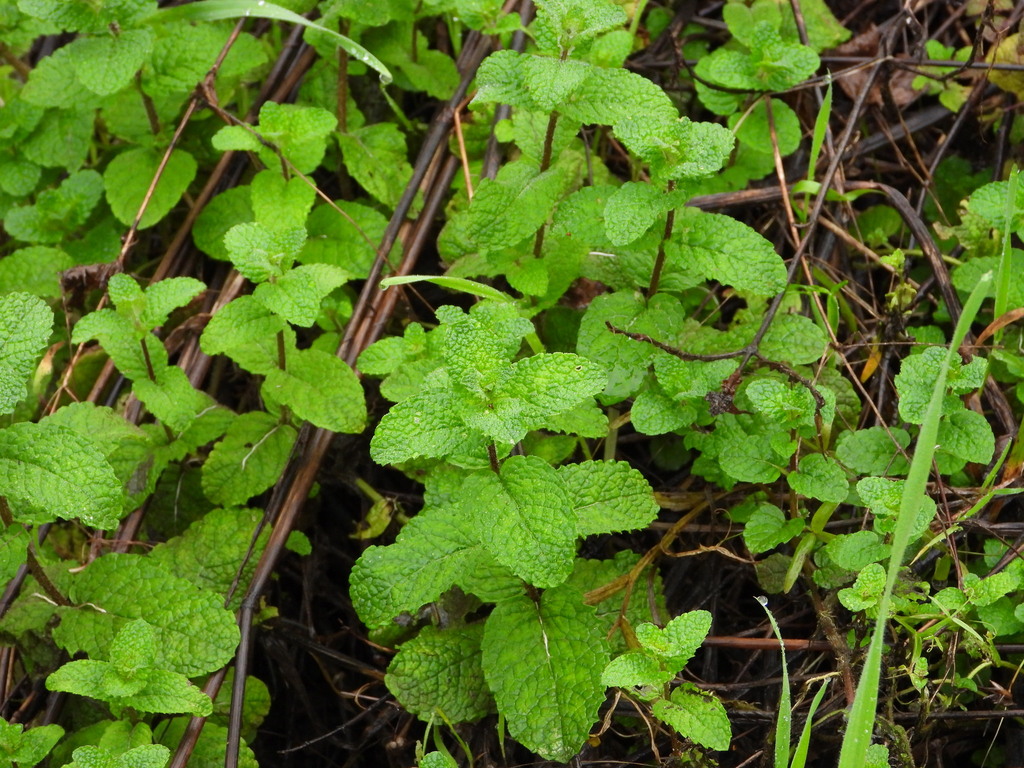
- Soft and fuzzy wrinkled leaves
- Light green foliage with serrated edges
- Spikes of tiny white or pink flowers
- Distinctive sweet apple scent when crushed
- Height
- 0.3 to 0.9m
- Spread
- 0.6 to 1.2m
- Leaves
- apple green, grey green, deciduous
- Flowers
- white, pale pink, 0.2 to 0.5cm
Problems to watch for
- Mint rust · Small orange pustules appear on the undersides of leaves during humid weather.
- Aphids · Tiny sap-sucking insects that cluster on new growth.
Check your apple mint from a photo
Pocket Botanist looks at a photo of your plant and tells you what's wrong and what to try first.
Scan with your phone's camera to get the app
Or go to pocketbotanist.app/get on your phone
Growing it
- Propagation
- division, cuttings, seed
- When to plant
- spring, autumn
- Overwintering
- The foliage will die back completely in winter. You can cut the stems to the ground after the first frost and mulch the roots if you live in a very cold climate.
- In containers
- It grows beautifully in pots, but ensure the container is at least 30 cm wide to accommodate its vigorous root system.
Division
- 1. Dig up a section of the plant in spring.
- 2. Separate the root mass into smaller clumps.
- 3. Replant the divisions in moist soil.
Cuttings
- 1. Take a 10 cm stem cutting.
- 2. Place the cutting in a glass of water.
- 3. Once roots appear, plant in soil.
Always plant mint in its own container, even when placing it near other plants, to stop it from choking out its neighbors.
Grows well with
Similar species
- Peppermint · A common relative with a much sharper, menthol-heavy scent.
- Spearmint · Another popular culinary mint with smoother, hairless leaves.
Science
- Family
- Lamiaceae
- Genus
- Mentha
- Order
- Lamiales
- Class
- Magnoliopsida
- Native range
- Mediterranean region and Western Europe.
- Conservation
- This species is considered invasive in many regions outside its native range and should be managed carefully.
It thrives in damp, disturbed soils and spreads rapidly to colonize open areas.
- Value to wildlife
- nectar source, attracts beneficial insects
- Pollinators
- bees, butterflies
- Uses
- culinary herb, ground cover, herbal tea, pollinator garden
Through the year
Ecological indicators
- Salinity
- 2/9
- Soil reaction
- 6/9
- Light
- 7/9
- Temperature
- 5/9
- Moisture
- 6/9
- Nutrients
- 5/9
Taxonomy resolved against GBIF.
Questions people ask
- Is apple mint invasive?
- Yes, it spreads very quickly via rhizomes and can easily take over a garden bed.
- Can I grow it in a pot?
- Absolutely, and it is actually recommended to keep it in a container to prevent it from spreading.
Where the name comes from
The name suaveolens is Latin for sweet-smelling, referring to the pleasant scent of the foliage.
Good to know
- The leaves have a soft, woolly texture that feels like velvet.
- It is often called apple mint because of its sweet, fruity aroma.
- This plant spreads aggressively through underground runners.
- It is a classic choice for flavoring jellies and desserts.
Also in
Keep your apple mint growing
This page is a general guide. Save your plant in Pocket Botanist and you get care reminders timed for this plant, plus a care history that shows what worked.
Scan with your phone's camera to get the app
Or go to pocketbotanist.app/get on your phone
This guide was generated with AI on and checked against GBIF taxonomy. It is general information, not horticultural or veterinary advice. Read about how we build these guides.