 Pocket Botanist
Plant guide
Prayer plant.
Maranta leuconeura É.Morren
Pronounced muh-RAN-tuh loo-koh-NOO-ruh
Also known as prayerplant, ten-commandments


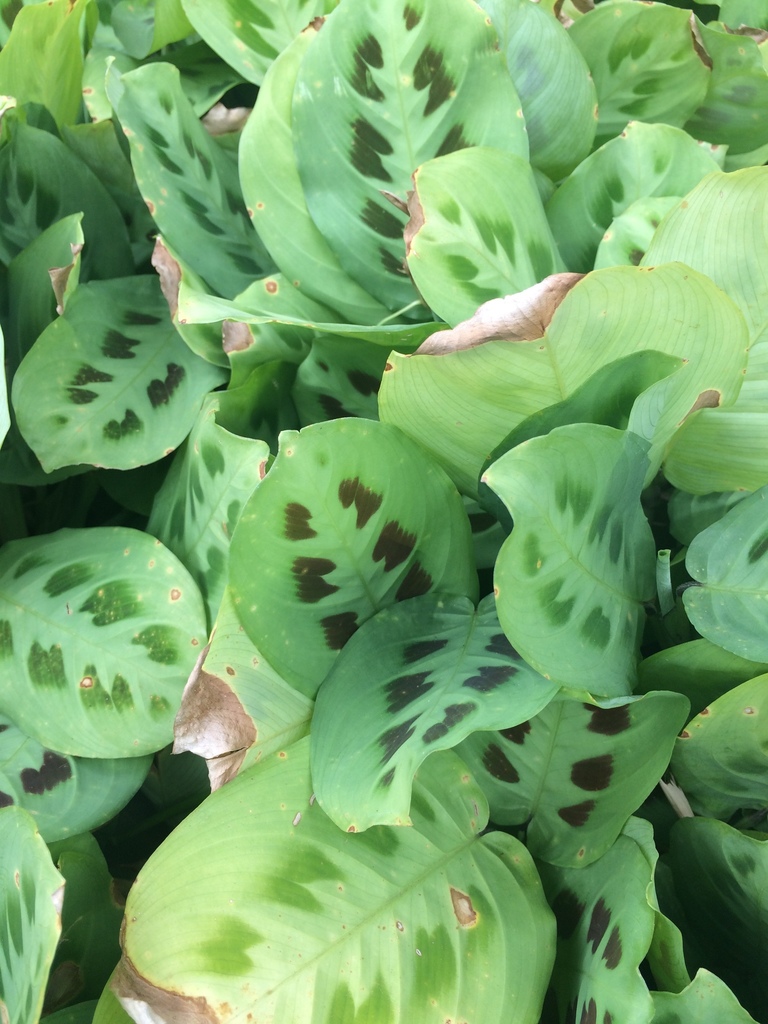
The prayer plant is famous for its leaves that fold up at night like hands in prayer. It is a charming tropical native that loves humidity and warmth. You will find it makes a lovely addition to any indoor collection.

At a glance
- Care level
- Moderate
- Plant type
- Tropical perennial
- Light
- Bright indirect light
- Indoor light
- Medium light
- Water
- Every 5 to 10 days
- Mature size
- 12 inches tall
- Growth rate
- Medium
- Hardiness
- USDA 11 to 12
- Bloom time
- Late spring to early summer
Care
Keep the soil consistently moist but never soggy to prevent root rot. Watch for brown, crispy leaf edges which often signal that the air is too dry. It thrives best when placed in a spot with filtered light away from harsh sun.
- Watering
- Water when the top inch of soil feels dry to the touch.
- Feeding
- Feed with a balanced liquid fertilizer diluted to half strength during the growing season.
- Pruning
- Trim back leggy stems to encourage a bushier growth habit.
- Repotting
- Move to a slightly larger pot once the roots begin to fill the current container.
- Soil
- Peat based potting mix
- Soil pH
- 5.5 to 6.0
- Temperature
- 15 to 27°C
- Humidity
- 60 to 90%
- Drought tolerance
- Low
- Lifespan
- Perennial, typically 3 to 5 years with proper care.
- Deer and rabbits
- Moderate
Signs it needs repotting
- Roots growing out of drainage holes
- Water running straight through the soil
- Stunted growth
Safety
- People
- The plant is generally considered non-toxic to humans.
- Pets
- This plant is non-toxic to cats and dogs.
- Children
- Keep out of reach of small children to prevent ingestion of leaves.
- Edibility
- This plant is not considered edible and may cause stomach upset if ingested.
How to identify it
- Oval leaves with dark green patterns
- Prominent light green or red veining
- Leaves fold upward at night
- Low growing habit
- Height
- 0.15 to 0.3m
- Spread
- 0.2 to 0.45m
- Leaves
- green, red, yellow, evergreen
- Flowers
- white, lavender, 1 to 2cm
Problems to watch for
- Brown Leaf EdgesCommon
- Leaf SpotCommon
- Spider MitesCommon
- Fungus GnatsUncommon
- MealybugsUncommon
- Root RotUncommon
- ChlorosisRare
By symptom
Check your prayer plant from a photo
Pocket Botanist looks at a photo of your plant and tells you what's wrong and what to try first.
Growing it
- Propagation
- division, cuttings
- When to plant
- spring, summer
- Overwintering
- Keep the plant in a warm spot away from cold drafts and reduce watering slightly as growth slows.
- In containers
- It thrives in containers and prefers shallow pots due to its shallow root system.
Division
- Gently remove the plant from its pot.
- Carefully separate the root ball into smaller sections.
- Repot each section into fresh, well-draining soil.
Group plants with similar moisture needs together to create a humid microclimate.
Grows well with
- Peace Lily — They share similar requirements for high humidity and indirect light.
- Ferns — Ferns create a humid microclimate that benefits the prayer plant.
Similar species
- Calathea — They are related and share similar foliage patterns and care needs.
- Stromanthe — Another member of the Marantaceae family with striking leaf coloration.
Science
- Family
- Marantaceae
- Genus
- Maranta
- Order
- Zingiberales
- Class
- Liliopsida
- Native range
- Tropical Brazil
- Conservation
- This species is not currently listed as endangered or threatened in its native habitat.
It grows as a low-lying ground cover in the shaded, humid understory of tropical rainforests.
- Value to wildlife
- nectar source
- Pollinators
- bees
- Uses
- houseplant, terrarium plant
Through the year
Ecological indicators
- Salinity
- 2/9
- Light
- 3/9
- Moisture
- 7/9
- Nutrients
- 5/9
- Soil reaction
- 5/9
- Temperature
- 8/9
Taxonomy resolved against GBIF.
Questions people ask
- Why are the leaf edges turning brown?
- This is usually caused by low humidity or using tap water with high mineral content.
- How often should I water it?
- Keep the soil consistently moist but never waterlogged.
Where the name comes from
The genus honors Bartolomeo Maranta, an Italian physician and botanist from the 16th century.
Good to know
- It is native to the tropical forests of Brazil.
- The leaves exhibit nyctinasty, which is a circadian rhythm movement.
- It prefers indirect light to prevent leaf bleaching.
Also in
Keep your prayer plant growing
This page is a general guide. Save your plant in Pocket Botanist and you get care reminders timed for this plant, plus a care history that shows what worked.
This guide was generated with AI and checked against GBIF taxonomy. It is general information, not horticultural or veterinary advice. Read about how we build these guides.