 Pocket Botanist
Guía de plantas
Planta de la oración.
Maranta leuconeura É.Morren
Pronunciación mah-RAN-tah loo-koh-NEW-rah
También se conoce como planta de la oración, diez mandamientos


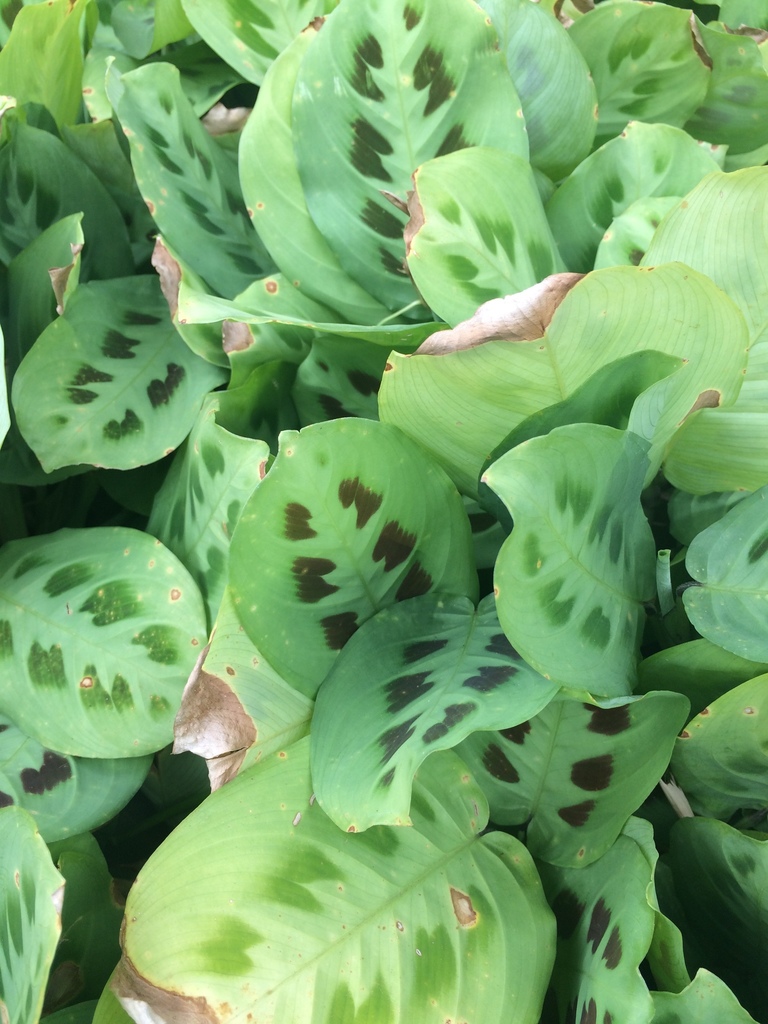
La planta de la oración es famosa por sus hojas que se pliegan por la noche como manos en oración. Es una encantadora planta tropical nativa que ama la humedad y el calor. Encontrarás que es una adición encantadora a cualquier colección de interior.

De un vistazo
- Nivel de cuidados
- Media
- Tipo de planta
- Perenne tropical
- Luz
- Luz indirecta brillante
- Luz en interior
- Luz media
- Riego
- Cada 5 a 10 días
- Tamaño adulto
- 12 pulgadas de alto
- Ritmo de crecimiento
- Medio
- Rusticidad
- USDA 11 a 12
- Floración
- Finales de primavera a principios de verano
Cuidados
Mantén la tierra consistentemente húmeda pero nunca empapada para prevenir la pudrición de la raíz. Observa los bordes de las hojas marrones y crujientes, que a menudo indican que el aire está demasiado seco. Prospera mejor cuando se coloca en un lugar con luz filtrada, lejos del sol fuerte.
- Riego
- Riega cuando la pulgada superior de la tierra se sienta seca al tacto.
- Abonado
- Alimenta con un fertilizante líquido balanceado diluido a la mitad de su fuerza durante la temporada de crecimiento.
- Poda
- Recorta los tallos largos para fomentar un hábito de crecimiento más frondoso.
- Trasplante
- Mueve a una maceta ligeramente más grande una vez que las raíces comiencen a llenar el contenedor actual.
- Suelo
- Mezcla para macetas a base de turba
- pH del suelo
- 5.5 a 6.0
- Temperatura
- 15 a 27°C
- Humedad
- 60 a 90%
- Tolerancia a la sequía
- Baja
- Longevidad
- Perenne, típicamente de 3 a 5 años con el cuidado adecuado.
- Resistencia a ciervos y conejos
- Moderada
Señales de que necesita trasplante
- Raíces que crecen fuera de los orificios de drenaje
- El agua pasa directamente a través de la tierra
- Crecimiento atrofiado
Seguridad
- Personas
- La planta generalmente se considera no tóxica para los humanos.
- Mascotas
- Esta planta no es tóxica para gatos y perros.
- Niños
- Mantener fuera del alcance de los niños pequeños para prevenir la ingestión de hojas.
- Alérgenos por contacto
- No se conocen alérgenos de contacto significativos para esta planta.
- Alérgenos en el aire
- No se conocen alérgenos respiratorios significativos para esta planta.
- Comestibilidad
- Esta planta no se considera comestible y puede causar malestar estomacal si se ingiere.
Cómo identificarla
- Hojas ovaladas con patrones verde oscuro
- Venas prominentes de color verde claro o rojo
- Las hojas se pliegan hacia arriba por la noche
- Hábito de crecimiento bajo
- Altura
- 0,15 a 0,3m
- Anchura
- 0,2 a 0,45m
- Hojas
- verde, rojo, amarillo, perenne
- Flores
- blanco, lavanda, 1 a 2cm
Problemas a vigilar
- Araña rojaComún
- Bordes marrones en las hojasComún
- Manchas foliaresComún
- Cochinillas algodonosasPoco común
- Moscas del mantilloPoco común
- Podredumbre radicularPoco común
- ClorosisRara
- Mancha foliar — Infección fúngica o bacteriana a menudo causada por follaje húmedo.
Por síntoma
Revisa tu planta de la oración con una foto
Pocket Botanist mira una foto de tu planta y te dice qué le pasa y qué probar primero.
Cómo cultivarla
- Propagación
- división, esquejes
- Cuándo plantar
- primavera, verano
- Cuidados en invierno
- Mantén la planta en un lugar cálido, lejos de las corrientes de aire frío, y reduce ligeramente el riego a medida que el crecimiento se ralentiza.
- En maceta
- Prospera en contenedores y prefiere macetas poco profundas debido a su sistema radicular superficial.
División
- Retira suavemente la planta de su maceta.
- Separa con cuidado el cepellón en secciones más pequeñas.
- Trasplanta cada sección a tierra fresca y bien drenada.
Agrupa plantas con necesidades de humedad similares para crear un microclima húmedo.
Buenas compañeras
- Spathiphyllum — Comparten requisitos similares de alta humedad y luz indirecta.
- Helecho de Boston — Los helechos crean un microclima húmedo que beneficia a la planta de oración.
Especies parecidas
- Calathea — Están relacionadas y comparten patrones de follaje y necesidades de cuidado similares.
- Stromanthe sanguinea — Otro miembro de la familia Marantaceae con llamativa coloración de hojas.
Ciencia
- Familia
- Marantaceae
- Género
- Maranta
- Orden
- Zingiberales
- Clase
- Liliopsida
- Distribución natural
- Brasil tropical
- Conservación
- Esta especie no está actualmente catalogada como en peligro o amenazada en su hábitat nativo.
Crece como una cobertura vegetal baja en el sotobosque sombreado y húmedo de las selvas tropicales.
- Valor para la fauna
- fuente de néctar
- Polinizadores
- abejas
- Usos
- planta de interior, planta de terrario
A lo largo del año
Indicadores ecológicos
- Salinidad
- 2/9
- Luz
- 3/9
- Humedad
- 7/9
- Nutrientes
- 5/9
- Reacción del suelo
- 5/9
- Temperatura
- 8/9
Taxonomía cotejada con GBIF.
Lo que más preguntan
- ¿Por qué se están poniendo marrones los bordes de las hojas?
- Esto suele ser causado por baja humedad o por el uso de agua del grifo con alto contenido mineral.
- ¿Con qué frecuencia debo regarla?
- Mantén la tierra consistentemente húmeda pero nunca encharcada.
De dónde viene el nombre
El género honra a Bartolomeo Maranta, un médico y botánico italiano del siglo XVI.
Bueno saberlo
- Es originaria de las selvas tropicales de Brasil.
- Las hojas exhiben nictinastia, que es un movimiento del ritmo circadiano.
- Prefiere la luz indirecta para evitar el blanqueamiento de las hojas.
También en
Que tu planta de la oración siga creciendo
Esta página es una guía general. Guarda tu planta en Pocket Botanist y tendrás recordatorios de cuidado pensados para esta planta, además de un historial de cuidados que muestra qué ha funcionado.
Esta guía se ha generado con IA y se ha cotejado con la taxonomía de GBIF. Es información general, no asesoramiento botánico ni veterinario. Descubre cómo elaboramos estas guías.