 Pocket Botanist
Plant guide
Yellow pimpernel.
Lysimachia nemorum
Pronounced ly-si-MAK-ee-uh NEM-or-um
Also known as Yellow Pimpernel



Scan with your phone's camera to get the app
Or go to pocketbotanist.app/get on your phone
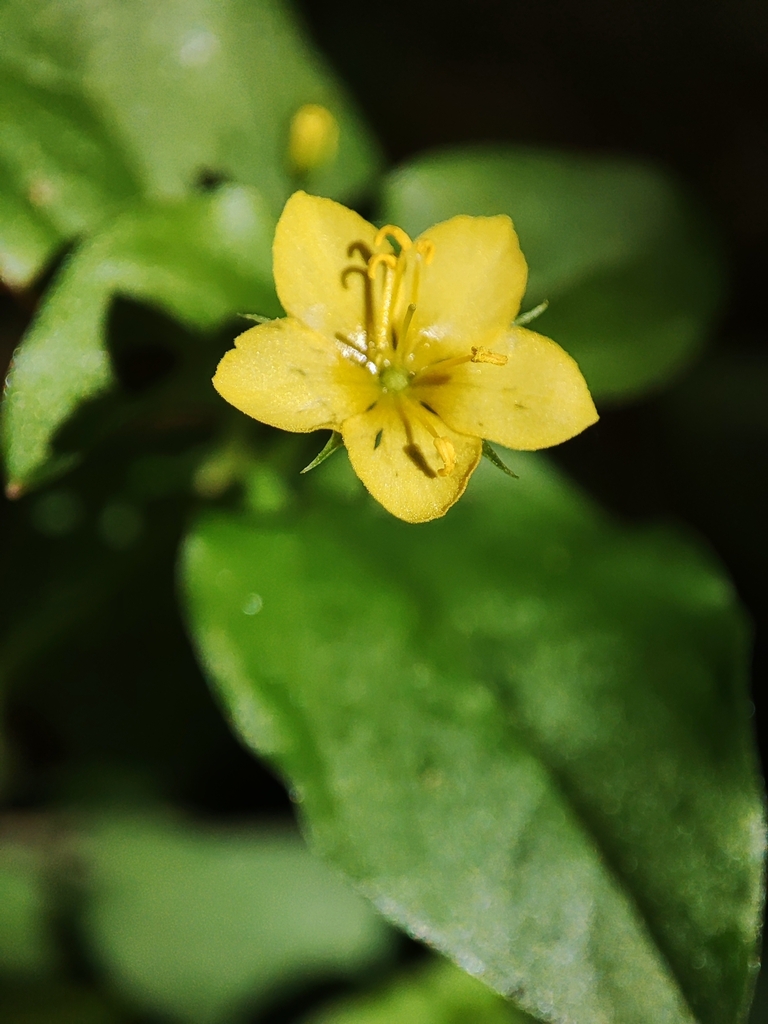
The yellow pimpernel is a lovely, low growing perennial that loves damp, shaded spots in the garden. It spreads gently along the ground, creating a soft carpet of bright green foliage. You will enjoy its cheerful, star shaped yellow flowers throughout the spring and summer months.

At a glance
- Care level
- Easy
- Plant type
- Perennial
- Light
- Partial shade to full shade
- Indoor light
- Medium light
- Water
- Every 3 to 7 days
- Mature size
- 6 to 12 inches
- Growth rate
- Medium
- Hardiness
- USDA 5 to 9
- Bloom time
- Late spring to mid summer
Care
Keep the soil consistently moist to mimic its natural woodland habitat. Watch for wilting, which indicates the plant is drying out too much. It thrives best when protected from harsh, direct afternoon sun.
- Watering
- Keep the soil damp to the touch at all times.
- Feeding
- Apply a balanced liquid fertilizer during the active growing season.
- Pruning
- Trim back leggy stems after flowering to encourage a bushier shape.
- Repotting
- Refresh the soil and move to a slightly larger pot if the plant becomes root bound.
- Soil
- Moist, humus rich, well draining soil
- Soil pH
- Neutral to slightly acidic
- Temperature
- -15 to 25°C
- Humidity
- 50 to 80%
- Drought tolerance
- Low
- Lifespan
- Perennial, typically 3 to 5 years.
- Deer and rabbits
- Moderate
Signs it needs repotting
- Roots growing out of the drainage holes.
- The plant dries out very quickly between waterings.
Safety
- People
- There is no significant toxicity reported for humans, but it is best to avoid ingestion.
- Children
- The plant is not known to be dangerous, but it is always wise to keep small children from eating garden plants.
- Contact allergens
- Contact with the foliage may cause mild skin irritation in sensitive individuals.
- Airborne allergens
- There are no notable airborne allergens associated with this plant.
- Edibility
- This plant is not considered edible and should be kept away from food preparation areas.
How to identify it
- Opposite, oval shaped bright green leaves
- Single bright yellow star shaped flowers
- Creeping stems that root at nodes
- Smooth, hairless stems and foliage
- Height
- 0.05 to 0.2m
- Spread
- 0.3 to 0.6m
- Leaves
- bright green, semi-evergreen
- Flowers
- yellow, 1 to 2cm
Problems to watch for
- Slugs · Slugs often feed on the tender leaves during damp weather.
Check your yellow pimpernel from a photo
Pocket Botanist looks at a photo of your plant and tells you what's wrong and what to try first.
Scan with your phone's camera to get the app
Or go to pocketbotanist.app/get on your phone
Growing it
- Propagation
- division, cuttings
- When to plant
- spring, autumn
- Overwintering
- It is hardy and generally stays green in mild winters, though it may die back in colder regions. Simply clear away any dead debris in early spring to encourage fresh growth.
- In containers
- It grows well in containers at least 20 centimeters wide, provided the soil is kept moist.
Division
- 1. Dig up a clump in spring or autumn.
- 2. Gently pull the rooted stems apart.
- 3. Replant the sections immediately in moist soil.
Pair this with other shade loving plants that appreciate consistent moisture to create a lush woodland carpet.
Grows well with
- Wood Anemone · They share similar woodland habitat requirements.
- Common Fern · The fern provides a nice textural contrast to the low growing foliage.
Similar species
- Creeping Jenny · It is a close relative with a similar creeping habit but rounder leaves.
Science
- Family
- Primulaceae
- Genus
- Lysimachia
- Order
- Ericales
- Class
- Magnoliopsida
- Native range
- Europe and parts of western Asia.
- Conservation
- It is common throughout its range and is not of conservation concern.
It spreads through creeping stems that root at the nodes, allowing it to form dense mats in moist, shaded forest floors.
- Value to wildlife
- nectar source
- Pollinators
- bees
- Uses
- ground cover, woodland garden, rock garden
Through the year
Ecological indicators
- Salinity
- 1/9
- Soil reaction
- 6/9
- Light
- 3/9
- Temperature
- 5/9
- Moisture
- 7/9
- Nutrients
- 5/9
Taxonomy resolved against GBIF.
Questions people ask
- Does it need full sun?
- No, it much prefers partial to full shade.
- Can I grow it in a pot?
- It does well in a container if kept consistently moist.
Where the name comes from
The name Lysimachia honors King Lysimachus of Thrace, while nemorum refers to its preference for growing in woods or groves.
Good to know
- It thrives in the dappled shade of deciduous woodlands.
- The stems often root where they touch the soil, helping it spread.
- It is a classic indicator of ancient woodland sites in some regions.
Also in
Keep your yellow pimpernel growing
This page is a general guide. Save your plant in Pocket Botanist and you get care reminders timed for this plant, plus a care history that shows what worked.
Scan with your phone's camera to get the app
Or go to pocketbotanist.app/get on your phone
This guide was generated with AI on and checked against GBIF taxonomy. It is general information, not horticultural or veterinary advice. Read about how we build these guides.