 Pocket Botanist
Plant guide
Indian tobacco.
Lobelia inflata
Pronounced loh-BEE-lee-uh in-FLAY-tuh
Also known as Indian tobacco, Indian-tobacco, Lowbelia, Puke Weed, inflated lobelia, inflated tobacco



Scan with your phone's camera to get the app
Or go to pocketbotanist.app/get on your phone
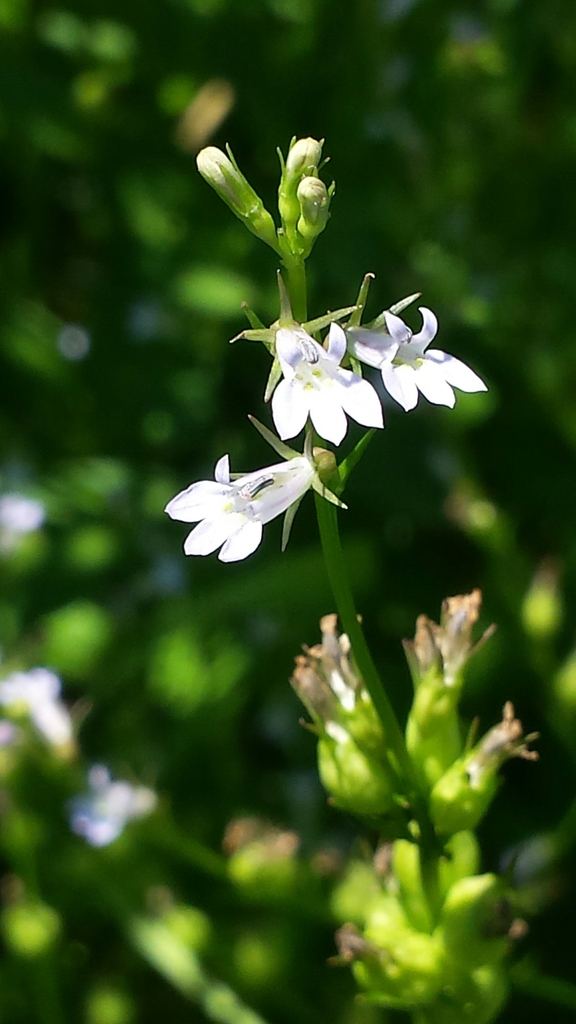
This charming annual or biennial wildflower is native to North America. It is known for its small, pale blue to violet flowers that bloom in late summer. You will often find it growing in open fields or along forest edges.
At a glance
- Care level
- Moderate
- Plant type
- Annual or biennial herb
- Light
- Full sun to partial shade
- Indoor light
- Bright indirect
- Water
- Every 2 to 4 days
- Mature size
- 1 to 3 feet
- Growth rate
- Fast
- Hardiness
- USDA 4 to 9
- Bloom time
- Mid summer to early fall
Care
Water regularly while young plants establish, then let the top of the soil dry slightly between waterings, as this plant naturally grows in average to dry soils in open fields and disturbed ground. Ensure it has good air circulation to prevent fungal issues.
- Watering
- Keep the soil evenly moist at all times.
- Feeding
- Apply a balanced liquid fertilizer once a month during the growing season.
- Pruning
- Deadhead spent flowers to encourage a longer blooming period.
- Repotting
- Since it is typically grown as an annual, repotting is rarely necessary.
- Soil
- Moist, well draining soil
- Soil pH
- Acidic to neutral
- Temperature
- -20 to 30°C
- Humidity
- 40 to 70%
- Drought tolerance
- Low
- Lifespan
- Annual or short lived biennial.
- Deer and rabbits
- High
Signs it needs repotting
- Roots growing out of the drainage holes.
- Soil drying out much faster than usual.
Safety
- People
- All parts of this plant are toxic if consumed and can cause severe nausea or respiratory distress.
- Pets
- This plant is toxic to cats and dogs if ingested.
- Children
- Keep this plant away from children as the toxic seeds and foliage are dangerous if ingested.
- Contact allergens
- Handling the plant may cause mild skin irritation in sensitive individuals.
- Airborne allergens
- The pollen is not typically a major allergen.
- Edibility
- This plant contains toxic alkaloids and should not be ingested.
How to identify it
- Small pale blue flowers
- Inflated seed capsules
- Hairy stems and leaves
- Alternate ovate leaves
- Milky sap when cut
- Height
- 0.3 to 1m
- Spread
- 0.15 to 0.3m
- Leaves
- light green, deciduous
- Flowers
- pale blue, white, 0.5 to 1.5cm
- Fruit
- green, tan, Fall
Problems to watch for
- Aphids · Small insects that cluster on new growth and suck plant sap.
Check your indian tobacco from a photo
Pocket Botanist looks at a photo of your plant and tells you what's wrong and what to try first.
Scan with your phone's camera to get the app
Or go to pocketbotanist.app/get on your phone
Growing it
- Propagation
- seed
- When to plant
- spring
- Overwintering
- As an annual, it will die back completely after the first hard frost. You can leave the dried stalks for winter interest or clear them away in late fall.
- In containers
- It grows well in containers if kept consistently moist, using at least a 15 cm pot.
Seed
- 1. Collect seeds from the inflated capsules in late fall.
- 2. Surface sow seeds in a tray in early spring.
- 3. Keep the soil moist and provide bright, indirect light until germination.
Pair this plant with other moisture loving natives to ensure the soil does not dry out too quickly.
Grows well with
- Blue Vervain · They share similar moisture requirements and look lovely together in a meadow setting.
- Joe Pye Weed · This taller plant provides a nice backdrop for the smaller lobelia.
Similar species
- Great Blue Lobelia · It is a larger, perennial relative with more showy blue flowers.
Science
- Family
- Campanulaceae
- Genus
- Lobelia
- Order
- Asterales
- Class
- Magnoliopsida
- Native range
- Eastern and central North America.
- Conservation
- It is considered a weed in some areas but is a native species across much of North America.
It thrives in disturbed soils, fields, and woodland edges where it can quickly colonize open ground.
- Value to wildlife
- nectar source
- Pollinators
- bees, butterflies
- Uses
- medicinal history, wildflower garden
Through the year
Ecological indicators
- Salinity
- 1/9
- Soil reaction
- 5/9
- Light
- 5/9
- Temperature
- 5/9
- Moisture
- 6/9
- Nutrients
- 4/9
Taxonomy resolved against GBIF.
Questions people ask
- Is it easy to grow from seed?
- Yes, just surface sow the tiny seeds in spring and keep them moist.
- Does it need full sun?
- It prefers partial shade but will tolerate full sun if the soil stays consistently moist.
Where the name comes from
The genus honors Matthias de l'Obel, a Flemish botanist, while the species name refers to the inflated seed capsules.
Good to know
- It is commonly known as Indian tobacco.
- The plant was historically used by indigenous peoples for various medicinal purposes.
- It is an annual or short lived biennial plant.
Also in
Keep your indian tobacco growing
This page is a general guide. Save your plant in Pocket Botanist and you get care reminders timed for this plant, plus a care history that shows what worked.
Scan with your phone's camera to get the app
Or go to pocketbotanist.app/get on your phone
This guide was generated with AI on and checked against GBIF taxonomy. It is general information, not horticultural or veterinary advice. Read about how we build these guides.