 Pocket Botanist
Plant guide
Sweetgum.
Liquidambar styraciflua
Pronounced lik-wid-AM-bar stir-uh-FLOO-uh
Also known as Alligator-wood, Alligatorwood, American Storax, American Sweet Gum, American-storax, Gumball Tree, Red-gum, Satin-walnut


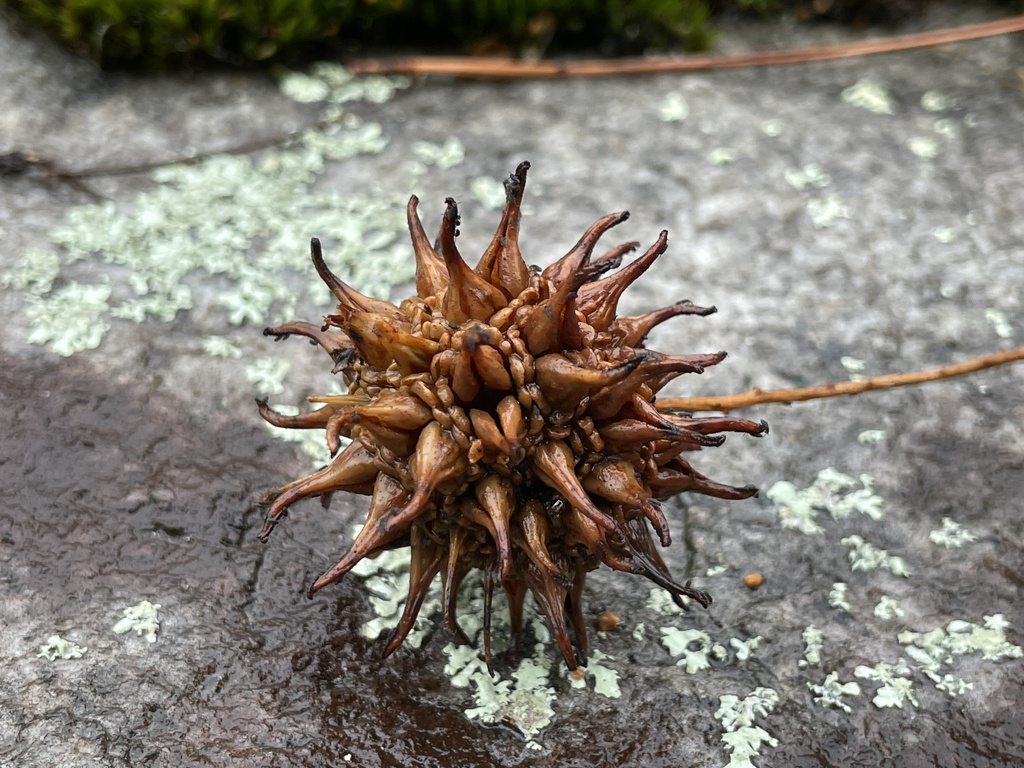
The sweetgum is a stately deciduous tree known for its star shaped leaves that turn brilliant colors in autumn. It produces unique spiky fruit balls that persist on the branches through winter. This tree thrives in deep, moist soils and makes a wonderful shade tree for large landscapes.
At a glance
- Care level
- Easy
- Plant type
- Deciduous tree
- Light
- Full sun
- Indoor light
- Direct sun
- Water
- Every 7 to 14 days
- Mature size
- 20 to 35 meters
- Growth rate
- Fast
- Hardiness
- USDA 5 to 9
- Bloom time
- Mid spring
Care
Plant in a location with plenty of space to accommodate its large root system and mature canopy. Keep the soil consistently moist, especially during the first few years, to encourage strong growth. Watch for surface roots that may emerge as the tree ages.
- Watering
- Water deeply during dry spells to maintain soil moisture.
- Feeding
- Apply a balanced slow release fertilizer in early spring.
- Pruning
- Prune during the dormant winter season to remove dead or crossing branches.
- Repotting
- Repotting is only applicable for young container specimens.
- Soil
- Deep, fertile, moist, acidic soil
- Soil pH
- Acidic to neutral
- Temperature
- -28 to 35°C
- Humidity
- 40 to 70%
- Drought tolerance
- Moderate
- Lifespan
- Perennial, typically 50 to 150 years.
- Deer and rabbits
- Moderate
Signs it needs repotting
- Roots growing out of the drainage holes.
- Stunted growth despite proper care.
- Soil drying out much faster than usual.
Safety
- People
- The plant is generally considered non-toxic, though the spiky seed pods can cause minor mechanical injury if handled carelessly.
- Pets
- The fruit and leaves are generally considered non toxic, but the spiky balls can be a nuisance or choking hazard for pets.
- Children
- The spiky, woody fruit capsules present a potential choking hazard and can be sharp if stepped on by small children.
- Contact allergens
- The sap may cause mild skin irritation in sensitive individuals.
- Airborne allergens
- The pollen can be a significant allergen for those sensitive to wind-borne tree pollens.
- Edibility
- The sap is sometimes used for flavoring, but the plant is not considered a food source and ingestion should be avoided.
How to identify it
- Star shaped leaves with five lobes
- Deeply furrowed gray brown bark
- Spiky spherical woody fruit capsules
- Brilliant red, orange, and purple fall color
- Height
- 15 to 35m
- Spread
- 10 to 20m
- Leaves
- green, red, orange, purple, deciduous
- Flowers
- yellow, green, 1 to 2cm
- Fruit
- brown, Autumn
Common problems
- Chlorosis — Yellowing of leaves often caused by high soil pH preventing iron uptake.
- Leaf spot — Fungal infections that cause dark spots on foliage during wet seasons.
Growing it
- Propagation
- seed, cuttings
- When to plant
- spring, autumn
- Overwintering
- No special winter protection is needed as this tree is fully hardy in its native range.
- In containers
- It is not suitable for long term container growth due to its massive size and extensive root system.
Seed
- Collect the spiky fruit capsules in late autumn.
- Allow them to dry until they open and release the seeds.
- Cold stratify the seeds for 30 to 60 days before sowing in spring.
Plant these trees in areas with enough space to accommodate their large root systems and falling debris.
Grows well with
- Red Maple — They share similar moisture requirements and thrive in the same woodland environments.
- River Birch — Both trees appreciate the consistent moisture found in low lying areas.
Similar species
- Oriental Sweetgum — It is a smaller relative that shares the same distinct leaf shape.
Science
- Family
- Altingiaceae
- Genus
- Liquidambar
- Order
- Saxifragales
- Class
- Magnoliopsida
- Native range
- Eastern and central North America.
- Conservation
- This species is common and widespread, so it is not currently of conservation concern.
It thrives in bottomland forests and floodplains where it can tolerate periodic saturated soil conditions.
- Value to wildlife
- seeds for birds, nesting habitat
- Pollinators
- bees, moths
- Uses
- shade tree, ornamental specimen, timber production
Through the year
Ecological indicators
- Salinity
- 2/9
- Soil reaction
- 4/9
- Light
- 7/9
- Temperature
- 5/9
- Moisture
- 6/9
- Nutrients
- 5/9
Taxonomy resolved against GBIF.
Questions people ask
- Why is it called sweetgum?
- It is named for the aromatic, amber colored resin that flows from wounds in the bark.
- Are the seed pods messy?
- Yes, the spiky fruit capsules drop in large numbers and can be difficult to clean up on paved surfaces.
Where the name comes from
Liquidambar comes from the Latin liquidus and the Arabic ambar, referring to its fragrant sap, while styraciflua means flowing with storax.
Good to know
- The name sweetgum comes from the fragrant resin that exudes from the bark.
- It is one of the most important commercial hardwood trees in the southeastern United States.
- The wood is often used to make furniture, veneer, and plywood.
- Its star shaped leaves are easily recognizable in the landscape.
Is your sweetgum looking unwell?
This page is a general guide. Pocket Botanist diagnoses problems from a photo of your actual plant, works out watering for your light and conditions, and reminds you when care is due.
This guide was generated with AI and checked against GBIF taxonomy. It is general information, not horticultural or veterinary advice. Read about how we build these guides.