 Pocket Botanist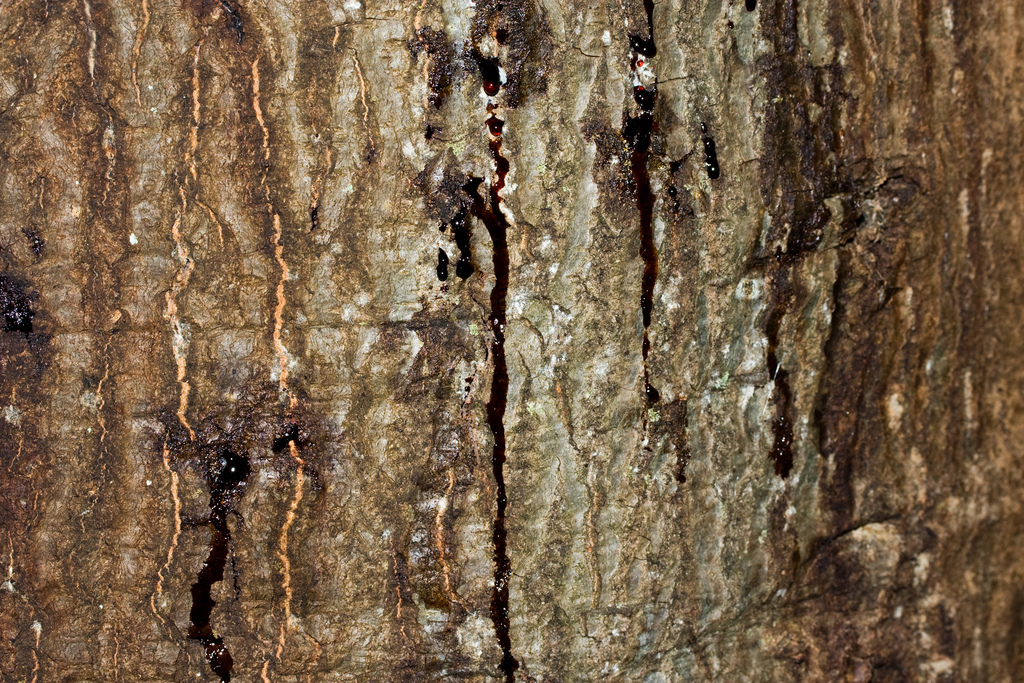
Symptoms by part
Stems
Dark, wet, or sticky patches on the bark that ooze a reddish or black fluid, often accompanied by sunken or dead tissue underneath.
Causes
- Physical injury to the bark from lawn equipment or tools.
- Environmental stress such as extreme temperature fluctuations.
- Infection by opportunistic fungi or bacteria entering through bark wounds.
- Excessive moisture trapped against the stem.
Could be confused with
- Bacterial wetwood · Wetwood typically produces a foul smelling, frothy liquid that bubbles from the wood, whereas bleeding necrosis is usually a localized, non bubbling exudate.
- Canker diseases · Cankers often show a distinct, raised callus margin around the dead area, while bleeding necrosis may appear more diffuse or flat.
Treatment
- Use a sterilized, sharp knife to carefully scrape away only the loose, dead bark around the bleeding site to expose healthy tissue.
- Clean the exposed area with a mild soap and water solution to remove debris and sap.
- Allow the cleaned area to air dry completely to encourage the plant to form a natural callus.
Without chemicals
- Prune away branches that are severely affected to prevent further stress.
- Improve air circulation around the trunk by removing weeds or dense groundcover.
- Avoid wounding the bark with lawn mowers or string trimmers.
Preventing it
- Keep mulch pulled back several inches from the base of the stem to prevent moisture buildup.
- Water the plant at the soil level rather than wetting the stems.
- Protect the trunk from mechanical damage using physical guards.
Season
The warm growing season, especially during periods of high humidity or following physical damage.
Spread risk
Low
Severity
Moderate
When to act
Act as soon as you notice the bleeding to prevent deeper wood decay. If the necrosis covers more than half the circumference of the trunk, consult a tree surgeon to assess if the plant can be saved.
Think it's Bleeding Necrosis?
This guide covers the general picture. Pocket Botanist looks at your actual plant from a photo and tells you what's really going on, how serious it is, and what to try first. Identification and a health check are free.


Questions people ask
- Will the bleeding stop on its own?
- Sometimes a plant will naturally seal the wound if the underlying cause is removed, but cleaning the area helps speed up this process.
- Should I paint the wound with a sealant?
- No, modern arboriculture suggests that sealants can trap moisture and pathogens inside, which makes the necrosis worse.
This guide was generated with AI and is general information, not horticultural advice. Read about how we build these guides.