 Pocket Botanist
Plant guide
Chinese privet.
Ligustrum sinense
Pronounced li-GUS-trum si-NEN-see
Also known as Chinese Privet, Common Chinese Privet, Narrow-leaf privet, chinese-privet, small-leaf privet



Scan with your phone's camera to get the app
Or go to pocketbotanist.app/get on your phone
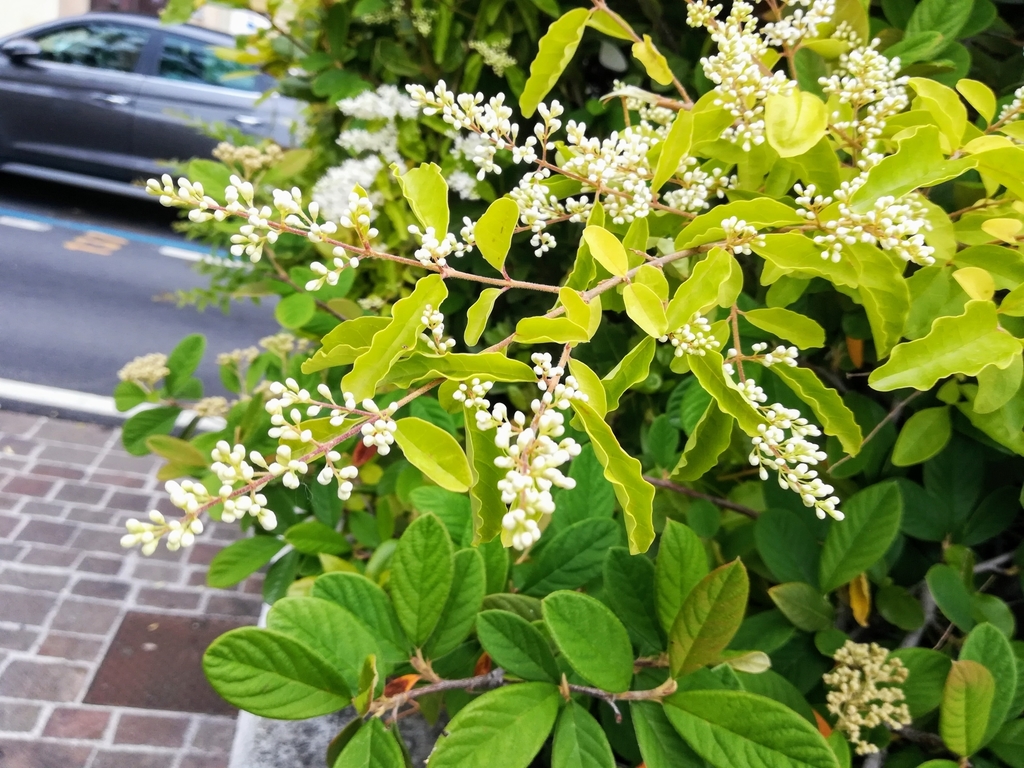
This hardy shrub is known for its dense, twiggy growth and small, semi-evergreen leaves. It is a popular choice for hedges because it handles heavy shearing quite well. You will see it produce small, fragrant white flowers in the spring.

At a glance
- Care level
- Easy
- Plant type
- Shrub
- Light
- Full sun to partial shade
- Indoor light
- Bright indirect
- Water
- Every 5 to 10 days
- Mature size
- 10 to 15 feet
- Growth rate
- Fast
- Hardiness
- USDA 6 to 10
- Bloom time
- Late spring to early summer
Care
Keep the soil consistently moist but not waterlogged to encourage healthy foliage. Watch for yellowing leaves which can signal overwatering or poor drainage. Regular trimming helps maintain the desired shape and density.
- Watering
- Water when the top inch of soil feels dry to the touch.
- Feeding
- Apply a balanced fertilizer during the active growing season.
- Pruning
- Prune regularly to maintain shape and encourage bushier growth.
- Repotting
- Repot when the plant becomes root-bound or needs fresh soil.
- Soil
- Well-draining loamy soil
- Soil pH
- 6.0 to 7.5
- Temperature
- -15 to 35°C
- Humidity
- 40 to 80%
- Drought tolerance
- Moderate
- Lifespan
- Perennial, typically 20 to 50 years
- Fragrance
- Strong
- Deer and rabbits
- Moderate
Signs it needs repotting
- Roots growing out of the drainage holes.
- Water running straight through the pot without soaking in.
- Noticeable decline in growth rate.
Safety
- People
- All parts of the plant are toxic if ingested and can cause gastrointestinal distress.
- Pets
- This plant is toxic to cats and dogs if ingested, potentially causing gastrointestinal upset.
- Children
- Keep children away from the berries as they are tempting but poisonous if swallowed.
- Contact allergens
- The sap can cause mild skin irritation in sensitive individuals.
- Airborne allergens
- The flowers produce a strong, often unpleasant scent that can trigger respiratory allergies in some people.
- Edibility
- The berries are toxic to humans and should never be consumed.
How to identify it
- Small oval leaves in opposite pairs
- Dense twiggy branching habit
- Small fragrant white flower clusters
- Dark purple to black berry fruits
- Height
- 2 to 4m
- Spread
- 1.5 to 3m
- Leaves
- green, semi-evergreen
- Flowers
- white, 0.5 to 1cm
- Fruit
- black, Autumn to winter
Problems to watch for
- Whitefly · Small insects that congregate on the undersides of leaves and suck sap.
- Leaf spot · Fungal infection causing dark spots on foliage during wet weather.
Check your chinese privet from a photo
Pocket Botanist looks at a photo of your plant and tells you what's wrong and what to try first.
Scan with your phone's camera to get the app
Or go to pocketbotanist.app/get on your phone
Growing it
- Propagation
- cuttings, seed
- When to plant
- spring, autumn
- Overwintering
- It is mostly hardy, but in colder regions, it may lose more leaves during a harsh winter. No special protection is usually required once established.
- In containers
- It grows well in large containers, but it requires regular pruning to keep its size in check.
Semi-hardwood cuttings
- Take 10 to 15 cm cuttings in late summer.
- Remove lower leaves and dip the base in rooting hormone.
- Place in a well draining potting mix and keep moist until rooted.
Because this plant is highly invasive, it is best to avoid planting it near natural areas or forests.
Grows well with
- Boxwood · They share similar light and soil requirements for formal garden designs.
- English Ivy · They are often paired in traditional landscapes, though both can be invasive.
Similar species
- Common Privet · It is a closely related species with similar growth habits and appearance.
Science
- Family
- Oleaceae
- Genus
- Ligustrum
- Order
- Lamiales
- Class
- Magnoliopsida
- Native range
- China and Southeast Asia
- Conservation
- It is not endangered, but it is widely managed as a noxious weed in many regions.
It spreads aggressively by seed, often dispersed by birds that eat the berries.
- Value to wildlife
- nectar source, provides cover for birds
- Pollinators
- bees, butterflies
- Uses
- hedging, topiary, privacy screen
Through the year
Ecological indicators
- Salinity
- 2/9
- Soil reaction
- 6/9
- Light
- 5/9
- Temperature
- 6/9
- Moisture
- 5/9
- Nutrients
- 5/9
Taxonomy resolved against GBIF.
Questions people ask
- Is this plant easy to prune?
- Yes, it responds very well to frequent shearing and shaping.
- Does it grow in shade?
- It is quite adaptable and will grow in full sun to partial shade.
Where the name comes from
The name Ligustrum comes from the Latin word for binder, referring to the flexible stems used for tying. The specific epithet sinense means from China.
Good to know
- It is commonly known as Chinese privet.
- It was introduced to North America as an ornamental shrub in the mid 1800s.
- The genus name Ligustrum is the classical Latin name for privet.
Also in
Keep your chinese privet growing
This page is a general guide. Save your plant in Pocket Botanist and you get care reminders timed for this plant, plus a care history that shows what worked.
Scan with your phone's camera to get the app
Or go to pocketbotanist.app/get on your phone
This guide was generated with AI on and checked against GBIF taxonomy. It is general information, not horticultural or veterinary advice. Read about how we build these guides.