 Pocket Botanist
Plant guide
European privet.
Ligustrum vulgare
Pronounced li-GUS-trum vul-GA-re
Also known as Common Privet, European Privet



Scan with your phone's camera to get the app
Or go to pocketbotanist.app/get on your phone
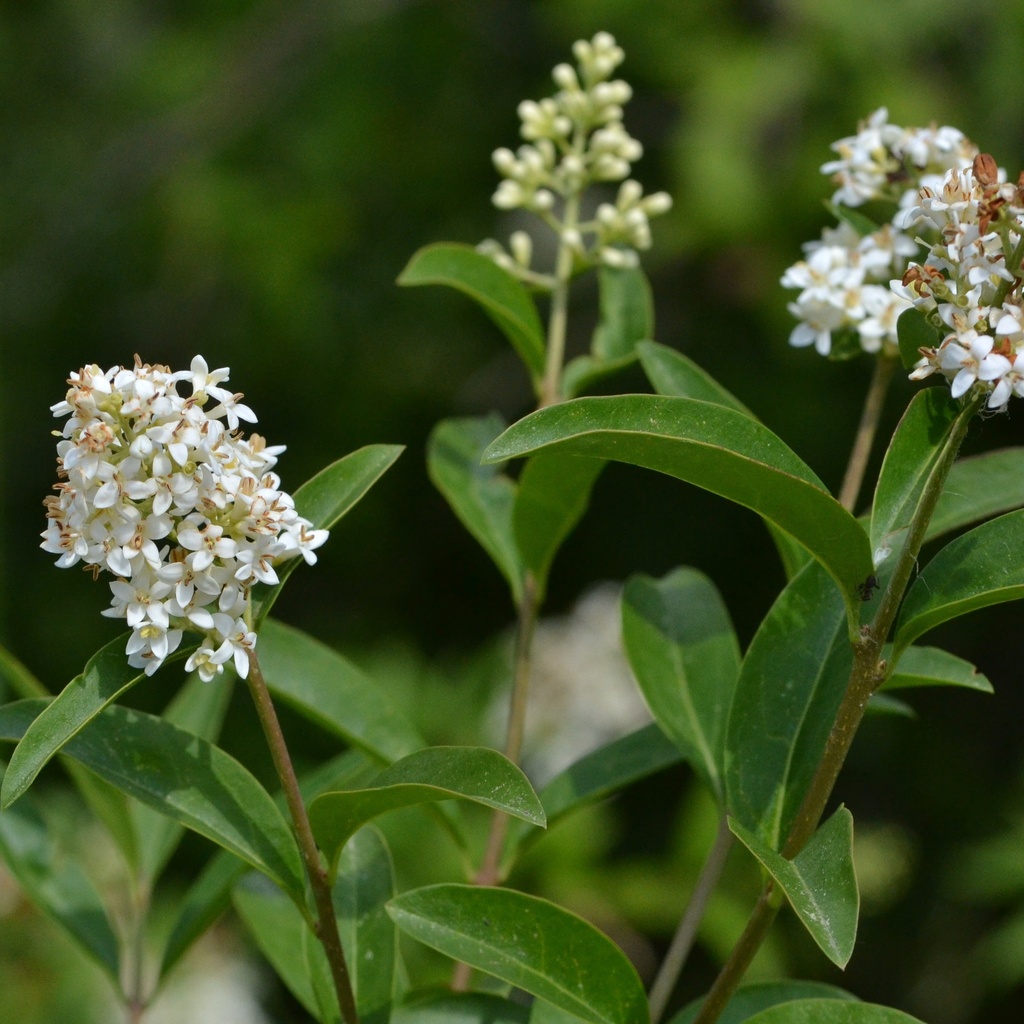
The European privet is a hardy, semi-evergreen shrub often used for dense hedging. It produces fragrant white flowers in late spring followed by clusters of dark berries. It's a tough plant that adapts well to many different soil conditions.

At a glance
- Care level
- Easy
- Plant type
- Shrub
- Light
- Full sun to partial shade
- Indoor light
- Bright indirect
- Water
- Every 7 to 14 days
- Mature size
- 3 to 5 meters
- Growth rate
- Fast
- Hardiness
- USDA 4 to 8
- Bloom time
- Late spring to early summer
Care
Keep the soil consistently moist but well drained to ensure healthy growth. Watch for yellowing leaves which can indicate poor drainage or nutrient deficiency. Regular trimming helps maintain a tidy shape for hedges.
- Watering
- Water deeply when the top inch of soil feels dry to the touch.
- Feeding
- Apply a balanced granular fertilizer once in early spring.
- Pruning
- Prune twice a year to maintain the desired shape and density.
- Repotting
- Repot only if the plant becomes root bound in its container.
- Soil
- Well drained, fertile soil
- Soil pH
- 6.0 to 7.5
- Temperature
- -25 to 35°C
- Humidity
- 40 to 70%
Safety
- People
- The berries and leaves contain glycosides that cause stomach pain, vomiting, and diarrhea if eaten.
- Pets
- The berries and leaves are toxic to cats and dogs if ingested.
- Children
- Keep children away from the plant, especially the dark berries, as they look like edible fruit but are poisonous.
- Contact allergens
- Contact with the leaves or sap can cause mild skin irritation in sensitive individuals.
- Airborne allergens
- The flowers produce a strong, sometimes unpleasant scent that can trigger respiratory discomfort in some people.
- Edibility
- All parts of this plant are toxic if ingested and should never be consumed.
How to identify it
- Opposite, lance shaped dark green leaves
- Small, fragrant white flower clusters
- Shiny black berry fruit clusters
- Dense, multi-stemmed shrub habit
- Height
- 2 to 5m
- Spread
- 1.5 to 4m
- Leaves
- dark green, semi-evergreen
- Flowers
- white, cream, 0.5 to 1cm
- Fruit
- black, Autumn
Problems to watch for
- Privet thrips · Tiny insects that cause leaves to curl and turn brown.
- Honey fungus · A soil-borne fungus that causes root rot and sudden plant death.
Check your european privet from a photo
Pocket Botanist looks at a photo of your plant and tells you what's wrong and what to try first.
Scan with your phone's camera to get the app
Or go to pocketbotanist.app/get on your phone
Growing it
- Propagation
- cuttings, seed
- When to plant
- spring, autumn
Plant in groups to create a dense barrier that blocks wind and noise effectively.
Grows well with
- English Holly · They share similar soil requirements and provide year-round structure.
- Common Box · Both plants are excellent for formal, clipped garden designs.
Similar species
- Japanese Privet · A larger, broader-leaved relative often used in warmer climates.
Science
- Family
- Oleaceae
- Genus
- Ligustrum
- Order
- Lamiales
- Class
- Magnoliopsida
- Native range
- Europe, North Africa, and Western Asia.
- Conservation
- It is considered invasive in many parts of North America where it outcompetes native flora.
It thrives in woodland edges and scrubland, spreading easily via bird-dispersed seeds.
- Value to wildlife
- nectar source, nesting cover, bird food
- Pollinators
- bees, butterflies
- Uses
- formal hedging, topiary, wildlife screen, windbreak
Through the year
Ecological indicators
- Salinity
- 2/9
- Soil reaction
- 6/9
- Light
- 5/9
- Temperature
- 5/9
- Moisture
- 5/9
- Nutrients
- 5/9
Taxonomy resolved against GBIF.
Questions people ask
- How often should I prune it?
- Prune twice a year, once in late spring and again in late summer, to keep it tidy.
- Does it grow in shade?
- Yes, it is very shade tolerant, though it flowers more heavily in full sun.
Where the name comes from
The genus name Ligustrum is the classical Latin name for the plant, while vulgare simply means common.
Good to know
- Privet was once used to make dyes for textiles.
- The origin of the English name privet is uncertain, though the plant has long been used to create private screens and hedges.
- It is incredibly resilient and can grow in almost any soil type.
Also in
Keep your european privet growing
This page is a general guide. Save your plant in Pocket Botanist and you get care reminders timed for this plant, plus a care history that shows what worked.
Scan with your phone's camera to get the app
Or go to pocketbotanist.app/get on your phone
This guide was generated with AI on and checked against GBIF taxonomy. It is general information, not horticultural or veterinary advice. Read about how we build these guides.