 Pocket Botanist
Plant guide
Heath rush.
Juncus squarrosus
Pronounced JUNG-kus skwar-RO-sus
Also known as Heath Rush



Scan with your phone's camera to get the app
Or go to pocketbotanist.app/get on your phone
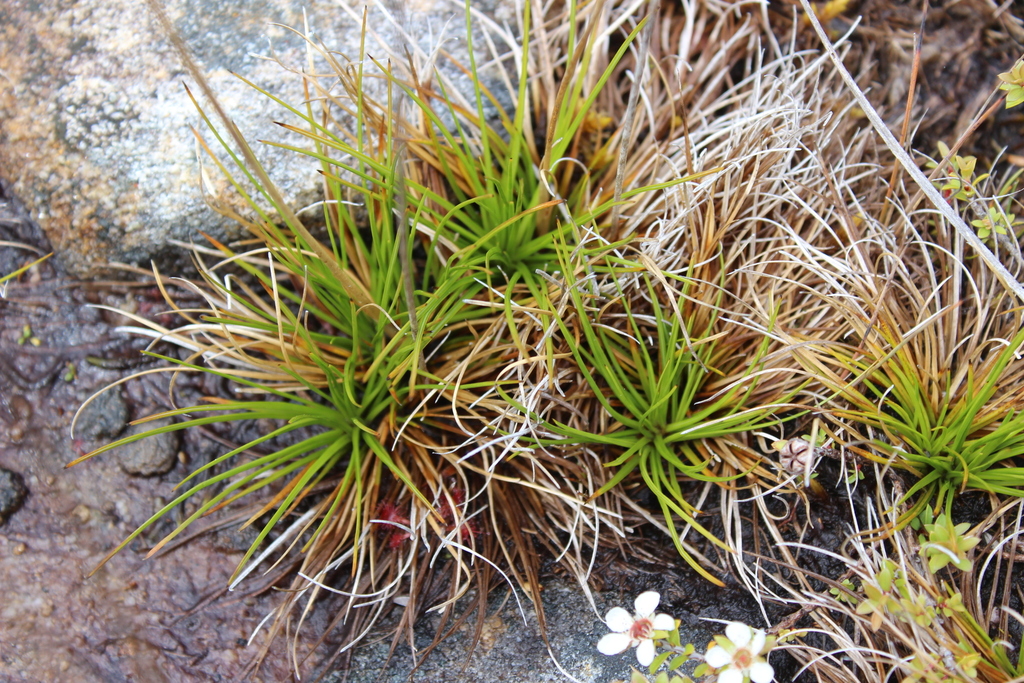
The heath rush is a hardy perennial that thrives in acidic, nutrient poor soils. It is often found in damp heaths and moorlands across Europe. Its tough, wiry leaves make it a resilient choice for naturalistic garden settings.
At a glance
- Care level
- Easy
- Plant type
- Perennial rush
- Light
- Full sun to partial shade
- Indoor light
- Direct sun
- Water
- Every 2 to 5 days
- Mature size
- 30 to 50 cm
- Growth rate
- Medium
- Hardiness
- USDA 4 to 9
- Bloom time
- Mid to late summer
Care
Keep the soil consistently moist to mimic its natural boggy habitat. Watch for browning leaf tips which often signal that the soil has dried out too much. Ensure it receives plenty of light to maintain its compact growth habit.
- Watering
- Keep the soil constantly damp, as this plant does not tolerate drying out.
- Feeding
- Apply a light, balanced fertilizer once during the growing season if growth seems sluggish.
- Pruning
- Trim back dead or unsightly foliage in late winter to make room for new spring growth.
- Repotting
- Repot only when the clump becomes too crowded or the container is completely filled with roots.
- Soil
- Acidic, peaty, or sandy soils
- Soil pH
- Acidic
- Temperature
- -25 to 30°C
- Humidity
- 60 to 90%
- Drought tolerance
- Low
- Lifespan
- Perennial, typically 5 to 10 years.
- Deer and rabbits
- High
Signs it needs repotting
- Roots growing out of the drainage holes.
- The center of the clump begins to die back.
- Water drains through the pot too quickly.
Safety
- People
- There are no known toxic effects from handling or accidental ingestion of this rush.
- Children
- The leaves are quite stiff and can be sharp, so keep it away from areas where toddlers play.
- Contact allergens
- The stiff, sharp leaves can cause minor skin abrasions if handled roughly.
- Airborne allergens
- The wind dispersed pollen may cause mild reactions in sensitive individuals.
- Edibility
- This plant is not considered edible for humans.
How to identify it
- Stiff, dark green basal leaves
- Small dark brown flowers in a branched terminal cluster on stiff, upright stems
- Dark brown, glossy, oval seeds
- Forms low, compact tufted clumps
- Height
- 0.1 to 0.3m
- Spread
- 0.15 to 0.4m
- Leaves
- dark green, evergreen
- Flowers
- brown, 0.5 to 1cm
Problems to watch for
- Rust · Fungal spots can appear on leaves during periods of poor air circulation.
Check your heath rush from a photo
Pocket Botanist looks at a photo of your plant and tells you what's wrong and what to try first.
Scan with your phone's camera to get the app
Or go to pocketbotanist.app/get on your phone
Growing it
- Propagation
- division, seed
- When to plant
- spring, autumn
- Overwintering
- It is fully hardy and requires no special protection. Simply leave the foliage intact until spring to protect the crown.
- In containers
- It grows well in containers, provided you use a moisture retentive mix and keep the pot in a saucer of water.
Division
- 1. Dig up the clump in early spring.
- 2. Use a sharp spade to divide the root ball into smaller sections.
- 3. Replant immediately into moist soil.
Group this plant with other acid loving moisture seekers to create a stable boggy habitat.
Grows well with
- Purple Moor Grass · They share similar moisture and soil acidity requirements.
- Cross Leaved Heath · This heath species thrives in the same boggy, acidic conditions.
Similar species
- Soft Rush · It is a much taller and more common relative that also enjoys wet soil.
Science
- Family
- Juncaceae
- Genus
- Juncus
- Order
- Poales
- Class
- Liliopsida
- Native range
- Europe and parts of Western Asia.
- Conservation
- It is common and widespread in its native range and not of conservation concern.
It survives in nutrient poor, acidic, and often waterlogged soils by forming dense tufts that tolerate trampling.
- Value to wildlife
- nesting material, cover for small invertebrates
- Pollinators
- bees
- Uses
- bog gardens, erosion control, restoration planting
Through the year
Ecological indicators
- Salinity
- 1/9
- Soil reaction
- 3/9
- Light
- 7/9
- Temperature
- 4/9
- Moisture
- 8/9
- Nutrients
- 2/9
Taxonomy resolved against GBIF.
Questions people ask
- Does it need a pond?
- It prefers very moist soil but does not need to be submerged in water.
- Can I grow it in a pot?
- Yes, as long as you keep the soil consistently wet.
Where the name comes from
The genus name Juncus is the classical Latin name for rushes, while the species name squarrosus refers to the stiff, spreading leaves.
Good to know
- It is commonly known as the heath rush.
- The leaves are stiff and curve outward, creating a distinct star shape.
- It thrives in places where other plants struggle due to low nutrients.
Also in
Keep your heath rush growing
This page is a general guide. Save your plant in Pocket Botanist and you get care reminders timed for this plant, plus a care history that shows what worked.
Scan with your phone's camera to get the app
Or go to pocketbotanist.app/get on your phone
This guide was generated with AI on and checked against GBIF taxonomy. It is general information, not horticultural or veterinary advice. Read about how we build these guides.