 Pocket Botanist
Plant guide
St. John's wort.
Hypericum perforatum
Pronounced hy-PEER-ih-kum per-for-AY-tum
Also known as Common St. John's Wort, Common St. Johnswort, Gammock, Goatweed, Herb-John, Klamath Weed, Klamathweed



Scan with your phone's camera to get the app
Or go to pocketbotanist.app/get on your phone

St. John's wort is a cheerful perennial known for its bright yellow flowers and medicinal history. It spreads easily and is often found growing wild in meadows or along roadsides. You'll love how its sunny blooms brighten up a garden space.
At a glance
- Care level
- Easy
- Plant type
- Herbaceous perennial
- Light
- Full sun to partial shade
- Indoor light
- Direct sun
- Water
- Every 7 to 14 days
- Mature size
- 1 to 3 feet
- Growth rate
- Fast
- Hardiness
- USDA 3 to 9
- Bloom time
- Early to late summer
Care
Give this plant plenty of sun and well draining soil to keep it happy. Watch for wilting if the soil dries out too much, though it is quite hardy. Keep an eye on its spread as it can become invasive in some areas.
- Watering
- Water when the top inch of soil feels dry to the touch.
- Feeding
- Apply a balanced fertilizer once in early spring to support new growth.
- Pruning
- Cut back the stems in late autumn or early spring to encourage a bushier shape.
- Repotting
- Repot only if the plant becomes root bound or you need to divide the clump.
- Soil
- Well draining, sandy or rocky soil
- Soil pH
- 6.0 to 7.5
- Temperature
- -25 to 35°C
- Humidity
- 40 to 70%
- Drought tolerance
- High
- Lifespan
- Perennial, typically 5 to 10 years
- Deer and rabbits
- High
Signs it needs repotting
- Roots growing out of the drainage holes.
- Water sitting on the surface for too long.
Safety
- People
- The plant is considered toxic if ingested and can cause skin irritation or increased sensitivity to sunlight.
- Pets
- This plant is toxic to cats, dogs, and horses if ingested.
- Children
- Keep this plant away from children as ingestion of any part can lead to illness and skin sensitivity.
- Contact allergens
- Handling the foliage can cause contact dermatitis in sensitive individuals due to the oils.
- Airborne allergens
- The pollen may trigger mild allergic reactions in some people during the peak summer bloom.
- Edibility
- This plant contains hypericin, which can cause severe photosensitivity in humans and livestock if ingested.
How to identify it
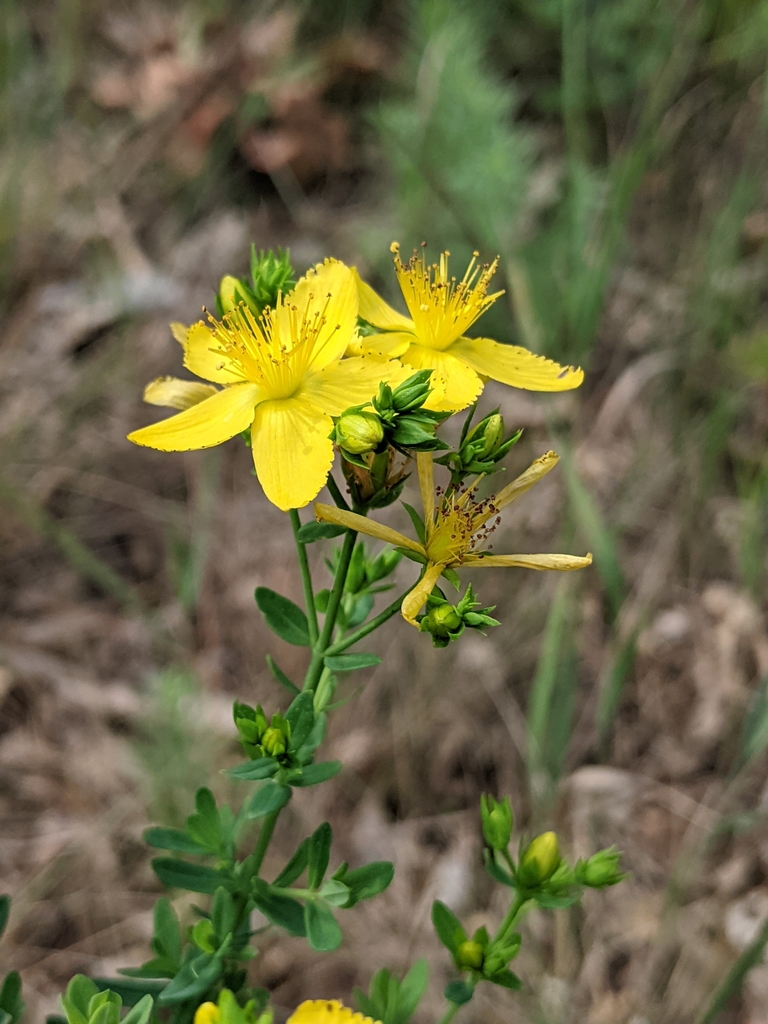
- Bright yellow five petaled flowers
- Translucent dots on leaf surfaces
- Opposite leaves along the stem
- Stems have two distinct ridges
- Height
- 0.3 to 0.9m
- Spread
- 0.3 to 0.6m
- Leaves
- green, deciduous
- Flowers
- yellow, 2 to 3cm
- Fruit
- brown, Autumn
Problems to watch for
- Rust · Fungal infection causing orange spots on the undersides of leaves.
Check your st. john's wort from a photo
Pocket Botanist looks at a photo of your plant and tells you what's wrong and what to try first.
Scan with your phone's camera to get the app
Or go to pocketbotanist.app/get on your phone
Growing it
- Propagation
- seed, division
- When to plant
- spring, autumn
- Overwintering
- Cut the stems back to the ground in late autumn or early winter. The plant will naturally go dormant and return in spring.
- In containers
- It grows well in containers, but ensure the pot has excellent drainage to prevent root rot.
Division
- 1. Dig up the clump in early spring.
- 2. Use a sharp spade to divide the root ball into smaller sections.
- 3. Replant immediately in well drained soil.
Pair this plant with other drought tolerant perennials to create a low maintenance meadow garden.
Grows well with
Similar species
- Shrubby St. John's Wort · This is a woody shrub version rather than a herbaceous perennial.
Science
- Family
- Hypericaceae
- Genus
- Hypericum
- Order
- Malpighiales
- Class
- Magnoliopsida
- Native range
- Europe, parts of Asia, and Northern Africa.
- Conservation
- It is considered an invasive weed in many parts of the world, including North America and Australia.
It thrives in open, sunny fields and disturbed ground where it outcompetes native vegetation.
- Value to wildlife
- pollen source
- Pollinators
- bees, butterflies, beetles
- Uses
- herbal medicine, ground cover, pollinator gardens
Through the year
Ecological indicators
- Salinity
- 2/9
- Soil reaction
- 6/9
- Light
- 7/9
- Temperature
- 5/9
- Moisture
- 4/9
- Nutrients
- 3/9
Taxonomy resolved against GBIF.
Questions people ask
- Is it easy to grow?
- Yes, it is very hardy and often grows as a weed in disturbed soils.
- Does it need full sun?
- It prefers full sun to light shade for the best flowering.
Where the name comes from
The genus name Hypericum comes from Greek words meaning over an apparition, while perforatum refers to the leaf glands that look like pinpricks.
Good to know
- It has been used for centuries in traditional medicine.
- The yellow flowers produce a red pigment when crushed.
- It is known as St. John's Wort because it traditionally blooms around St. John's Day in June.
- The plant can spread rapidly through underground runners.
Also in
Keep your st. john's wort growing
This page is a general guide. Save your plant in Pocket Botanist and you get care reminders timed for this plant, plus a care history that shows what worked.
Scan with your phone's camera to get the app
Or go to pocketbotanist.app/get on your phone
This guide was generated with AI on and checked against GBIF taxonomy. It is general information, not horticultural or veterinary advice. Read about how we build these guides.