 Pocket Botanist
Plant guide
Marsh pennywort.
Hydrocotyle vulgaris
Pronounced hy-dro-KOT-ih-lee vul-GAIR-iss
Also known as Marsh Pennywort



Scan with your phone's camera to get the app
Or go to pocketbotanist.app/get on your phone
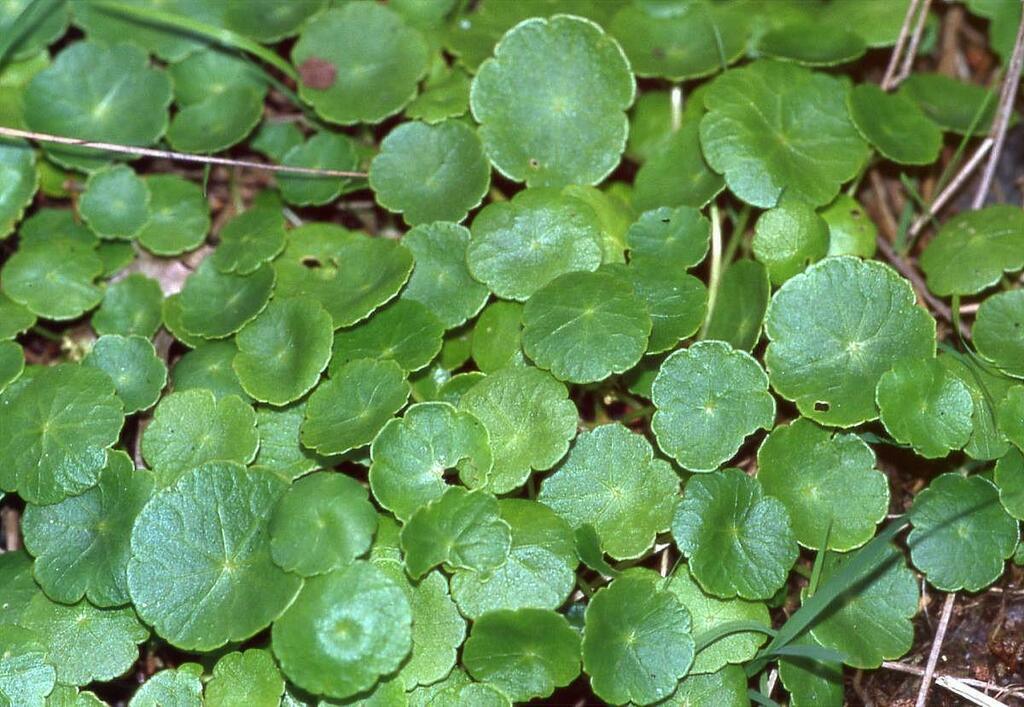
This charming aquatic perennial thrives in damp, boggy areas and shallow water. It features small, circular leaves that look like tiny umbrellas floating on the surface. It is a lovely choice for pond edges or water gardens.

At a glance
- Care level
- Easy
- Plant type
- Aquatic perennial
- Light
- Full sun to partial shade
- Indoor light
- Bright indirect
- Water
- Every 1 to 2 days
- Mature size
- 4 to 8 inches tall
- Growth rate
- Fast
- Hardiness
- USDA 5 to 9
- Bloom time
- Mid to late summer
Care
Keep the soil consistently saturated or submerge the plant in shallow water to mimic its natural wetland habitat. Watch for yellowing leaves, which often signal that the plant is drying out too much. It spreads quickly, so you might need to contain it if you have a small space.
- Watering
- The soil must remain constantly wet or submerged.
- Feeding
- Apply a balanced aquatic plant fertilizer during the active growing season.
- Pruning
- Trim back the stems if the plant starts to crowd out other species.
- Repotting
- Repot when the plant becomes root bound or outgrows its container.
- Soil
- Wet, boggy, or aquatic soil
- Soil pH
- 6.0 to 7.5
- Temperature
- -25 to 30°C
- Humidity
- 60 to 100%
- Drought tolerance
- Low
- Lifespan
- Perennial, typically 3 to 5 years
- Deer and rabbits
- Moderate
Signs it needs repotting
- Roots growing out of the drainage holes
- The plant looks crowded in its container
Safety
- People
- It is generally considered non-toxic, but ingestion is not recommended as it may cause stomach upset.
- Children
- The plant is not dangerous, but keep an eye on toddlers near water features where it grows.
- Edibility
- This plant is not considered edible and should be avoided.
How to identify it
- Circular leaves with scalloped edges
- Leaves attached at the center
- Creeping stems along the ground
- Tiny clusters of greenish flowers
- Height
- 0.05 to 0.2m
- Spread
- 0.3 to 1m
- Leaves
- bright green, evergreen
- Flowers
- white, pale pink, 0.2 to 0.5cm
Problems to watch for
- Aphids · Small insects that may cluster on the stems during dry spells.
Check your marsh pennywort from a photo
Pocket Botanist looks at a photo of your plant and tells you what's wrong and what to try first.
Scan with your phone's camera to get the app
Or go to pocketbotanist.app/get on your phone
Growing it
- Propagation
- division, seed
- When to plant
- spring, summer
- Overwintering
- It is hardy and will remain green in mild winters, though it may die back in colder regions. Simply leave it in place and it will regrow from the roots in spring.
- In containers
- It grows beautifully in containers submerged in shallow water or kept in very wet soil.
Division
- 1. Carefully lift a clump of the plant from the mud.
- 2. Gently pull the creeping stems apart to separate into smaller pieces.
- 3. Replant the pieces immediately into wet soil or shallow water.
Group this with other moisture-loving plants to create a lush, boggy display.
Grows well with
- Marsh Marigold · They both thrive in the same wet, boggy conditions.
- Water Mint · It provides a nice textural contrast to the round leaves.
Similar species
- Floating Pennywort · It is a larger, more aggressive relative that can become invasive.
Science
- Family
- Araliaceae
- Genus
- Hydrocotyle
- Order
- Apiales
- Class
- Magnoliopsida
- Native range
- Europe and North Africa.
- Conservation
- It is common in its native range and not of conservation concern.
It grows in wet, marshy habitats where it uses its creeping stems to colonize muddy banks.
- Value to wildlife
- provides cover for small aquatic life, stabilizes muddy pond edges
- Pollinators
- bees, beetles
- Uses
- groundcover for bog gardens, pond edge filler, aquatic container plant
Through the year
Ecological indicators
- Salinity
- 1/9
- Soil reaction
- 5/9
- Light
- 6/9
- Temperature
- 5/9
- Moisture
- 9/9
- Nutrients
- 5/9
Taxonomy resolved against GBIF.
Questions people ask
- Can I grow this in a regular garden bed?
- Only if the soil stays constantly wet, as it will wilt quickly in dry conditions.
- Does it need full sun?
- It prefers full sun to partial shade.
Where the name comes from
The genus name Hydrocotyle comes from the Greek words for water and cup, referring to the leaf shape. The species name vulgaris simply means common.
Good to know
- It is often called pennywort because of its round, coin-shaped leaves.
- It spreads rapidly by creeping stems called stolons.
- It thrives in waterlogged soil where other plants might struggle.
Keep your marsh pennywort growing
This page is a general guide. Save your plant in Pocket Botanist and you get care reminders timed for this plant, plus a care history that shows what worked.
Scan with your phone's camera to get the app
Or go to pocketbotanist.app/get on your phone
This guide was generated with AI on and checked against GBIF taxonomy. It is general information, not horticultural or veterinary advice. Read about how we build these guides.