 Pocket Botanist
Plant guide
Smooth Hydrangea.
Hydrangea arborescens
Pronounced hy-DRAN-jee-uh ar-bo-RES-kenz
Also known as Smooth Hydrangea, Smooth hydrangea, Wild hydrangea, Sevenbark, Sheep flower, sevenbark, tree hydrangea, wild hydrangea



Scan with your phone's camera to get the app
Or go to pocketbotanist.app/get on your phone
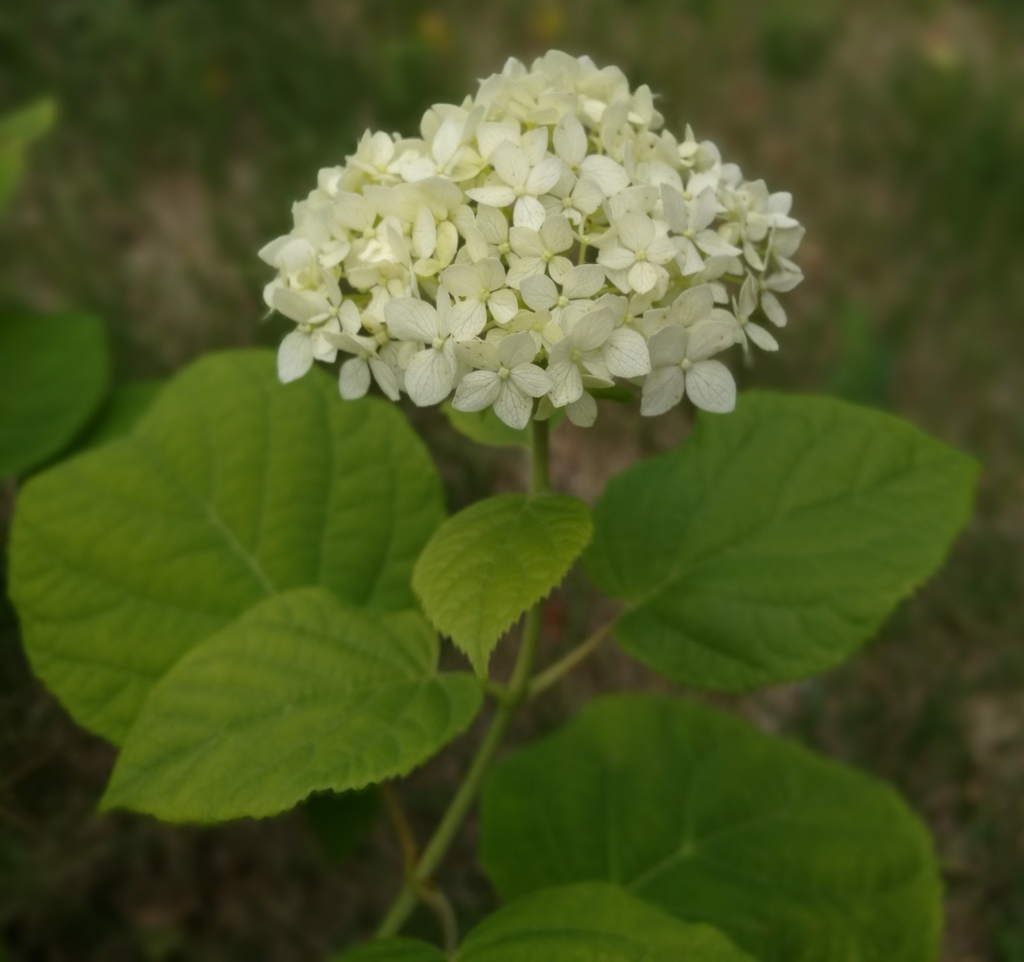
This lovely native shrub is well known for its large, rounded clusters of white flowers that bloom in the summer. It is a hardy plant that brings a classic look to any garden space. You will enjoy how it brightens up shady corners with its soft, mophead blooms.
At a glance
- Care level
- Easy
- Plant type
- Deciduous shrub
- Light
- Partial shade to full sun in cooler climates
- Indoor light
- Bright indirect
- Water
- Every 3 to 7 days
- Mature size
- 3 to 5 feet tall and wide
- Growth rate
- Fast
- Hardiness
- USDA 3 to 9
- Bloom time
- Early to late summer
Care
Keep the soil consistently moist, especially during hot summer days, to prevent wilting. Watch for drooping leaves as a sign that the plant needs a drink. Prune back in late winter to encourage strong new growth for the coming season.
- Watering
- Water deeply whenever the top inch of soil feels dry to the touch.
- Feeding
- Apply a balanced fertilizer once in early spring before new growth appears.
- Pruning
- Cut back stems to the ground in late winter to promote vigorous flowering.
- Repotting
- If growing in a container, move to a larger pot every few years when roots become crowded.
- Soil
- Rich, moist, well draining soil
- Soil pH
- Slightly acidic to neutral
- Temperature
- -30 to 35°C
- Humidity
- 40 to 70%
- Drought tolerance
- Low
- Lifespan
- Perennial, typically 10 to 20 years
- Deer and rabbits
- Moderate
Signs it needs repotting
- Roots growing out of the drainage holes
- Water running straight through the pot without soaking in
- Stunted growth during the active season
Safety
- People
- Ingestion of any part of the plant can cause gastrointestinal distress, nausea, and vomiting.
- Pets
- This plant is toxic to cats and dogs if ingested, as it contains cyanogenic glycosides.
- Children
- Keep this plant away from small children as ingestion of leaves or flowers can cause stomach upset.
- Contact allergens
- Handling the foliage may cause mild skin irritation in sensitive individuals.
- Airborne allergens
- The pollen is generally not considered a significant airborne allergen.
- Edibility
- All parts of this plant are considered toxic if ingested and should not be consumed.
How to identify it
- Large rounded clusters of white flowers
- Broad, oval shaped green leaves
- Stems have a smooth texture
- Deciduous shrub with spreading habit
- Height
- 0.9 to 1.8m
- Spread
- 0.9 to 1.8m
- Leaves
- green, deciduous
- Flowers
- white, green, 10 to 30cm
Problems to watch for
- Powdery mildew · A white fungal growth on leaves often caused by poor air circulation.
- Aphids · Small insects that cluster on new growth and suck plant sap.
Check your smooth hydrangea from a photo
Pocket Botanist looks at a photo of your plant and tells you what's wrong and what to try first.
Scan with your phone's camera to get the app
Or go to pocketbotanist.app/get on your phone
Growing it
- Propagation
- cuttings, division
- When to plant
- spring, fall
- Overwintering
- Cut the stems back to about 15 to 30 centimeters in late winter. Apply a layer of mulch around the base to protect the roots from extreme temperature fluctuations.
- In containers
- It grows well in large containers, provided the pot is at least 40 centimeters wide and has excellent drainage.
Softwood Cuttings
- 1. Take a 10 centimeter cutting from a non-flowering stem in early summer.
- 2. Remove the lower leaves and dip the cut end in rooting hormone.
- 3. Place in a moist, well-draining potting mix.
- 4. Cover with a plastic bag to maintain humidity until roots form.
Pair with moisture-loving perennials to ensure the soil stays cool and damp during the heat of summer.
Grows well with
Similar species
- Bigleaf Hydrangea · It is another popular hydrangea but requires different pruning and has different soil pH sensitivity.
Science
- Family
- Hydrangeaceae
- Genus
- Hydrangea
- Order
- Cornales
- Class
- Magnoliopsida
- Native range
- Eastern United States
- Conservation
- This plant is common in its native range and is not currently of conservation concern.
It naturally grows in moist, rich soils along stream banks and in shaded woodland edges.
- Value to wildlife
- nectar source
- Pollinators
- bees, butterflies
- Uses
- ornamental shrub, mass planting, woodland garden
Through the year
Ecological indicators
- Salinity
- 2/9
- Soil reaction
- 5/9
- Light
- 5/9
- Temperature
- 5/9
- Moisture
- 6/9
- Nutrients
- 6/9
Taxonomy resolved against GBIF.
Questions people ask
- Why are my flowers drooping?
- The large flower heads are heavy and often droop after heavy rain or during dry spells.
- When should I prune it?
- Prune in late winter or early spring before new growth begins.
Where the name comes from
The genus name Hydrangea comes from the Greek words for water and vessel, referring to the seed capsules. The species name arborescens means becoming tree-like.
Good to know
- It is commonly called smooth hydrangea because of the texture of its leaves.
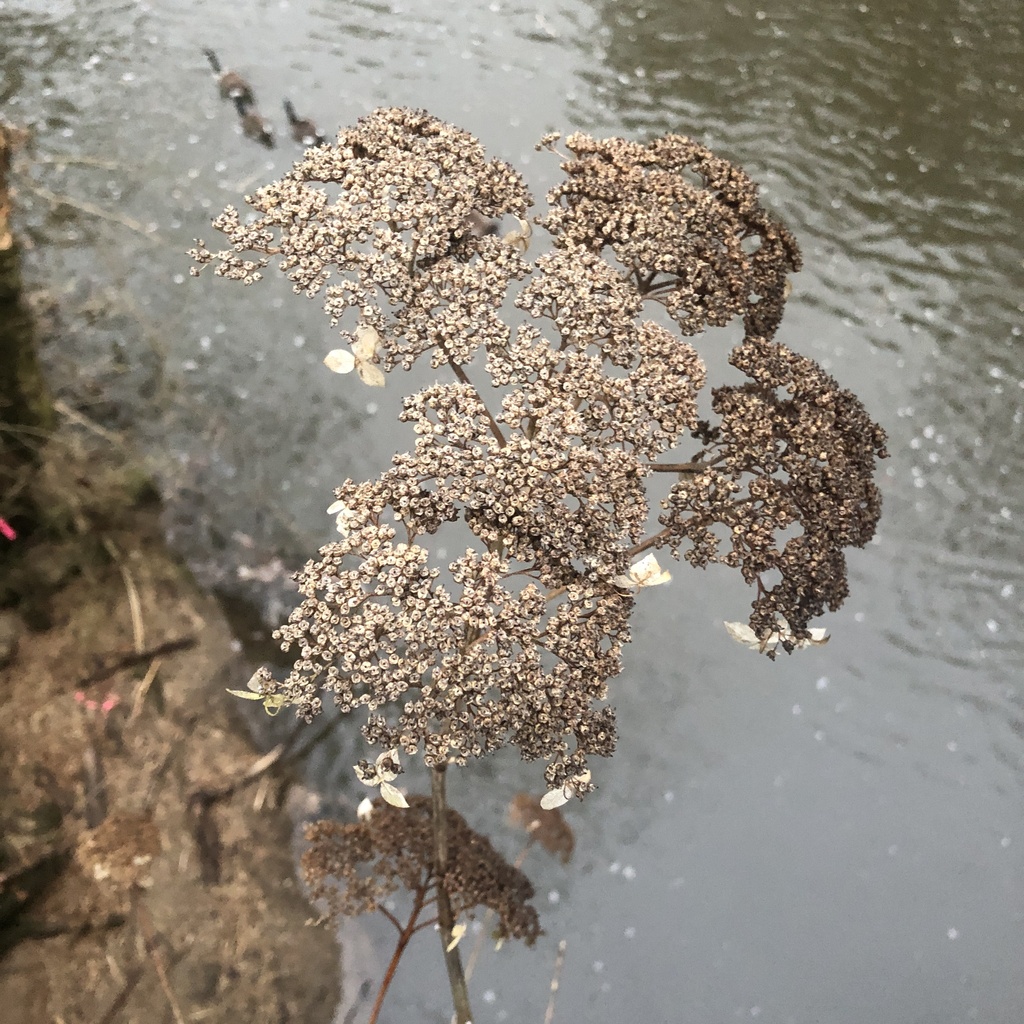
- The flowers can be dried and used in arrangements for winter interest.
- It blooms on new wood, so you can prune it back hard in late winter without losing flowers.
Also in
Keep your smooth hydrangea growing
This page is a general guide. Save your plant in Pocket Botanist and you get care reminders timed for this plant, plus a care history that shows what worked.
Scan with your phone's camera to get the app
Or go to pocketbotanist.app/get on your phone
This guide was generated with AI on and checked against GBIF taxonomy. It is general information, not horticultural or veterinary advice. Read about how we build these guides.