 Pocket Botanist
Plant guide
Boojum tree.
Fouquieria columnaris
Pronounced foo-KEE-air-ee-uh ko-lum-NAR-iss
Also known as boojum tree, boojumtree



Scan with your phone's camera to get the app
Or go to pocketbotanist.app/get on your phone
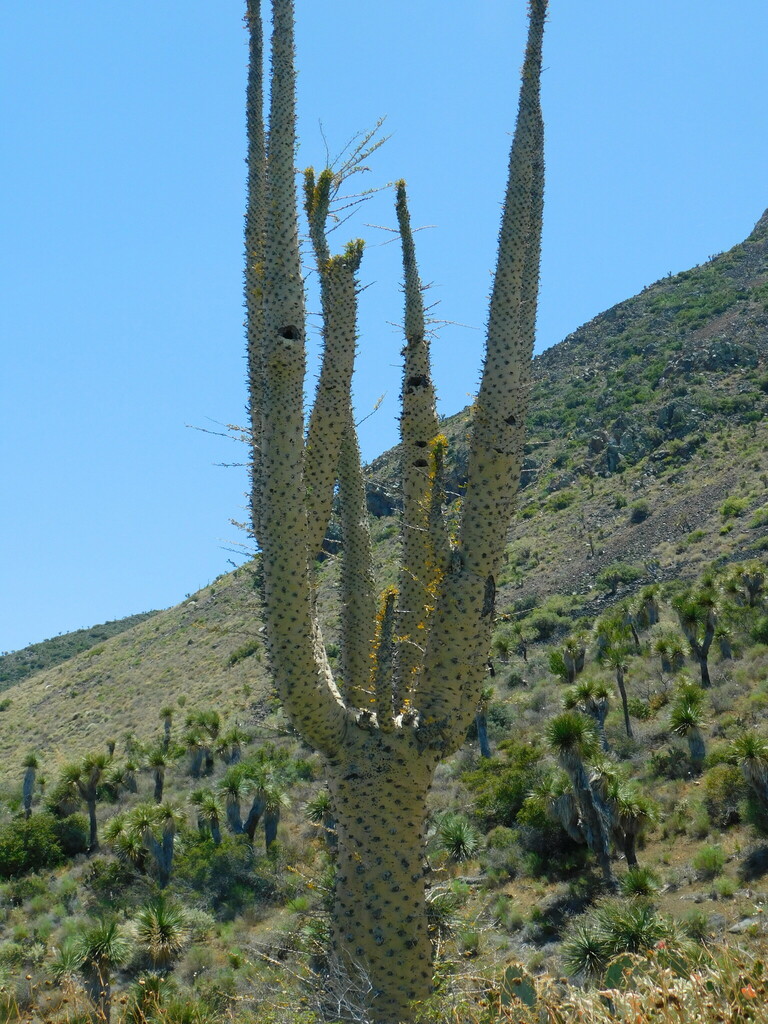
The Boojum tree is a truly unique succulent from the Baja California peninsula that looks like something out of a storybook. It grows as a tall, tapering trunk covered in small thorns and tiny leaves that appear after rain. It is a slow grower that thrives in arid, desert environments.

At a glance
- Care level
- Moderate
- Plant type
- Succulent
- Light
- Full sun
- Indoor light
- Direct sun
- Water
- Every 14 to 30 days
- Mature size
- 15 to 20 meters
- Growth rate
- Slow
- Hardiness
- USDA 9 to 11
- Bloom time
- Late summer to early autumn
Care
This plant needs plenty of sun and very well-draining soil to mimic its native desert home. Watch for mushy stems, which indicate it is getting too much water. Keep it dry during the summer dormant period, when it drops its leaves, to prevent rot.
- Watering
- Water sparingly from autumn to spring while the plant is in leaf, and keep almost completely dry during its summer dormancy.
- Feeding
- Use a balanced, low-nitrogen cactus fertilizer during the active growing months.
- Pruning
- Only prune to remove dead or damaged branches using clean, sharp shears.
- Repotting
- Repot only when the plant has clearly outgrown its container, as it dislikes root disturbance.
- Soil
- Sandy, rocky, fast-draining cactus mix
- Soil pH
- 6.0 to 7.5
- Temperature
- -5 to 45°C
- Humidity
- 10 to 40%
- Drought tolerance
- High
- Lifespan
- Perennial, can live for several hundred years.
- Deer and rabbits
- High
Signs it needs repotting
- Roots growing out of the drainage hole.
- The plant becomes top heavy and unstable.
- Soil has broken down and no longer drains quickly.
Safety
- People
- The plant is not known to be toxic, but its sharp spines pose a significant physical injury risk.
- Children
- The extremely sharp spines make this plant dangerous for children to touch or play near.
- Contact allergens
- The sharp spines can cause mechanical skin irritation or puncture wounds.
- Airborne allergens
- There are no notable airborne allergens associated with this plant.
- Edibility
- This plant is not considered edible and should not be consumed.
How to identify it
- Tall, tapering, pole-like trunk
- Covered in sharp, woody thorns
- Tiny leaves appear after rainfall
- Small yellow flowers on terminal spikes
- Height
- 3 to 15m
- Spread
- 1 to 3m
- Leaves
- green, deciduous
- Flowers
- yellow, cream, 0.5 to 1cm
- Fruit
- brown, Autumn
Problems to watch for
- Root RotCommon
- DehydrationUncommon
- MealybugsUncommon
- Scale InsectsUncommon
Check your boojum tree from a photo
Pocket Botanist looks at a photo of your plant and tells you what's wrong and what to try first.
Scan with your phone's camera to get the app
Or go to pocketbotanist.app/get on your phone
Growing it
- Propagation
- seed, cuttings
- When to plant
- spring
- Overwintering
- Water lightly while the plant is in leaf during the cool months, but never let the soil stay wet in cold weather, to prevent rot. Protect it from hard frosts if possible.
- In containers
- It grows well in large, heavy terracotta pots with excellent drainage, but it is very slow to establish.
Seed
- 1. Sow seeds in a well draining sandy mix.
- 2. Keep the soil barely moist in a warm location.
- 3. Germination can be slow and erratic.
Pair this plant only with other slow growing desert species that require minimal water to avoid competition.
Grows well with
- Ocotillo · They share similar environmental needs and aesthetic desert appeal.
- Saguaro Cactus · These plants thrive in the same harsh, arid conditions.
Similar species
- Ocotillo · It is a close relative with similar growth habits and flowering cycles.
Science
- Family
- Fouquieriaceae
- Genus
- Fouquieria
- Order
- Ericales
- Class
- Magnoliopsida
- Native range
- Baja California and a small part of Sonora, Mexico.
- Conservation
- It is protected in its native range and should never be collected from the wild.
It survives in arid desert environments by dropping its leaves during prolonged drought to conserve moisture.
- Value to wildlife
- nectar source
- Pollinators
- bees, butterflies, hummingbirds
- Uses
- ornamental specimen, xeriscaping
Through the year
Ecological indicators
- Salinity
- 2/9
- Soil reaction
- 7/9
- Light
- 9/9
- Temperature
- 8/9
- Moisture
- 1/9
- Nutrients
- 2/9
Taxonomy resolved against GBIF.
Questions people ask
- Does it need much water?
- No, it is highly drought tolerant and prefers very dry conditions.
- Can I grow it in a pot?
- Yes, but it requires a very large, heavy container and excellent drainage.
Where the name comes from
The genus honors Pierre Fouquier, a French physician, while the species name columnaris refers to its columnar growth habit.
Good to know
- It grows very slowly, sometimes only a few centimeters per year.
- The trunk is often twisted or bent in strange, sculptural shapes.
- It is a member of the Ocotillo family.
- The plant can survive for hundreds of years.
Also in
Keep your boojum tree growing
This page is a general guide. Save your plant in Pocket Botanist and you get care reminders timed for this plant, plus a care history that shows what worked.
Scan with your phone's camera to get the app
Or go to pocketbotanist.app/get on your phone
This guide was generated with AI on and checked against GBIF taxonomy. It is general information, not horticultural or veterinary advice. Read about how we build these guides.