 Pocket Botanist
Plant guide
Torch Ginger.
Etlingera elatior
Pronounced et-LIN-jer-uh eh-LAY-tee-or
Also known as Philippine Waxflower, Porcelain Rose, Siam Rose, Torch Ginger, Torch Lily, Torch-Ginger



Scan with your phone's camera to get the app
Or go to pocketbotanist.app/get on your phone

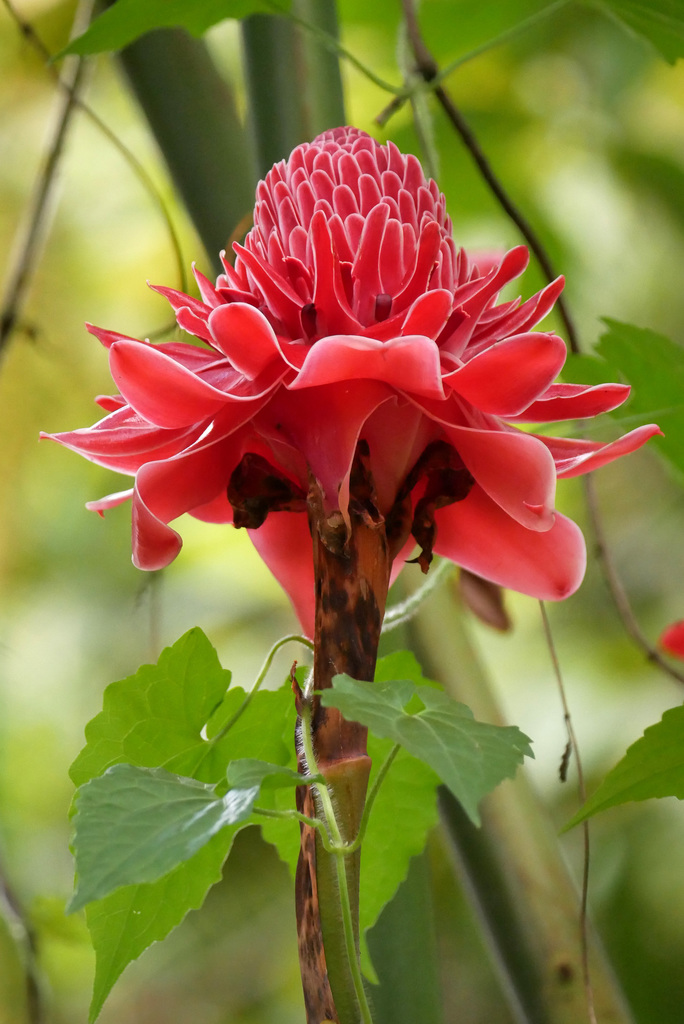
Torch ginger is a stunning tropical perennial known for its waxy, cone shaped flower heads. It thrives in warm, humid environments and makes a bold statement in any garden. You will love how its vibrant colors bring a touch of the tropics to your space.
At a glance
- Care level
- Moderate
- Plant type
- Tropical perennial
- Light
- Partial shade to bright indirect light
- Indoor light
- Bright indirect
- Water
- Every 2 to 4 days
- Mature size
- 15 to 20 feet
- Growth rate
- Fast
- Hardiness
- USDA 10 to 12
- Bloom time
- Spring to late summer
Care
Keep the soil consistently moist and provide plenty of humidity to mimic its native rainforest home. Watch for yellowing leaves which often signal that the plant needs more water or higher humidity. Ensure it is protected from cold drafts and direct freezing temperatures.
- Watering
- Keep the soil evenly moist but never waterlogged.
- Feeding
- Use a balanced liquid fertilizer during the active growing season.
- Pruning
- Remove old or damaged stems to encourage fresh growth.
- Repotting
- Repot when the rhizomes become too crowded for the current container.
- Soil
- Rich, organic, well-draining soil
- Soil pH
- 5.5 to 6.5
- Temperature
- 15 to 35°C
- Humidity
- 70 to 90%
- Drought tolerance
- Low
- Lifespan
- Perennial, typically 10 to 20 years
- Fragrance
- Light
- Deer and rabbits
- Moderate
Signs it needs repotting
- Roots growing out of the drainage holes
- Stunted growth despite regular feeding
- Soil drying out too quickly
Safety
- People
- The plant is generally considered non toxic, but raw consumption may cause mild mouth irritation.
- Children
- The large, stiff stalks can be a tripping hazard or cause minor scratches if children play near them.
- Contact allergens
- The sap can cause mild skin irritation in sensitive individuals.
- Airborne allergens
- There are no notable airborne allergens associated with this plant.
- Edibility
- The flower buds and young shoots are edible when cooked, but ensure proper identification as some related species may cause irritation.
How to identify it
- Waxy cone shaped flower heads
- Large lance shaped green leaves
- Tall clumping pseudostems
- Bright pink or red bracts
- Height
- 3 to 6m
- Spread
- 1.5 to 3m
- Leaves
- dark green, evergreen
- Flowers
- red, pink, 15 to 25cm
- Fruit
- green, red, Autumn
Problems to watch for
- Leaf SpotCommon
- Scale InsectsCommon
- MealybugsUncommon
- Root RotUncommon
- Sooty MoldUncommon
- Spider MitesUncommon
Check your torch ginger from a photo
Pocket Botanist looks at a photo of your plant and tells you what's wrong and what to try first.
Scan with your phone's camera to get the app
Or go to pocketbotanist.app/get on your phone
Growing it
- Propagation
- division, seed
- When to plant
- spring, summer
- Overwintering
- In cooler climates, move the container indoors to a warm, bright spot before the first frost. Keep the soil consistently moist but not waterlogged during the winter months.
- In containers
- It can grow in large containers, but requires a pot at least 50 centimeters wide to accommodate its vigorous root system.
Division
- 1. Carefully dig up a mature clump.
- 2. Use a sharp, clean spade to divide the rhizomes.
- 3. Ensure each section has at least one healthy shoot.
- 4. Replant immediately in rich, moist soil.
Group this plant with other tropical moisture lovers to create a microclimate that maintains high humidity.
Grows well with
- Heliconia · They share similar tropical moisture and light requirements.
- Calathea · These plants thrive in the same shady, humid conditions.
Similar species
- Ginger Lily · Both are members of the ginger family with similar growth habits.
Science
- Family
- Zingiberaceae
- Genus
- Etlingera
- Order
- Zingiberales
- Class
- Liliopsida
- Native range
- Southeast Asia
- Conservation
- This species is not currently listed as endangered or threatened in its native range.
It thrives in the understory of tropical rainforests where it benefits from dappled light and high humidity.
- Value to wildlife
- nectar source
- Pollinators
- bees, butterflies, hummingbirds
- Uses
- ornamental, culinary, cut flower
Through the year
Ecological indicators
- Salinity
- 1/9
- Soil reaction
- 6/9
- Light
- 4/9
- Temperature
- 9/9
- Moisture
- 8/9
- Nutrients
- 7/9
Taxonomy resolved against GBIF.
Questions people ask
- Does it need full sun?
- It prefers partial shade to protect the leaves from scorching.
- Can I grow it in a pot?
- Yes, but it requires a very large container and consistent moisture.
Where the name comes from
The genus name honors the German botanist Andreas Ernst Etlinger, while the specific epithet elatior means taller.
Good to know
- The flower head looks like a torch, earning it the common name torch ginger.
- It is a key ingredient in the Malaysian dish laksa.
- The flowers are extremely long lasting in vases.
- It grows best in rich, organic soil with plenty of moisture.
Also in
Keep your torch ginger growing
This page is a general guide. Save your plant in Pocket Botanist and you get care reminders timed for this plant, plus a care history that shows what worked.
Scan with your phone's camera to get the app
Or go to pocketbotanist.app/get on your phone
This guide was generated with AI on and checked against GBIF taxonomy. It is general information, not horticultural or veterinary advice. Read about how we build these guides.