 Pocket Botanist
Plant guide
Winter Aconite.
Eranthis hyemalis
Pronounced eh-RAN-this hy-em-AH-liss
Also known as Choirboys, Winter Aconite



Scan with your phone's camera to get the app
Or go to pocketbotanist.app/get on your phone

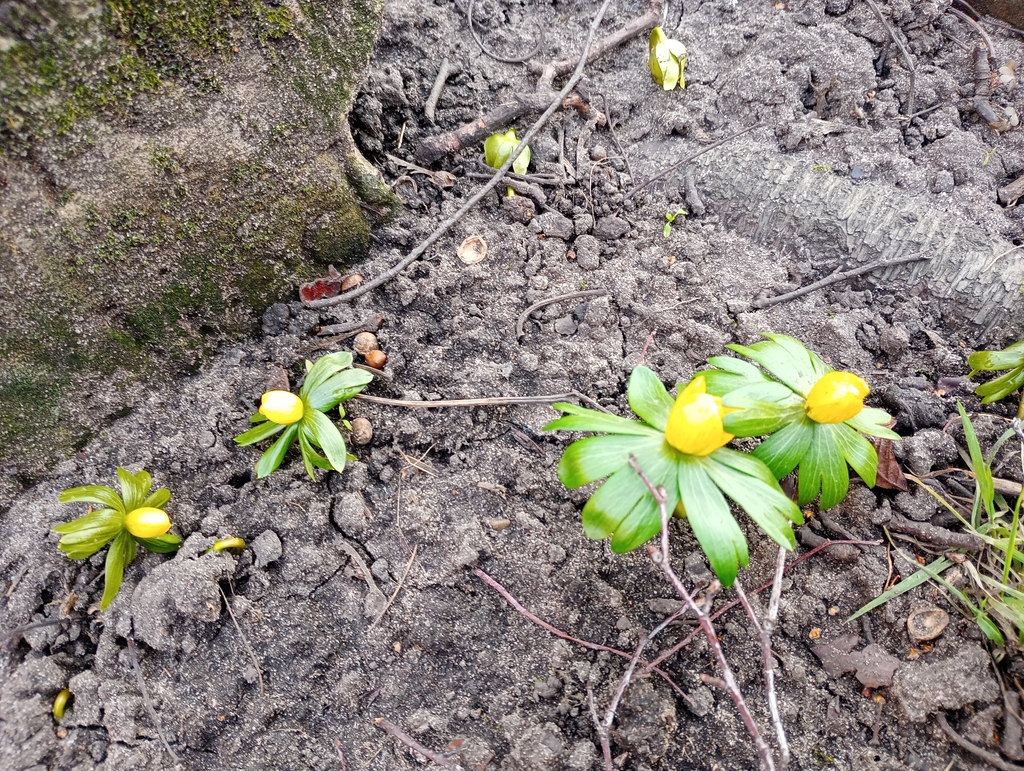
Winter aconite is a cheerful little bulb that pops up in late winter or early spring. It features bright yellow, cup shaped flowers surrounded by a ruff of green leaves. These plants are perfect for naturalizing under deciduous trees.
At a glance
- Care level
- Easy
- Plant type
- Perennial bulb
- Light
- Partial shade to full sun
- Indoor light
- Bright indirect
- Water
- Every 7 to 14 days
- Mature size
- 3 to 6 inches
- Growth rate
- Medium
- Hardiness
- USDA 3 to 7
- Bloom time
- Late winter to early spring
Care
Plant these bulbs in autumn in a spot that gets plenty of spring sun before trees leaf out. Keep the soil consistently moist while they are actively growing. Watch for yellowing leaves as the plant goes dormant in late spring.
- Watering
- Keep the soil moist but not waterlogged during the active growing season.
- Feeding
- Apply a balanced bulb fertilizer once in early spring as growth begins.
- Pruning
- Remove dead foliage only after it has turned yellow and withered naturally.
- Repotting
- Bulbs rarely need repotting unless they become too crowded in their container.
- Soil
- Humus rich, well draining soil
- Soil pH
- Neutral to slightly alkaline
- Temperature
- -40 to 25°C
- Humidity
- 40 to 70%
- Drought tolerance
- Moderate
- Lifespan
- Perennial, typically 5 to 10 years
- Deer and rabbits
- High
Signs it needs repotting
- Roots growing out of the drainage holes
- Stunted growth compared to previous years
Safety
- People
- The plant contains cardiac glycosides that are poisonous to humans and pets if eaten.
- Pets
- This plant is toxic to cats and dogs if ingested.
- Children
- Keep this plant away from children as the tubers look like small bulbs and are highly toxic when swallowed.
- Contact allergens
- The sap can cause skin irritation or dermatitis in sensitive individuals.
- Airborne allergens
- There is no significant evidence of airborne pollen allergies for this species.
- Edibility
- All parts of this plant are toxic if ingested and can cause severe digestive distress.
How to identify it
- Bright yellow cup shaped flowers
- Deeply lobed green foliage ruff
- Low growing habit
- Blooms in late winter
- Height
- 0.05 to 0.15m
- Spread
- 0.05 to 0.1m
- Leaves
- green, deciduous
- Flowers
- yellow, 2 to 3cm
- Fruit
- green, brown, Late spring
Problems to watch for
- Slugs and SnailsCommon
- Bulb RotUncommon
- Root RotUncommon
- Botrytis BlightRare
Check your winter aconite from a photo
Pocket Botanist looks at a photo of your plant and tells you what's wrong and what to try first.
Scan with your phone's camera to get the app
Or go to pocketbotanist.app/get on your phone
Growing it
- Propagation
- division, seed
- When to plant
- autumn
- Overwintering
- No special care is needed as the tubers are hardy and dormant during the coldest months.
- In containers
- They are best suited for the ground but can be grown in shallow pots if kept cool.
Division
- Wait until the foliage begins to yellow in late spring.
- Carefully lift the clumps with a garden fork.
- Separate the tubers and replant them immediately in a new location.
Plant these in drifts under deciduous trees to mimic their natural woodland habitat.
Grows well with
Similar species
- Buttercup · They share the same family and similar yellow flower structures.
Science
- Family
- Ranunculaceae
- Genus
- Eranthis
- Order
- Ranunculales
- Class
- Magnoliopsida
- Native range
- Europe and western Asia
- Conservation
- This species is not currently threatened and is widely naturalized in many regions.
It grows in deciduous woodlands where it completes its life cycle before the tree canopy fully leafs out.
- Value to wildlife
- early nectar source
- Pollinators
- bees
- Uses
- woodland gardens, rock gardens, early spring color
Through the year
Ecological indicators
- Salinity
- 1/9
- Soil reaction
- 6/9
- Light
- 5/9
- Temperature
- 3/9
- Moisture
- 6/9
- Nutrients
- 5/9
Taxonomy resolved against GBIF.
Questions people ask
- When should I plant winter aconite?
- Plant the tubers in early autumn while they are still fresh.
- Why didn't my tubers grow?
- Tubers often dry out too much before planting; try soaking them in water for a few hours before putting them in the ground.
Where the name comes from
The genus name Eranthis comes from the Greek words for spring and flower, while hyemalis refers to its winter blooming habit.
Good to know
- Winter aconite is a member of the buttercup family.
- The plant goes dormant by late spring after setting seed.
- It thrives in the dappled shade provided by deciduous trees.
Also in
Keep your winter aconite growing
This page is a general guide. Save your plant in Pocket Botanist and you get care reminders timed for this plant, plus a care history that shows what worked.
Scan with your phone's camera to get the app
Or go to pocketbotanist.app/get on your phone
This guide was generated with AI on and checked against GBIF taxonomy. It is general information, not horticultural or veterinary advice. Read about how we build these guides.