 Pocket Botanist
Plant guide
Flame tree.
Delonix regia
Pronounced deh-LON-iks REE-jee-uh
Also known as Flamboyan, Flamboyant, Flamboyant Tree, Flame Tree, Flame of the Forest, Gold Mohar, July Tree, May-flower Tree



Scan with your phone's camera to get the app
Or go to pocketbotanist.app/get on your phone

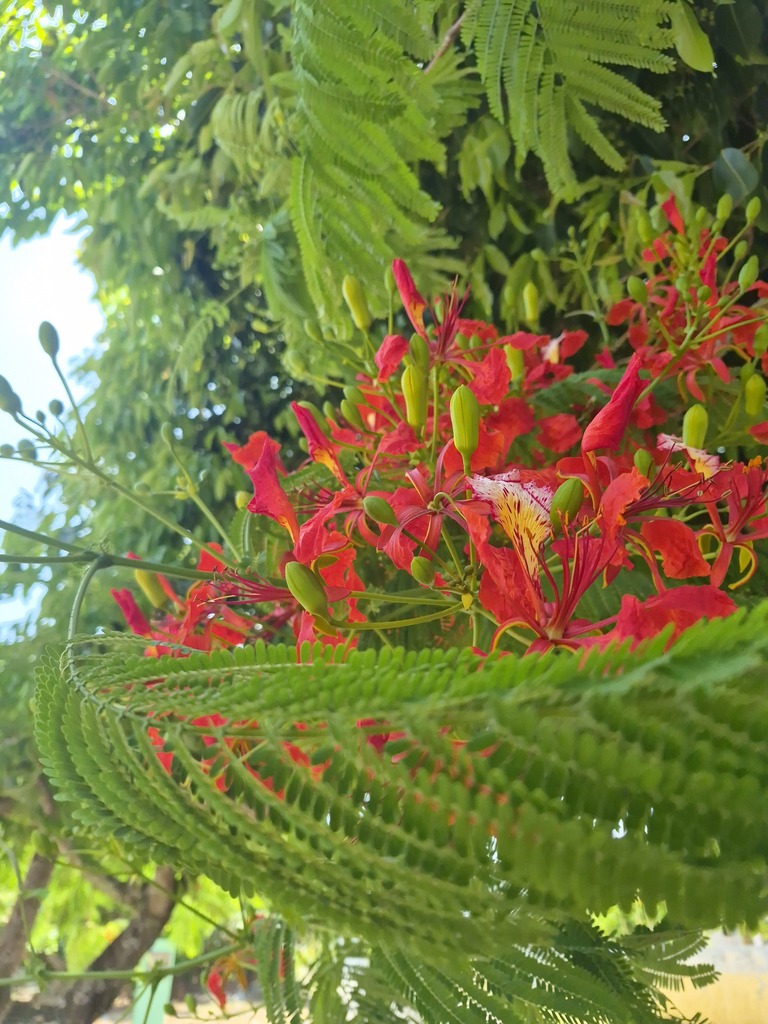
The flame tree is a stunning tropical specimen famous for its vibrant, fiery red flowers that cover the canopy. It thrives in warm climates and makes a dramatic statement in large gardens. You will love how it transforms your outdoor space during its blooming season.
At a glance
- Care level
- Moderate
- Plant type
- Deciduous tree
- Light
- Full sun
- Indoor light
- Direct sun
- Water
- Every 7 to 14 days
- Mature size
- 40 feet
- Growth rate
- Fast
- Hardiness
- USDA 10 to 12
- Bloom time
- Late spring to early summer
Care
Plant this tree in a spot with plenty of room for its expansive roots and canopy. Watch for yellowing leaves which can signal poor drainage or nutrient issues. It prefers deep, infrequent watering once established to encourage a strong root system.
- Watering
- Water deeply when the top few inches of soil feel dry to the touch.
- Feeding
- Apply a balanced fertilizer during the active growing season to support flowering.
- Pruning
- Prune during the dormant season to remove dead wood and maintain a balanced shape.
- Repotting
- Repot only when the tree is young, as it is best suited for permanent ground planting.
- Soil
- Well draining sandy or loamy soil
- Soil pH
- 6.0 to 7.5
- Temperature
- 10 to 45°C
- Humidity
- 40 to 80%
Safety
- People
- All parts of the plant are considered mildly toxic if ingested.
- Pets
- This plant is considered toxic to cats and dogs if ingested.
- Children
- Keep children away from the large, hard seed pods as they pose a choking hazard.
- Contact allergens
- The sap may cause mild skin irritation in sensitive individuals.
- Airborne allergens
- There is no significant evidence of airborne allergens from this tree.
- Edibility
- The seeds are considered toxic if ingested and should not be consumed.
How to identify it
- Large fern like bipinnate leaves
- Massive clusters of bright red flowers
- Spreading umbrella shaped canopy
- Long woody dark brown seed pods
- Height
- 5 to 12m
- Spread
- 6 to 15m
- Leaves
- bright green, deciduous
- Flowers
- red, orange, 8 to 15cm
- Fruit
- dark brown, Late summer to autumn
Problems to watch for
- CaterpillarsCommon
- ChlorosisUncommon
- Leaf ScorchUncommon
- Root RotUncommon
Check your flame tree from a photo
Pocket Botanist looks at a photo of your plant and tells you what's wrong and what to try first.
Scan with your phone's camera to get the app
Or go to pocketbotanist.app/get on your phone
Growing it
- Propagation
- seed, cuttings
- When to plant
- spring
Plant smaller, drought tolerant shrubs around the base to avoid disturbing the shallow root system.
Grows well with
- Bougainvillea · They share similar tropical light and water requirements.
- Hibiscus · These shrubs provide a nice color contrast beneath the canopy.
Similar species
- Jacaranda · Both are popular tropical trees with fern-like foliage.
Science
- Family
- Fabaceae
- Genus
- Delonix
- Order
- Fabales
- Class
- Magnoliopsida
- Native range
- Madagascar
- Conservation
- This species is listed as vulnerable in its native habitat of Madagascar due to habitat loss.
It is adapted to survive in seasonally dry forests by dropping its leaves to conserve water.
- Value to wildlife
- nectar source
- Pollinators
- bees, butterflies, hummingbirds
- Uses
- ornamental shade tree, street tree, park specimen
Through the year
Ecological indicators
- Salinity
- 3/9
- Soil reaction
- 6/9
- Light
- 8/9
- Temperature
- 9/9
- Moisture
- 4/9
- Nutrients
- 5/9
Taxonomy resolved against GBIF.
Questions people ask
- Can I grow this in a pot?
- It is generally too large for long term container growth, though it can be kept as a bonsai.
- Does it need full sun?
- Yes, it requires full sun to bloom effectively.
Where the name comes from
Delonix comes from the Greek words for obvious claw, referring to the petals, while regia means royal.
Good to know
- It is often called the Flame of the Forest because of its intense red blooms.
- The tree is native to the dry deciduous forests of Madagascar.
- It can grow quite rapidly in ideal tropical conditions.
- The wood is relatively soft and can be brittle during high winds.
Also in
Keep your flame tree growing
This page is a general guide. Save your plant in Pocket Botanist and you get care reminders timed for this plant, plus a care history that shows what worked.
Scan with your phone's camera to get the app
Or go to pocketbotanist.app/get on your phone
This guide was generated with AI on and checked against GBIF taxonomy. It is general information, not horticultural or veterinary advice. Read about how we build these guides.