 Pocket Botanist
Plant guide
Rabbit's Foot Fern.
Davallia fejeensis
Pronounced da-VAL-ee-uh fay-jee-EN-sis
Also known as Lacy hare's-foot fern



Scan with your phone's camera to get the app
Or go to pocketbotanist.app/get on your phone
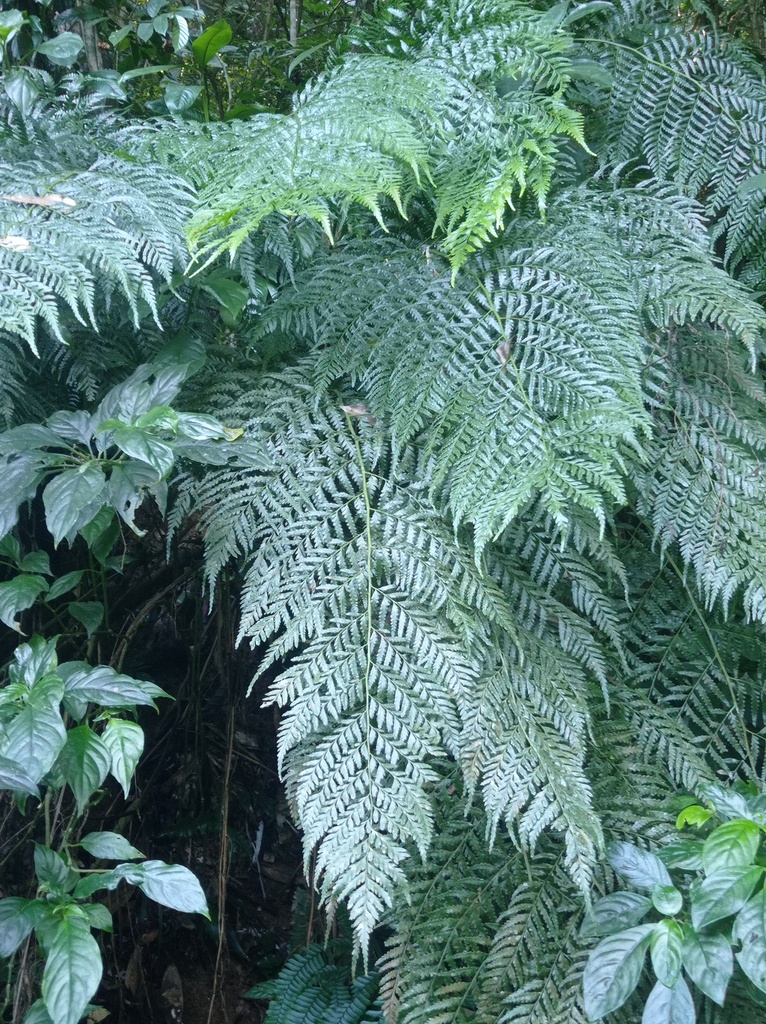
The Rabbit's Foot Fern is a charming epiphyte known for its fuzzy, creeping rhizomes that spill over the edges of pots. It thrives in humid environments and makes a fantastic hanging basket specimen. Keep it away from drafts to prevent the delicate fronds from drying out.
At a glance
- Care level
- Moderate
- Plant type
- Fern
- Light
- Bright indirect light, avoid direct sun.
- Indoor light
- Bright indirect
- Water
- Every 3 to 7 days
- Mature size
- 30 to 60 cm
- Growth rate
- Medium
- Hardiness
- USDA 10 to 12
Care
Keep the soil consistently moist but never soggy to avoid root rot. Watch for brown, crispy frond tips, which often indicate the air is too dry or the plant needs more water. Ensure the rhizomes are not buried deep in the soil, as they prefer to creep along the surface.
- Watering
- Water when the top inch of soil feels slightly dry to the touch.
- Feeding
- Use a balanced liquid fertilizer diluted to half strength during the growing season.
- Pruning
- Trim away any yellow or brown fronds at the base to keep the plant tidy.
- Repotting
- Repot only when the rhizomes have completely filled the container.
- Soil
- Peat based, well draining potting mix.
- Soil pH
- 5.5 to 6.5
- Temperature
- 15 to 27°C
- Humidity
- 60 to 90%
- Drought tolerance
- Low
- Lifespan
- Perennial, typically 5 to 10 years with proper care.
- Deer and rabbits
- Moderate
Signs it needs repotting
- Rhizomes have completely covered the surface of the soil.
- The plant dries out much faster than usual.
- Growth has noticeably slowed during the active season.
Safety
- People
- This plant is generally considered non-toxic to humans.
- Pets
- This plant is considered non-toxic to cats and dogs.
- Children
- The fuzzy rhizomes may be tempting to touch but are not inherently dangerous to children.
- Edibility
- This plant is not intended for consumption.
How to identify it
- Fuzzy brown rhizomes resembling rabbit feet
- Finely divided, lacy green fronds
- Creeping growth habit
- Delicate, arching foliage
- Height
- 0.3 to 0.6m
- Spread
- 0.3 to 0.6m
- Leaves
- green, evergreen
- Flowers
- 0cm
Problems to watch for
- Scale InsectsCommon
- Tip BurnCommon
- Fungus GnatsUncommon
- Spider MitesUncommon
Check your rabbit's foot fern from a photo
Pocket Botanist looks at a photo of your plant and tells you what's wrong and what to try first.
Scan with your phone's camera to get the app
Or go to pocketbotanist.app/get on your phone
Growing it
- Propagation
- division, spores
- When to plant
- spring, summer
- Overwintering
- Keep the plant away from cold drafts and heating vents. Ensure it stays in a room with stable, warm temperatures.
- In containers
- It is excellent for hanging baskets, which allow the rhizomes to trail naturally over the sides.
Division
- Gently remove the plant from its pot.
- Cut a section of the rhizome that has at least one healthy frond attached.
- Place the rhizome section on top of moist, well-draining potting mix.
- Secure it with a pin or wire until it roots.
Group this fern with other moisture-loving plants to create a microclimate that boosts ambient humidity.
Grows well with
- Peace Lily · They share similar requirements for high humidity and indirect light.
- Pothos · Both plants thrive in warm, indoor environments with consistent moisture.
Similar species
- White Rabbit's Foot Fern · It features similar fuzzy rhizomes but has a slightly different growth habit.
Science
- Family
- Davalliaceae
- Genus
- Davallia
- Order
- Polypodiales
- Class
- Polypodiopsida
- Native range
- Fiji and surrounding Pacific islands.
- Conservation
- This species is not currently listed as threatened in the wild.
It grows as an epiphyte on trees or rocks in humid tropical forests.
- Uses
- hanging basket specimen, indoor foliage plant
Through the year
Ecological indicators
- Salinity
- 1/9
- Soil reaction
- 5/9
- Light
- 3/9
- Moisture
- 7/9
- Nutrients
- 4/9
- Temperature
- 8/9
Taxonomy resolved against GBIF.
Questions people ask
- Why are the rhizomes fuzzy?
- The fuzz helps the plant retain moisture and protects it from drying out.
- Can I bury the rhizomes?
- No, the rhizomes should sit on top of the soil to prevent rot.
Where the name comes from
The genus honors the Swiss botanist Edmond Davall, while the species name refers to its native Fiji.
Good to know
- It is commonly called the Rabbit's Foot Fern.
- The rhizomes creep over the edge of pots.
- It thrives in bright, indirect light.
- The fronds are finely divided and lacy.
Keep your rabbit's foot fern growing
This page is a general guide. Save your plant in Pocket Botanist and you get care reminders timed for this plant, plus a care history that shows what worked.
Scan with your phone's camera to get the app
Or go to pocketbotanist.app/get on your phone
This guide was generated with AI on and checked against GBIF taxonomy. It is general information, not horticultural or veterinary advice. Read about how we build these guides.