 Pocket Botanist
Plant guide
Firecracker flower.
Crossandra infundibuliformis
Pronounced kro-SAN-druh in-fun-dib-yoo-lih-FOR-mis
Also known as firecracker-flower, firecracker-plant



Scan with your phone's camera to get the app
Or go to pocketbotanist.app/get on your phone
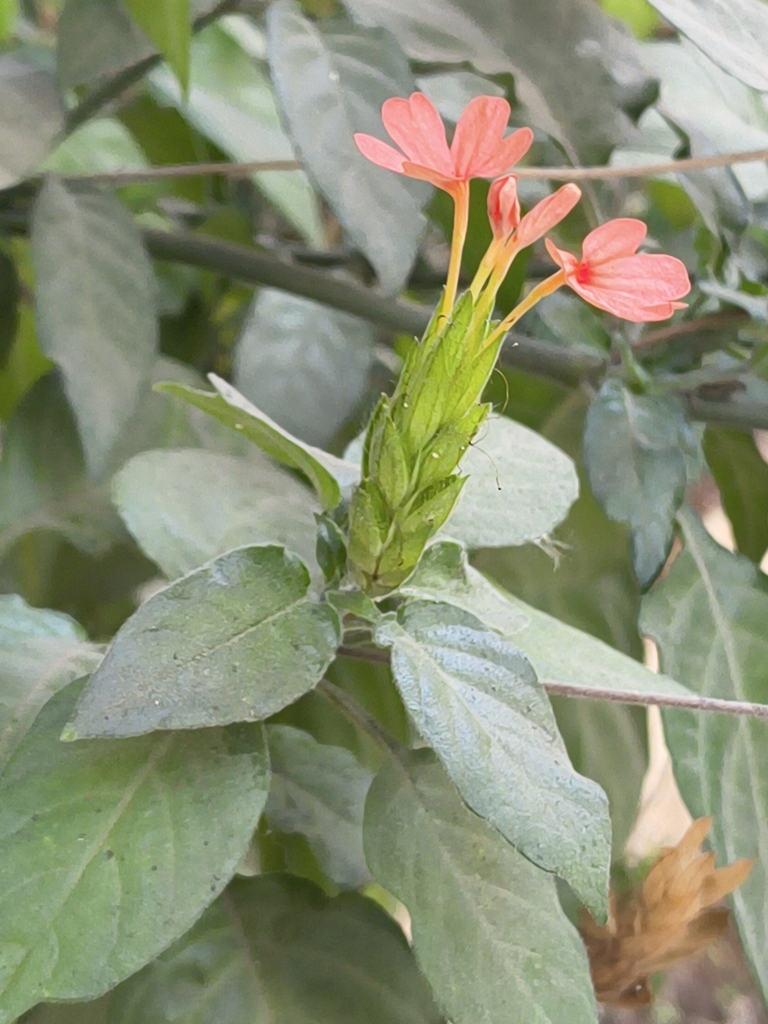
The firecracker flower is a cheerful tropical shrub that produces vibrant, fan shaped blooms. It loves warmth and humidity, making it a great choice for bright indoor spots. You will enjoy its long blooming season if you keep it happy.
At a glance
- Care level
- Moderate
- Plant type
- Tropical evergreen shrub
- Light
- Bright indirect light is best, though it can handle some morning sun.
- Indoor light
- Bright indirect
- Water
- Every 5 to 7 days
- Mature size
- 1 to 3 feet
- Growth rate
- Medium
- Hardiness
- USDA 10 to 11
- Bloom time
- Spring to fall
Care
Keep the soil consistently moist but never soggy, as this plant dislikes drying out completely. High humidity is key to preventing leaf drop and encouraging continuous flowering. Watch for yellowing leaves, which often signal that the soil is too wet or the air is too dry.
- Watering
- Water when the top inch of soil feels dry to the touch.
- Feeding
- Feed with a balanced liquid fertilizer during the active growing season.
- Pruning
- Pinch back stems to encourage a bushier shape and more blooms.
- Repotting
- Repot in the spring when the roots begin to crowd the container.
- Soil
- Well draining, peat based potting mix
- Soil pH
- 6.1 to 7.5
- Temperature
- 15 to 30°C
- Humidity
- 60 to 80%
- Drought tolerance
- Low
- Lifespan
- Short-lived perennial, often grown as an annual.
- Deer and rabbits
- Moderate
Signs it needs repotting
- Roots growing out of the drainage holes.
- Water running straight through the pot without soaking in.
- Stunted growth during the active season.
Safety
- People
- The plant is generally considered non-toxic, but ingestion should be avoided.
- Pets
- This plant is generally considered non toxic to cats and dogs.
- Children
- Keep out of reach of small children to prevent accidental ingestion of leaves or flowers.
- Contact allergens
- No specific skin irritants are known.
- Airborne allergens
- No notable airborne allergens are associated with this plant.
- Edibility
- This plant is not intended for consumption and may cause digestive upset if ingested.
How to identify it
- Glossy dark green leaves
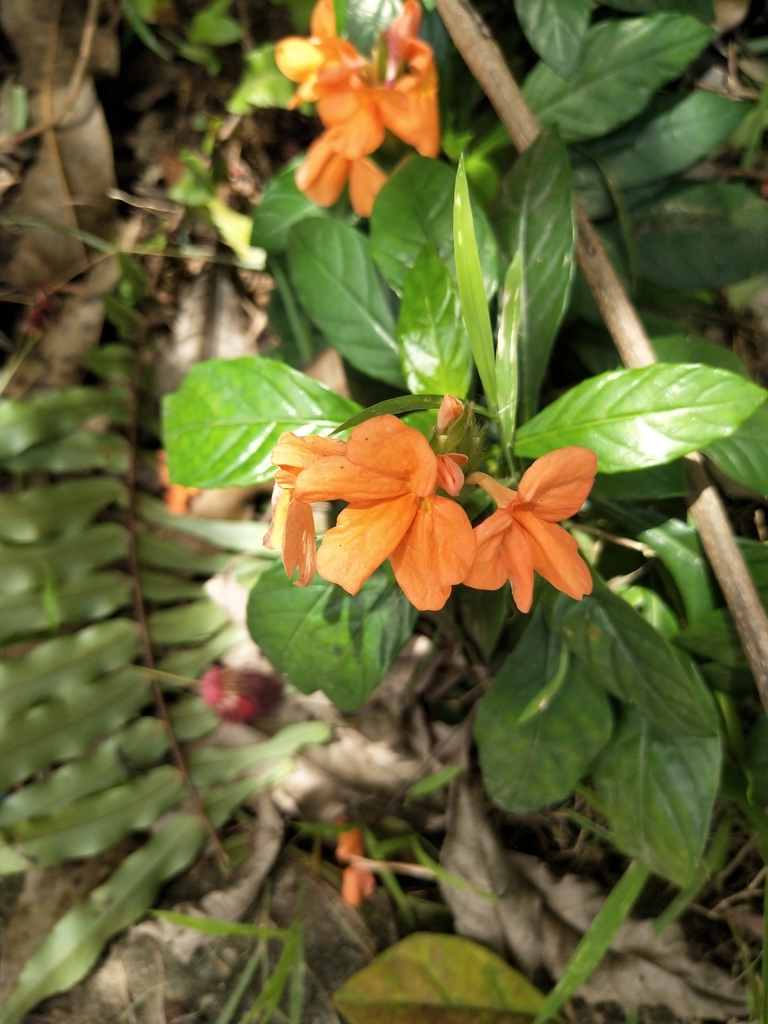
- Bright orange or salmon flowers
- Spikes of fan shaped blooms
- Compact bushy growth habit
- Height
- 0.3 to 0.9m
- Spread
- 0.3 to 0.6m
- Leaves
- dark green, glossy, evergreen
- Flowers
- orange, apricot, coral, 2 to 5cm
Problems to watch for
- Root RotCommon
- Spider MitesCommon
- AphidsUncommon
- Brown Leaf EdgesUncommon
- Fungus GnatsUncommon
- Leaf DropUncommon
- MealybugsUncommon
- WhiteflyUncommon
Check your firecracker flower from a photo
Pocket Botanist looks at a photo of your plant and tells you what's wrong and what to try first.
Scan with your phone's camera to get the app
Or go to pocketbotanist.app/get on your phone
Growing it
- Propagation
- cuttings, seed
- When to plant
- spring, early summer
- Overwintering
- Bring containers indoors before temperatures drop below 15 degrees Celsius. Place in a bright spot away from cold drafts.
- In containers
- It is an excellent container plant that prefers a pot with good drainage and a size of at least 15 to 20 centimeters.
Stem Cuttings
- Take a 10 centimeter cutting from a healthy stem.
- Remove the lower leaves.
- Place in moist potting mix and cover with a plastic bag to maintain humidity.
Group this plant with other tropicals to create a microclimate that helps maintain necessary humidity levels.
Grows well with
- Ferns · They share similar requirements for high humidity and indirect light.
- Peace Lily · Both plants thrive in warm, humid indoor environments.
Similar species
- Aphelandra · Another tropical plant with showy, long-lasting blooms.
Science
- Family
- Acanthaceae
- Genus
- Crossandra
- Order
- Lamiales
- Class
- Magnoliopsida
- Native range
- Southern India and Sri Lanka.
- Conservation
- This species is not currently threatened in its native habitat.
It grows as an understory plant in tropical forests, where it benefits from dappled light and high humidity.
- Value to wildlife
- nectar source
- Pollinators
- butterflies
- Uses
- container plant, houseplant, tropical bedding
Through the year
Ecological indicators
- Salinity
- 2/9
- Soil reaction
- 6/9
- Light
- 6/9
- Temperature
- 8/9
- Moisture
- 7/9
- Nutrients
- 6/9
Taxonomy resolved against GBIF.
Questions people ask
- Does it need direct sun?
- It prefers bright, indirect light to keep the foliage healthy and blooming.
- How often should I water?
- Keep the soil consistently moist but never waterlogged.
Where the name comes from
The scientific name infundibuliformis refers to the funnel shape of the individual flowers.
Good to know
- It is commonly called the firecracker flower because of its vibrant orange color.
- The genus name comes from the Greek words for fringe and man, referring to the fringed anthers.
- It is a popular choice for indoor color in cooler climates.
Keep your firecracker flower growing
This page is a general guide. Save your plant in Pocket Botanist and you get care reminders timed for this plant, plus a care history that shows what worked.
Scan with your phone's camera to get the app
Or go to pocketbotanist.app/get on your phone
This guide was generated with AI on and checked against GBIF taxonomy. It is general information, not horticultural or veterinary advice. Read about how we build these guides.