 Pocket Botanist
Plant guide
Cabbage tree.
Cordyline australis
Pronounced kor-di-LY-nee aw-STRAH-liss
Also known as Cabbage Tree, Cabbage-Palm, New Zealand cabbagetree, Palm Lily, cabbagetree, fountain-dracaena, giant-dracaena, grass-palm


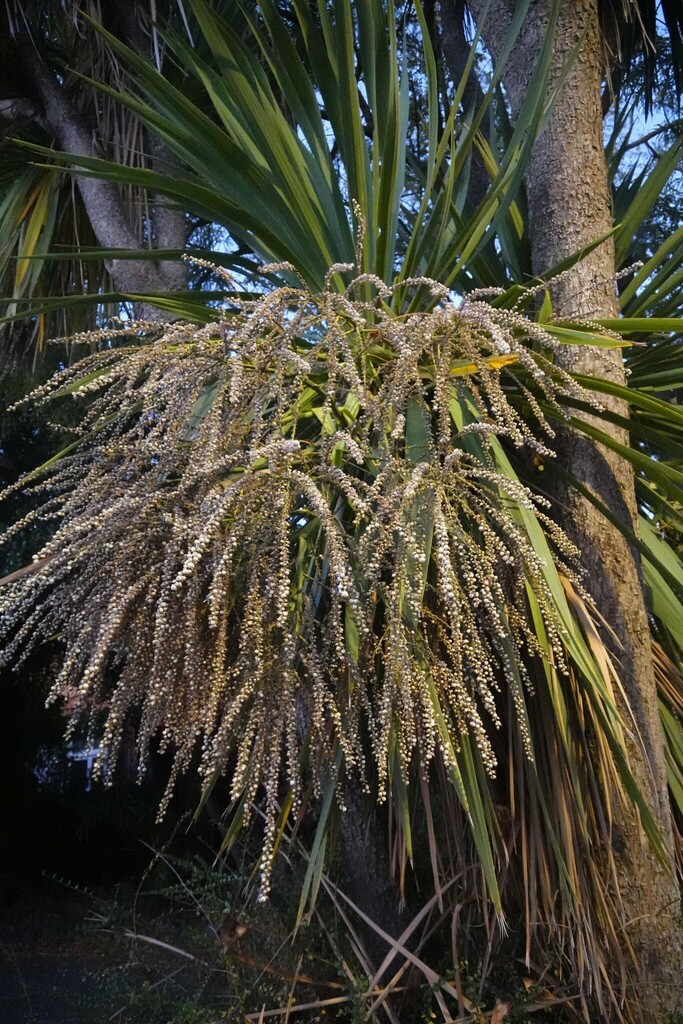
The cabbage tree is a striking, palm like plant native to New Zealand. It brings a tropical feel to your space with its sword shaped leaves and architectural form. You will love how it stands out as a focal point in any bright room.

At a glance
- Care level
- Easy
- Plant type
- Evergreen tree
- Light
- Full sun to partial shade
- Indoor light
- Bright indirect
- Water
- Every 7 to 10 days
- Mature size
- 15 to 30 feet in nature
- Growth rate
- Medium
- Hardiness
- USDA 9 to 11
- Bloom time
- Late spring to early summer
Care
Keep the soil consistently moist but never soggy to prevent root rot. Watch for yellowing leaves, which often signal that the plant is getting too much water. Dust the leaves occasionally to help the plant breathe and stay healthy.
- Watering
- Water when the top inch of soil feels dry to the touch.
- Feeding
- Feed with a balanced liquid fertilizer during the active growing season.
- Pruning
- Remove dead or damaged lower leaves to maintain a tidy appearance.
- Repotting
- Move to a slightly larger container once the roots begin to crowd the pot.
- Soil
- Well draining potting mix
- Soil pH
- 6.0 to 7.5
- Temperature
- -5 to 35°C
- Humidity
- 40 to 70%
- Drought tolerance
- Moderate
- Lifespan
- Long-lived perennial, often lasting several decades.
- Fragrance
- Strong
- Deer and rabbits
- Moderate
Signs it needs repotting
- Roots growing out of the drainage holes.
- Water sitting on the surface for too long.
- Stunted growth during the active season.
Safety
- People
- The foliage can be mildly toxic if ingested by humans or pets.
- Pets
- This plant is considered non toxic to cats and dogs.
- Children
- Keep children away from the sharp, sword-like leaf tips which can cause eye injuries.
- Contact allergens
- The sharp, pointed leaf tips can cause mechanical skin irritation.
- Airborne allergens
- The flowers produce pollen that may trigger mild hay fever in sensitive individuals.
- Edibility
- The plant is not considered edible and ingestion may cause digestive distress.
How to identify it
- Long sword shaped leathery leaves
- Palm like woody trunk
- Leaves grow in dense terminal tufts
- Mature plants produce fragrant white flowers
- Height
- 3 to 6m
- Spread
- 1 to 3m
- Leaves
- green, bronze, purple, evergreen
- Flowers
- white, cream, 0.5 to 1cm
- Fruit
- white, blue, Autumn
Problems to watch for
- Leaf SpotCommon
- Scale InsectsCommon
- Brown Leaf EdgesUncommon
- Root RotUncommon
By symptom
Check your cabbage tree from a photo
Pocket Botanist looks at a photo of your plant and tells you what's wrong and what to try first.
Growing it
- Propagation
- seed, cuttings, division
- When to plant
- spring, early summer
- Overwintering
- In colder climates, move containers indoors to a bright, frost-free location. If planted in the ground, wrap the crown with burlap to protect it from harsh winter winds.
- In containers
- It grows beautifully in containers, provided the pot is at least 40 cm wide and has excellent drainage.
Stem cuttings
- 1. Cut a healthy side shoot or stem section.
- 2. Remove the lower leaves.
- 3. Dip the cut end in rooting hormone.
- 4. Plant in a moist, well-draining medium.
- 5. Keep in a warm, bright spot until roots form.
Pair with low-growing, drought-tolerant groundcovers to shade the root zone and retain moisture.
Grows well with
- New Zealand Flax — They share similar environmental needs and create a classic coastal aesthetic.
- Hebe — These shrubs provide a nice textural contrast to the spiky foliage of the cabbage tree.
Similar species
- Mountain Cabbage Tree — It has broader, more rigid leaves and a more alpine preference.
Science
- Family
- Asparagaceae
- Genus
- Cordyline
- Order
- Asparagales
- Class
- Liliopsida
- Native range
- New Zealand
- Conservation
- It is not currently threatened in its native range.
It thrives in open forests and swampy areas where it can access consistent moisture.
- Value to wildlife
- nectar source, provides shelter for small birds
- Pollinators
- bees, butterflies, moths
- Uses
- ornamental focal point, container plant, coastal landscaping
Through the year
Ecological indicators
- Salinity
- 6/9
- Soil reaction
- 5/9
- Light
- 7/9
- Temperature
- 7/9
- Moisture
- 5/9
- Nutrients
- 4/9
Taxonomy resolved against GBIF.
Questions people ask
- Can I grow this in a pot?
- Yes, it makes a fantastic container plant if you use a well-draining potting mix.
- How often should I water it?
- Water when the top few centimeters of soil feel dry to the touch.
Where the name comes from
The genus name comes from the Greek word kordyle, meaning club, referring to the thickened roots. The species name australis means southern, referencing its origin in the Southern Hemisphere.
Good to know
- It is commonly called the cabbage tree in New Zealand.
- The plant can grow quite tall in its native habitat.
- It is highly tolerant of salt spray, making it great for seaside gardens.
- The leaves were historically used by indigenous people to make rope and clothing.
- It produces massive, fragrant flower panicles.
Keep your cabbage tree growing
This page is a general guide. Save your plant in Pocket Botanist and you get care reminders timed for this plant, plus a care history that shows what worked.
This guide was generated with AI and checked against GBIF taxonomy. It is general information, not horticultural or veterinary advice. Read about how we build these guides.