 Pocket Botanist
Guide botanique
Arbre à chou.
Cordyline australis
Prononciation kor-di-LY-nee aw-STRAH-liss
Aussi appelée Arbre à chou, Cabbage-Palm, Chou palmier de Nouvelle-Zélande, Lys palmier, cabbagetree, Dracaena fontaine, Dracaena géante, Palmier-herbe


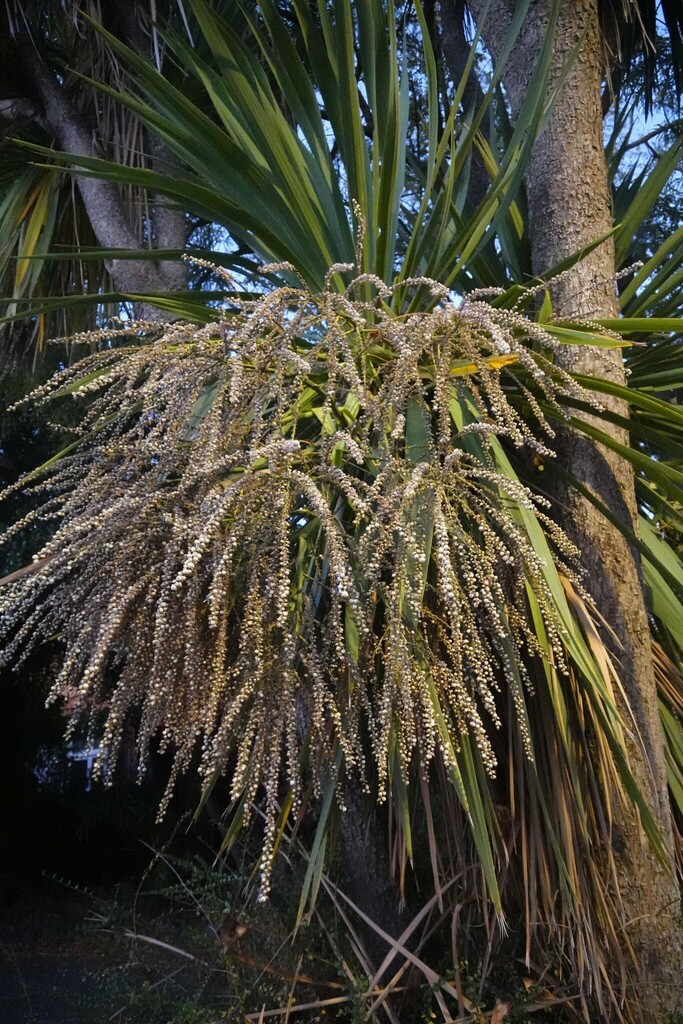
L'arbre à chou est une plante saisissante, semblable à un palmier, originaire de Nouvelle-Zélande. Il apporte une touche tropicale à votre espace avec ses feuilles en forme d'épée et sa forme architecturale. Vous adorerez la façon dont il se démarque comme point focal dans n'importe quelle pièce lumineuse.

En un coup d'œil
- Niveau d'entretien
- Facile
- Type de plante
- Arbre à feuilles persistantes
- Lumière
- Plein soleil à mi-ombre
- Lumière en intérieur
- Lumière vive indirecte
- Arrosage
- Tous les 7 à 10 jours
- Taille adulte
- 4,5 à 9 mètres dans la nature
- Croissance
- Moyenne
- Rusticité
- USDA 9 à 11
- Floraison
- Fin du printemps au début de l'été
Entretien
Gardez le sol constamment humide mais jamais détrempé pour éviter la pourriture des racines. Surveillez le jaunissement des feuilles, qui signale souvent que la plante reçoit trop d'eau. Dépoussiérez les feuilles occasionnellement pour aider la plante à respirer et à rester en bonne santé.
- Arrosage
- Arrosez lorsque le pouce supérieur de terre est sec au toucher.
- Engrais
- Nourrissez avec un engrais liquide équilibré pendant la saison de croissance active.
- Taille
- Retirez les feuilles inférieures mortes ou endommagées pour maintenir une apparence soignée.
- Rempotage
- Déplacez dans un conteneur légèrement plus grand une fois que les racines commencent à envahir le pot.
- Sol
- Mélange de terreau bien drainant
- pH du sol
- 6,0 à 7,5
- Température
- -5 à 35°C
- Humidité
- 40 à 70%
- Résistance à la sécheresse
- Moyenne
- Durée de vie
- Plante vivace à longue durée de vie, souvent plusieurs décennies.
- Parfum
- Fort
- Résistance aux chevreuils et lapins
- Moyenne
Signes qu'il faut rempoter
- Les racines sortent des trous de drainage.
- L'eau reste trop longtemps à la surface.
- Croissance ralentie pendant la saison active.
Sécurité
- Humains
- Le feuillage peut être légèrement toxique s'il est ingéré par des humains ou des animaux domestiques.
- Animaux
- Cette plante est considérée comme non toxique pour les chats et les chiens.
- Enfants
- Tenez les enfants à l'écart des pointes de feuilles acérées semblables à des épées qui peuvent causer des blessures aux yeux.
- Allergènes de contact
- Les pointes de feuilles acérées et pointues peuvent provoquer une irritation mécanique de la peau.
- Allergènes aéroportés
- Les fleurs produisent du pollen qui peut déclencher un léger rhume des foins chez les personnes sensibles.
- Comestibilité
- La plante n'est pas considérée comme comestible et son ingestion peut provoquer des troubles digestifs.
Comment l'identifier
- Longues feuilles coriaces en forme d'épée
- Tronc boisé semblable à un palmier
- Feuilles poussant en touffes terminales denses
- Les plantes matures produisent des fleurs blanches parfumées
- Hauteur
- 3 à 6m
- Envergure
- 1 à 3m
- Feuilles
- vert, bronze, violet, evergreen
- Fleurs
- blanc, crème, 0,5 à 1cm
- Fruits
- blanc, bleu, Automne
Problèmes à surveiller
- CochenillesCourant
- Taches foliairesCourant
- Brunissement du bord des feuillesPeu courant
- Pourriture des racinesPeu courant
Par symptôme
Vérifie la santé de ta plante en photo
Pocket Botanist analyse une photo de ta plante et te dit ce qui ne va pas et quoi essayer en premier.
La cultiver
- Multiplication
- semis, bouturage, division
- Quand planter
- printemps, début de l'été
- Hivernage
- Dans les climats plus froids, rentrez les conteneurs à l'intérieur dans un endroit lumineux et hors gel. Si vous plantez en pleine terre, enveloppez la couronne de toile de jute pour la protéger des vents d'hiver rigoureux.
- En pot
- Elle pousse magnifiquement en conteneur, à condition que le pot mesure au moins 40 cm de large et qu'il ait un excellent drainage.
Boutures de tige
- 1. Coupez un jeune rameau ou une section de tige saine.
- 2. Retirez les feuilles inférieures.
- 3. Trempez l'extrémité coupée dans de l'hormone d'enracinement.
- 4. Plantez dans un milieu humide et bien drainant.
- 5. Conservez dans un endroit chaud et lumineux jusqu'à ce que les racines se forment.
Associez-la à des couvre-sols bas et résistants à la sécheresse pour ombrager la zone racinaire et conserver l'humidité.
Bonnes associations
- Lin de Nouvelle-Zélande — Ils partagent des besoins environnementaux similaires et créent une esthétique côtière classique.
- Hebe — Ces arbustes offrent un beau contraste textuel avec le feuillage épineux de l'arbre-chou.
Espèces similaires
- Cordyline indivisa — Il a des feuilles plus larges et plus rigides et une préférence plus alpine.
Science
- Famille
- Asparagaceae
- Genre
- Cordyline
- Ordre
- Asparagales
- Classe
- Liliopsida
- Région d'origine
- Nouvelle-Zélande
- Préservation
- Il n'est actuellement pas menacé dans son aire de répartition indigène.
Il prospère dans les forêts ouvertes et les zones marécageuses où il peut avoir accès à une humidité constante.
- Intérêt pour la faune
- source de nectar, fournit un abri aux petits oiseaux
- Pollinisateurs
- abeilles, papillons, papillons de nuit
- Utilisations
- point focal ornemental, plante en conteneur, aménagement paysager côtier
Au fil des saisons
Repères écologiques
- Salinité
- 6/9
- Réaction du sol
- 5/9
- Lumière
- 7/9
- Température
- 7/9
- Humidité
- 5/9
- Nutriments
- 4/9
Taxonomie vérifiée avec le GBIF.
Ce qu'on demande souvent
- Puis-je le cultiver en pot ?
- Oui, c'est une plante de conteneur fantastique si vous utilisez un terreau bien drainant.
- À quelle fréquence dois-je l'arroser ?
- Arrosez lorsque les quelques centimètres supérieurs du sol sont secs au toucher.
D'où vient le nom
Le nom du genre vient du mot grec kordyle, signifiant massue, faisant référence aux racines épaissies. Le nom d'espèce australis signifie austral, faisant référence à son origine dans l'hémisphère sud.
Bon à savoir
- Il est communément appelé « arbre-chou » en Nouvelle-Zélande.
- La plante peut devenir assez grande dans son habitat d'origine.
- Il est très tolérant aux embruns salés, ce qui le rend idéal pour les jardins côtiers.
- Les feuilles étaient historiquement utilisées par les peuples autochtones pour fabriquer des cordes et des vêtements.
- Il produit des panicules de fleurs massives et parfumées.
Garde ta plante en pleine forme
Cette page est un guide général. Enregistre ta plante dans Pocket Botanist et tu reçois des rappels d'entretien adaptés à cette plante, ainsi qu'un historique d'entretien qui montre ce qui a marché.
Ce guide a été généré par IA et vérifié avec la taxonomie du GBIF. Il s'agit d'informations générales, et non de conseils horticoles ou vétérinaires. Découvre comment nous concevons ces guides.