 Pocket Botanist
Plant guide
Traveller's-joy.
Clematis vitalba
Pronounced KLEM-uh-tis vy-TAL-buh
Also known as Old Man's Beard



Scan with your phone's camera to get the app
Or go to pocketbotanist.app/get on your phone
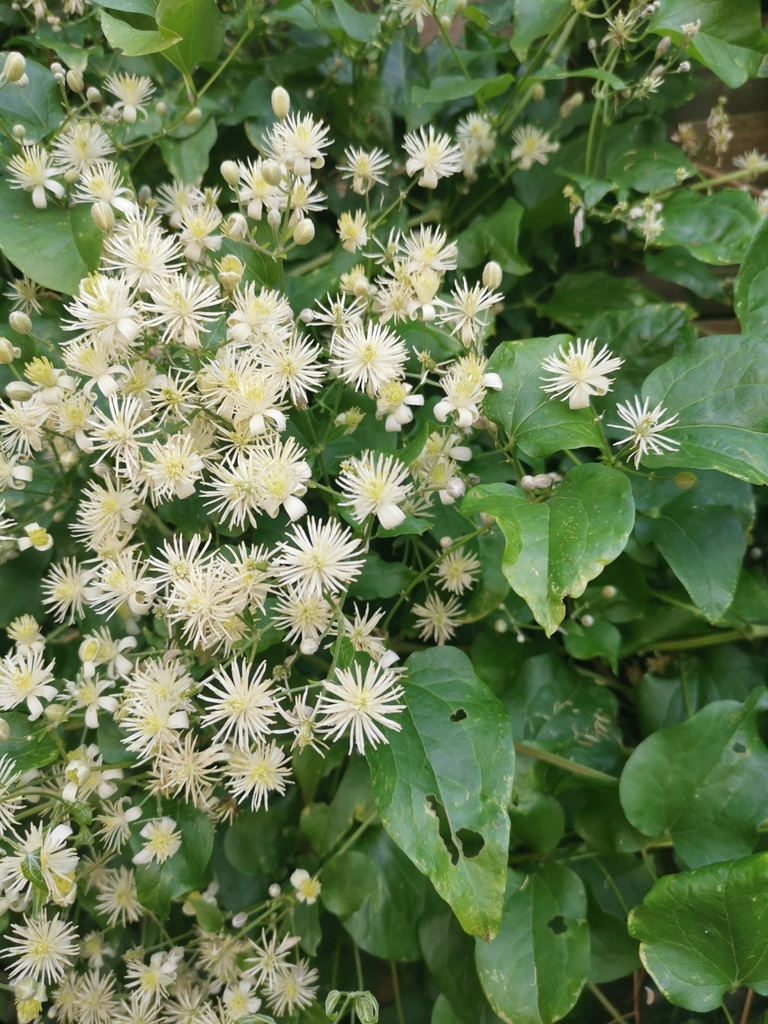
Traveller's joy is a vigorous, woody climber native to hedgerows and woodland edges across Europe. It produces masses of fragrant, creamy white flowers followed by distinctive, feathery seed heads. This plant is best suited for large spaces where its rapid growth can be managed.
At a glance
- Care level
- Easy
- Plant type
- Deciduous climber
- Light
- Full sun to partial shade
- Indoor light
- Bright indirect
- Water
- Every 7 to 14 days
- Mature size
- Up to 30 meters
- Growth rate
- Fast
- Hardiness
- USDA 4 to 9
- Bloom time
- Mid to late summer
Care
Provide a sturdy trellis or fence for this climber to scramble over. Prune back hard in late winter to keep the plant within bounds and encourage fresh growth. Watch for signs of clematis wilt, such as sudden stem collapse or leaf blackening.
- Watering
- Keep the soil consistently moist but not waterlogged, especially during the first year of growth.
- Feeding
- Apply a balanced, slow release fertilizer in early spring to support vigorous growth.
- Pruning
- Prune back to a pair of strong buds in late winter or early spring.
- Repotting
- Repot only if the plant becomes rootbound or if you are moving it to a larger permanent location.
- Soil
- Well drained, alkaline soil
- Soil pH
- Neutral to alkaline
- Temperature
- -25 to 35°C
- Humidity
- 40 to 70%
- Drought tolerance
- Moderate
- Lifespan
- Perennial, typically 20 to 50 years
- Fragrance
- Light
- Deer and rabbits
- Moderate
Signs it needs repotting
- Roots growing out of the drainage holes.
- Water running straight through the pot without soaking in.
- Stunted growth despite regular feeding.
Safety
- People
- All parts of this plant contain protoanemonin, which can cause skin irritation and internal distress if eaten.
- Pets
- This plant contains protoanemonin, which can cause irritation if ingested by cats or dogs.
- Children
- Keep children away from the plant as the sap is a skin irritant and ingestion causes mouth and stomach pain.
- Contact allergens
- The sap can cause contact dermatitis in sensitive individuals.
- Airborne allergens
- The pollen is not considered a major allergen.
- Edibility
- This plant is considered toxic if ingested and should not be consumed.
How to identify it
- Pinnate leaves with five leaflets
- Fragrant, creamy white flowers
- Distinctive feathery, persistent seed heads
- Woody, climbing stems
- Opposite leaf arrangement
- Height
- 20 to 30m
- Spread
- 3 to 6m
- Leaves
- green, deciduous
- Flowers
- white, greenish white, 2 to 3cm
- Fruit
- silvery, grey, Autumn
Problems to watch for
- AphidsCommon
- Clematis WiltCommon
- Powdery MildewCommon
- Leaf SpotUncommon
- Root RotUncommon
- RustUncommon
- Slugs and SnailsUncommon
- CankerRare
Check your traveller's-joy from a photo
Pocket Botanist looks at a photo of your plant and tells you what's wrong and what to try first.
Scan with your phone's camera to get the app
Or go to pocketbotanist.app/get on your phone
Growing it
- Propagation
- seed, cuttings
- When to plant
- spring, autumn
- Overwintering
- Cut back the previous year's growth in late winter to encourage fresh spring stems. It is fully hardy and requires no special protection.
- In containers
- It is generally too aggressive for containers unless you have a very large, heavy pot and a sturdy trellis.
Stem cuttings
- Take semi-ripe cuttings in late summer.
- Remove lower leaves and dip the base in rooting hormone.
- Place in a pot with well-draining soil and keep moist.
Plant near sturdy shrubs or fences to provide the necessary support for its vigorous climbing habit.
Grows well with
- English Ivy · They share similar woodland habitat requirements.
- Common Hawthorn · It provides a sturdy structure for the vine to climb.
Similar species
- Fragrant virgin's bower · It shares a similar growth habit but has more fragrant flowers.
Science
- Family
- Ranunculaceae
- Genus
- Clematis
- Order
- Ranunculales
- Class
- Magnoliopsida
- Native range
- Europe, North Africa, and Southwest Asia.
- Conservation
- It is considered an invasive weed in some regions outside its native range.
It thrives in woodland edges and hedgerows where it uses its leaf stalks to climb over other vegetation to reach sunlight.
- Value to wildlife
- nectar source, nesting material for birds
- Pollinators
- bees, butterflies, beetles
- Uses
- ornamental climber, wildlife habitat, hedgerow plant
Through the year
Ecological indicators
- Soil reaction
- 7/9
- Light
- 6/9
- Temperature
- 5/9
- Moisture
- 5/9
- Salinity
- 1/9
- Nutrients
- 7/9
Taxonomy resolved against GBIF.
Questions people ask
- Is it invasive?
- Yes, it can be quite aggressive and is considered invasive in parts of New Zealand and North America.
- Does it need pruning?
- It benefits from hard pruning in late winter to keep its size in check.
Where the name comes from
The name vitalba comes from the Latin vitis, meaning vine, and alba, meaning white. It is commonly called Old Man's Beard due to the long, silky seed plumes.
Good to know
- It is the only Clematis species native to the British Isles.
- The stems were historically used for basket weaving.
- It is a vigorous grower that can quickly cover fences or trees.
Also in
Keep your traveller's-joy growing
This page is a general guide. Save your plant in Pocket Botanist and you get care reminders timed for this plant, plus a care history that shows what worked.
Scan with your phone's camera to get the app
Or go to pocketbotanist.app/get on your phone
This guide was generated with AI on and checked against GBIF taxonomy. It is general information, not horticultural or veterinary advice. Read about how we build these guides.