 Pocket Botanist
Plant guide
European fan palm.
Chamaerops humilis
Pronounced kam-AIR-ops HEW-mi-lis
Also known as Dwarf Fan Palm, European Fan Palm, Kiko Rivera, Mediterranean Fan Palm, Mediterranean fan-fern, hair palm



Scan with your phone's camera to get the app
Or go to pocketbotanist.app/get on your phone

The European fan palm is a hardy, clumping palm that brings a Mediterranean feel to your garden. It is one of the few palms that can handle cooler temperatures and occasional light frosts. You will love its unique, multi-stemmed growth habit.
At a glance
- Care level
- Easy
- Plant type
- Palm
- Light
- Full sun to partial shade
- Indoor light
- Direct sun
- Water
- Every 7 to 14 days
- Mature size
- 15 feet tall
- Growth rate
- Slow
- Hardiness
- USDA 8 to 11
- Bloom time
- Late spring to early summer
Care
Plant this palm in a spot with excellent drainage to prevent root rot. Watch for yellowing leaves, which often signal that the soil is staying too wet. It is very drought tolerant once it is established in the ground.
- Watering
- Allow the top few inches of soil to dry out completely between waterings.
- Feeding
- Apply a balanced palm fertilizer during the active growing season.
- Pruning
- Remove only dead or damaged fronds once a year.
- Repotting
- Repot only when the roots have clearly filled the container.
- Soil
- Well-draining, sandy or loamy soil
- Soil pH
- 6.0 to 7.5
- Temperature
- -12 to 40°C
- Humidity
- 20 to 60%
- Drought tolerance
- High
- Lifespan
- Perennial, can live for many decades.
- Deer and rabbits
- High
Signs it needs repotting
- Roots growing out of the drainage holes.
- Stunted growth during the active season.
- Soil drying out much faster than usual.
Safety
- People
- The plant is not considered toxic to humans.
- Pets
- This plant is generally considered non-toxic to cats and dogs.
- Children
- Keep children away from the sharp, needle-like spines on the leaf stems.
- Contact allergens
- The sharp spines on the leaf stalks can cause painful scratches and skin irritation.
- Airborne allergens
- The pollen may cause mild respiratory irritation in sensitive individuals.
- Edibility
- The fruit is technically edible but is generally considered unpalatable and astringent.
How to identify it
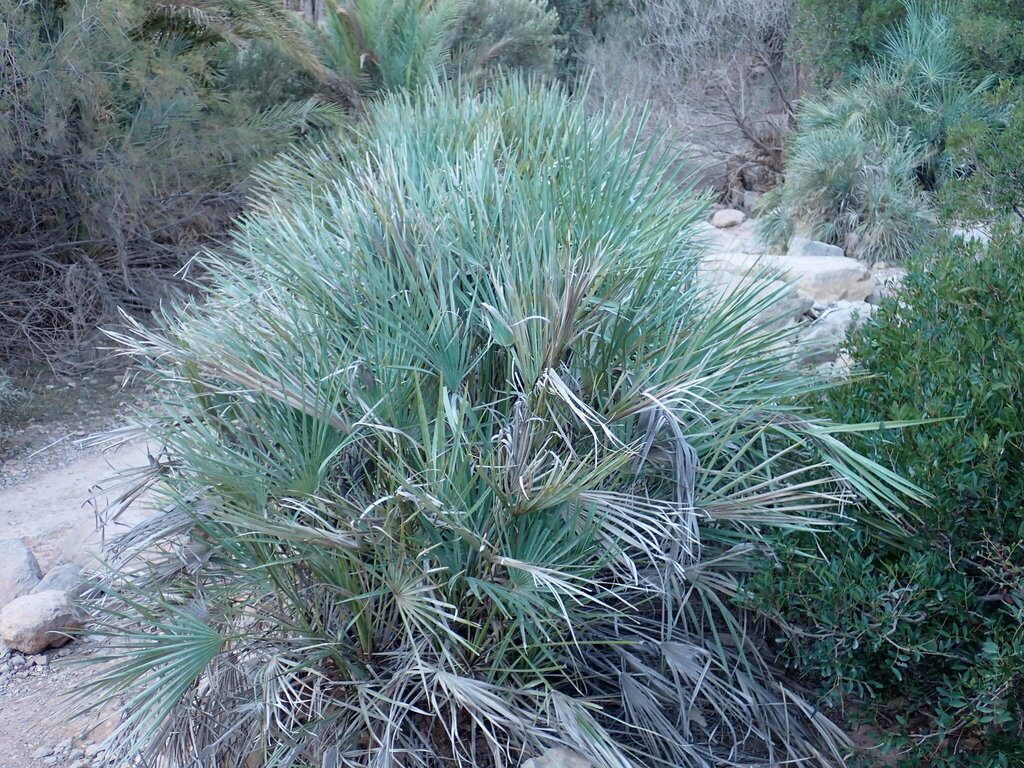
- Fan shaped, stiff, leathery green fronds
- Spiny, sharp petioles on leaf stalks
- Multi-stemmed, clumping growth habit
- Small yellow flowers in spring
- Dense, fibrous brown trunk covering
- Height
- 1.5 to 4.5m
- Spread
- 1.5 to 3m
- Leaves
- green, blue-green, evergreen
- Flowers
- yellow, 0.5 to 1cm
- Fruit
- brown, yellow, Autumn
Problems to watch for
- Scale insects · Small sap-sucking insects that appear as bumps on leaves.
- Leaf spot · Fungal infection causing dark spots on foliage due to high moisture.
Check your european fan palm from a photo
Pocket Botanist looks at a photo of your plant and tells you what's wrong and what to try first.
Scan with your phone's camera to get the app
Or go to pocketbotanist.app/get on your phone
Growing it
- Propagation
- seed, offsets
- When to plant
- spring, early autumn
- Overwintering
- In colder regions, move containers to a sheltered spot or frost-free area. Protect young plants from severe frost with horticultural fleece.
- In containers
- It grows very well in containers, provided you use a large pot with excellent drainage.
Seed
- 1. Clean the fleshy pulp from the seeds.
- 2. Soak seeds in warm water for 24 hours.
- 3. Plant in a well-draining seed mix.
- 4. Keep warm and moist until germination.
Offsets
- 1. Carefully separate the offset from the base of the parent plant.
- 2. Ensure the offset has some roots attached.
- 3. Pot into a small container with gritty soil.
Pair this palm with other drought-tolerant Mediterranean shrubs to create a low-maintenance, water-wise garden.
Grows well with
Similar species
- Windmill Palm · Another cold-hardy palm often used in similar landscape settings.
Science
- Family
- Arecaceae
- Genus
- Chamaerops
- Order
- Arecales
- Class
- Liliopsida
- Native range
- Western Mediterranean region of Europe and North Africa.
- Conservation
- While common in cultivation, wild populations in parts of its range are threatened by habitat loss.
It survives in the wild by growing in rocky, dry, and often windy coastal environments.
- Value to wildlife
- nectar source
- Pollinators
- bees, beetles
- Uses
- ornamental specimen, container plant, coastal landscaping
Through the year
Ecological indicators
- Salinity
- 5/9
- Soil reaction
- 6/9
- Light
- 8/9
- Temperature
- 7/9
- Moisture
- 2/9
- Nutrients
- 3/9
Taxonomy resolved against GBIF.
Questions people ask
- Does it need full sun?
- Yes, it thrives best in full sun but tolerates light shade.
- Can I grow it in a pot?
- It makes an excellent container plant if given a large, well-draining pot.
Where the name comes from
The name Chamaerops comes from the Greek words chamai meaning on the ground and rhops meaning bush, referring to its low, shrubby growth. Humilis is Latin for low or humble.
Good to know
- It is often called the European fan palm.
- It is extremely drought tolerant once established.
- It naturally grows in a clumping, multi-stemmed habit.
- The leaves are very stiff and fan-shaped.
Also in
Keep your european fan palm growing
This page is a general guide. Save your plant in Pocket Botanist and you get care reminders timed for this plant, plus a care history that shows what worked.
Scan with your phone's camera to get the app
Or go to pocketbotanist.app/get on your phone
This guide was generated with AI on and checked against GBIF taxonomy. It is general information, not horticultural or veterinary advice. Read about how we build these guides.