 Pocket Botanist
Plant guide
Sticky mouse-ear chickweed.
Cerastium glomeratum
Pronounced seh-RAS-tee-um glom-er-AY-tum
Also known as Annual Mouse Ear Chickweed, Sticky Mouse-Ear, Sticky chickweed, clammy chickweed



Scan with your phone's camera to get the app
Or go to pocketbotanist.app/get on your phone
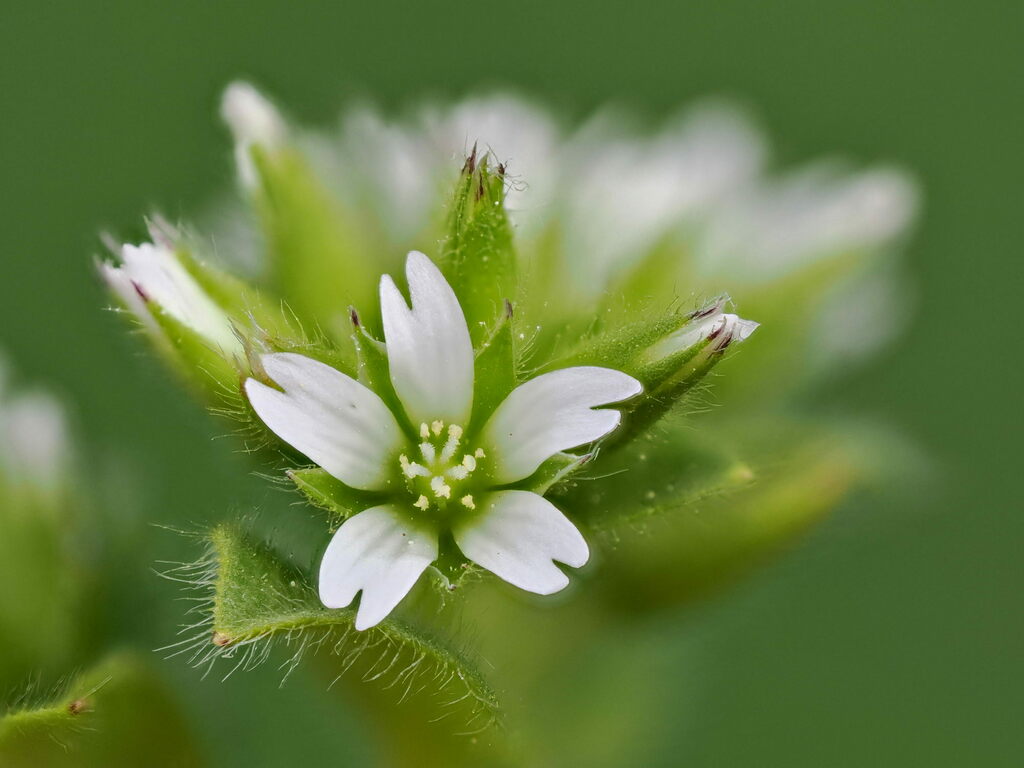
This little plant is a common sight in lawns and disturbed soil across many regions. It is a small annual herb that spreads easily through seed production. You will often find it popping up in early spring.
At a glance
- Care level
- Easy
- Plant type
- Annual herb
- Light
- Full sun
- Indoor light
- Direct sun
- Water
- Every 3 to 7 days
- Mature size
- 10 to 30 cm
- Growth rate
- Fast
- Hardiness
- USDA 6 to 10
- Bloom time
- Early to mid spring
Care
This plant thrives in full sun and well drained soil. Keep an eye out for rapid spread since it drops seeds quite effectively. It does not require much attention to grow well.
- Watering
- Keep the soil consistently moist but not waterlogged.
- Feeding
- This plant generally does not require supplemental fertilizer.
- Pruning
- Trim back after flowering to prevent excessive seed dispersal.
- Repotting
- As an annual, this plant completes its life cycle in one season and does not need repotting.
- Soil
- Well drained sandy or loamy soil
- Soil pH
- 6.0 to 7.5
- Temperature
- -10 to 30°C
- Humidity
- 40 to 70%
- Drought tolerance
- Moderate
- Lifespan
- Annual or short lived biennial.
- Deer and rabbits
- Moderate
Safety
- People
- It is not considered toxic but is not intended for human consumption.
- Children
- Keep away from small children as the plant is often found in areas treated with lawn chemicals.
- Contact allergens
- The sticky hairs on the stems can cause mild skin irritation in sensitive individuals.
- Airborne allergens
- The pollen may cause mild reactions in those with grass or weed allergies.
- Edibility
- This plant is not typically consumed and may cause digestive upset if ingested.
How to identify it
- Small white five petaled flowers
- Opposite oval shaped leaves
- Sticky glandular hairs on stems
- Clustered flower heads at tips
- Height
- 0.05 to 0.25m
- Spread
- 0.1 to 0.3m
- Leaves
- green, grayish, deciduous
- Flowers
- white, 0.5 to 0.8cm
Problems to watch for
- Powdery mildew · A white fungal growth appears on leaves during humid weather.
Check your sticky mouse-ear chickweed from a photo
Pocket Botanist looks at a photo of your plant and tells you what's wrong and what to try first.
Scan with your phone's camera to get the app
Or go to pocketbotanist.app/get on your phone
Growing it
- Propagation
- seed
- When to plant
- spring, autumn
- Overwintering
- The plant survives winter as a low rosette of leaves. No special protection is needed.
- In containers
- It is not typically grown in containers as it is considered a weed.
Seed
- Collect seeds from dried capsules in late spring.
- Scatter seeds directly onto bare soil in autumn.
- Lightly rake the soil to ensure good seed contact.
It is best managed as a wild component of a meadow rather than a garden plant.
Grows well with
- Common Daisy · They share similar soil and light requirements in lawn settings.
- Speedwell · They often grow together in disturbed meadow habitats.
Similar species
- Common Mouse Ear · It is a perennial relative that looks very similar but has a longer lifespan.
Science
- Family
- Caryophyllaceae
- Genus
- Cerastium
- Order
- Caryophyllales
- Class
- Magnoliopsida
- Native range
- Europe, Western Asia, and North Africa.
- Conservation
- This is a widespread, common species and is not of conservation concern.
It colonizes disturbed ground quickly by producing large quantities of seeds that germinate in cool, moist conditions.
- Value to wildlife
- early season nectar source
- Pollinators
- bees
- Uses
- ground cover, weed in lawns, wildflower meadows
Through the year
Ecological indicators
- Salinity
- 1/9
- Soil reaction
- 5/9
- Light
- 7/9
- Temperature
- 5/9
- Moisture
- 4/9
- Nutrients
- 3/9
Taxonomy resolved against GBIF.
Questions people ask
- Is this plant a perennial?
- It is typically an annual or short lived biennial.
- How do I get rid of it?
- Hand pull before it sets seed to prevent it from spreading.
Where the name comes from
The genus name Cerastium comes from the Greek word keras, meaning horn, referring to the shape of the seed capsules. The species name glomeratum refers to the clustered arrangement of the flowers.
Good to know
- It is commonly called sticky mouse ear because of the glandular hairs on its leaves.
- The seeds are easily spread by wind and water.
- It thrives in poor, compacted soils where other plants struggle.
Keep your sticky mouse-ear chickweed growing
This page is a general guide. Save your plant in Pocket Botanist and you get care reminders timed for this plant, plus a care history that shows what worked.
Scan with your phone's camera to get the app
Or go to pocketbotanist.app/get on your phone
This guide was generated with AI on and checked against GBIF taxonomy. It is general information, not horticultural or veterinary advice. Read about how we build these guides.