 Pocket Botanist
Plant guide
Common Daisy.
Bellis perennis
Pronounced BEL-iss per-EN-iss
Also known as Daisy, English daisy, Lawndaisy



Scan with your phone's camera to get the app
Or go to pocketbotanist.app/get on your phone
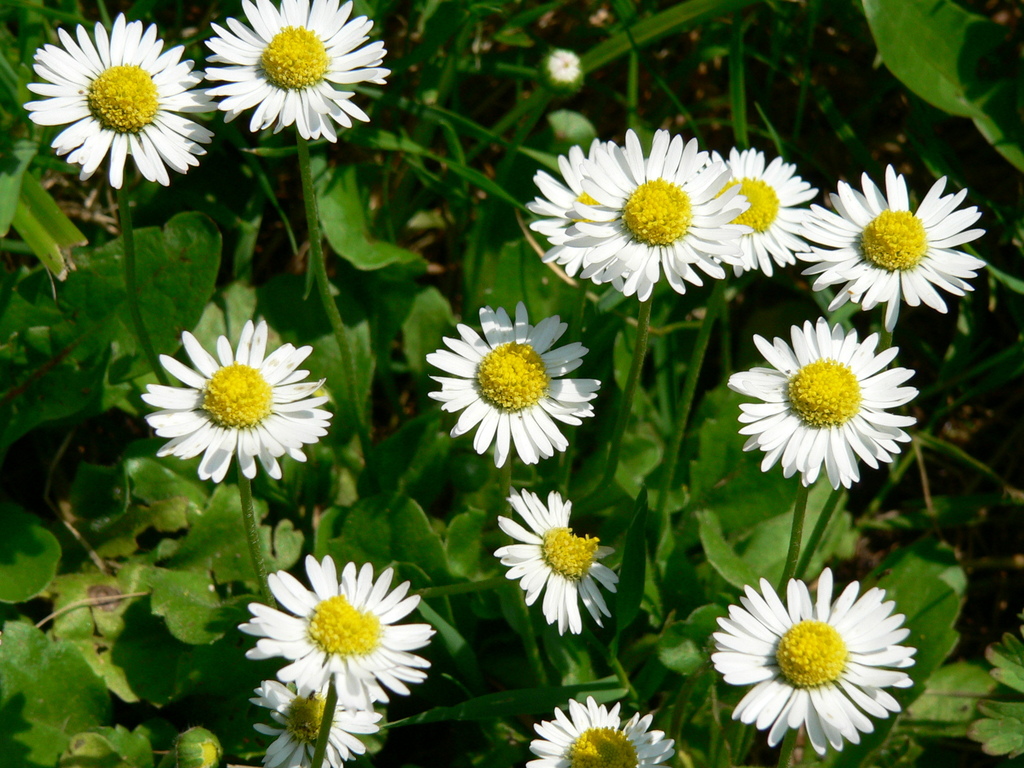
The common daisy is a cheerful, low growing perennial that brings a touch of spring to any garden. It features classic white petals surrounding a bright yellow center. These plants are perfect for naturalizing in lawns or adding charm to containers.
At a glance
- Care level
- Easy
- Plant type
- Perennial
- Light
- Full sun to partial shade.
- Indoor light
- Bright indirect
- Water
- Every 3 to 7 days
- Mature size
- 6 inches tall
- Growth rate
- Medium
- Hardiness
- USDA 4 to 9
- Bloom time
- Early spring to mid summer
Care
Keep the soil consistently moist but not soggy to help your daisies thrive. Watch for wilting leaves as a sign that the plant needs a drink. Deadheading spent flowers will encourage a longer blooming season.
- Watering
- Water whenever the top inch of soil feels dry to the touch.
- Feeding
- Apply a balanced liquid fertilizer during the active growing season.
- Pruning
- Remove faded flowers regularly to promote continuous blooming.
- Repotting
- Repot if the plant becomes root bound or needs fresh soil.
- Soil
- Well draining, fertile soil.
- Soil pH
- 6.0 to 7.0
- Temperature
- -30 to 30°C
- Humidity
- 40 to 70%
- Drought tolerance
- Moderate
- Lifespan
- Short-lived perennial, typically 2 to 3 years.
- Deer and rabbits
- Moderate
Signs it needs repotting
- Roots growing out of the drainage holes.
- The plant looks crowded in its current container.
Safety
- People
- This plant is generally considered non-toxic to humans.
- Pets
- This plant is generally considered non toxic to cats and dogs.
- Children
- There are no specific safety concerns for children, though ingestion of any garden plant should be discouraged.
- Contact allergens
- Handling the foliage may cause mild skin irritation in sensitive individuals.
- Airborne allergens
- The pollen can trigger mild seasonal allergies in some people.
- Edibility
- While the leaves and flowers are edible in small amounts, they can cause digestive upset if consumed in large quantities.
How to identify it
- White ray florets
- Yellow disk florets
- Basal rosette of leaves
- Single flower heads on stalks
- Height
- 0.05 to 0.15m
- Spread
- 0.1 to 0.2m
- Leaves
- green, semi-evergreen
- Flowers
- white, pink, red, 2 to 5cm
Problems to watch for
- AphidsCommon
- Powdery MildewCommon
- Slugs and SnailsCommon
- RustUncommon
Check your common daisy from a photo
Pocket Botanist looks at a photo of your plant and tells you what's wrong and what to try first.
Scan with your phone's camera to get the app
Or go to pocketbotanist.app/get on your phone
Growing it
- Propagation
- division, seed
- When to plant
- spring, autumn
- Overwintering
- In cold climates, a light layer of mulch helps protect the crown during winter. Ensure the soil does not stay waterlogged during the dormant season.
- In containers
- They grow very well in pots, provided the container is at least 15 cm deep.
Division
- 1. Dig up the clump in early spring.
- 2. Gently pull the root mass apart into smaller sections.
- 3. Replant immediately in moist soil.
Seed
- 1. Sow seeds on the surface of moist compost.
- 2. Keep in a bright, cool location.
- 3. Transplant seedlings once they have two sets of true leaves.
Plant them in groups to create a dense mat that helps suppress weeds.
Grows well with
- Pansy · They share similar moisture needs and bloom times.
- Forget-me-not · These create a lovely carpet effect in spring borders.
Similar species
- Oxeye Daisy · It is a much larger plant with similar flower structure.
Science
- Family
- Asteraceae
- Genus
- Bellis
- Order
- Asterales
- Class
- Magnoliopsida
- Native range
- Europe and the Mediterranean region.
- Conservation
- This plant is common and widespread, with no conservation concerns.
It thrives in disturbed soils and short grasslands where it can outcompete other plants for light.
- Value to wildlife
- early season nectar source
- Pollinators
- bees, butterflies
- Uses
- ground cover, container plant, edible garnish, rock garden
Through the year
Ecological indicators
- Salinity
- 2/9
- Soil reaction
- 6/9
- Light
- 6/9
- Temperature
- 4/9
- Moisture
- 5/9
- Nutrients
- 5/9
Taxonomy resolved against GBIF.
Questions people ask
- Can I grow these in pots?
- Yes, they thrive in containers as long as they have good drainage.
- Do they come back every year?
- They are short-lived perennials that often self-seed to maintain their presence.
Where the name comes from
The scientific name Bellis perennis translates to pretty perennial.
Good to know
- The name daisy is a contraction of day's eye.
- It is often considered a weed in lawns but is highly valued in cottage gardens.
- The plant has a long history of use in traditional herbal medicine.
Keep your common daisy growing
This page is a general guide. Save your plant in Pocket Botanist and you get care reminders timed for this plant, plus a care history that shows what worked.
Scan with your phone's camera to get the app
Or go to pocketbotanist.app/get on your phone
This guide was generated with AI on and checked against GBIF taxonomy. It is general information, not horticultural or veterinary advice. Read about how we build these guides.