 Pocket Botanist
Plant guide
Common hackberry.
Celtis occidentalis
Pronounced SEL-tis ok-si-den-TAL-iss
Also known as American hackberry, Common Hackberry, Hackberry, Mississippi hackberry, Nettle-tree, beaverwood



Scan with your phone's camera to get the app
Or go to pocketbotanist.app/get on your phone
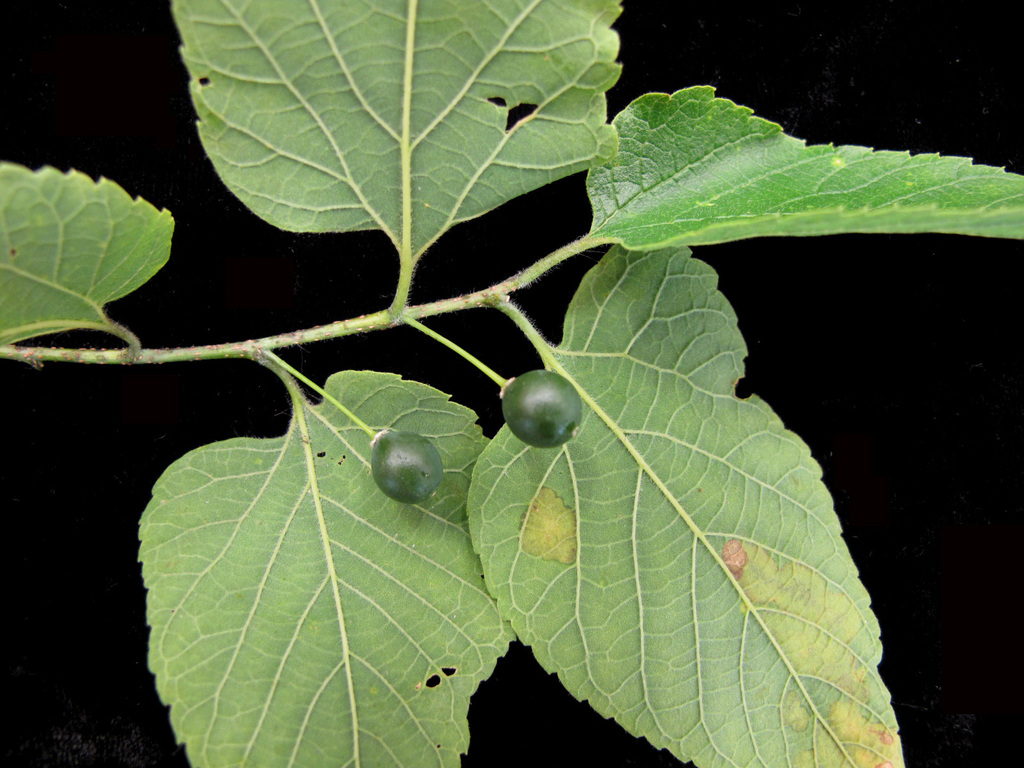
The common hackberry is a sturdy, adaptable native tree that thrives in many different environments. It is well known for its unique, corky bark and small, berry like fruits that birds absolutely love. You will find it is a great choice for a shade tree in larger landscapes.
At a glance
- Care level
- Easy
- Plant type
- Deciduous tree
- Light
- Full sun to partial shade
- Indoor light
- Direct sun
- Water
- Every 7 to 14 days
- Mature size
- 50 to 80 feet
- Growth rate
- Medium
- Hardiness
- USDA 3 to 9
- Bloom time
- Mid to late spring
Care
Plant this tree in a spot with plenty of room for its roots to spread. Keep an eye on the leaves for signs of nipple gall, which is common but usually harmless. Ensure the soil drains well to keep the tree happy and healthy.
- Watering
- Water deeply during the first few years until the root system is established.
- Feeding
- Apply a balanced slow release fertilizer in early spring if growth seems sluggish.
- Pruning
- Prune during the dormant winter season to remove dead or crossing branches.
- Repotting
- This is a large landscape tree and is not suitable for container culture long term.
- Soil
- Adaptable to various soil types
- Soil pH
- 6.0 to 8.0
- Temperature
- -35 to 35°C
- Humidity
- 30 to 70%
- Drought tolerance
- High
Safety
- People
- This tree is not considered toxic to humans.
- Children
- The small, hard berries could pose a minor choking hazard if ingested by very small children.
- Contact allergens
- The rough, warty bark can be abrasive to sensitive skin.
- Airborne allergens
- The pollen is a known allergen that can cause hay fever during the spring flowering season.
- Edibility
- The small fruits are technically edible but are mostly pit and skin with very little flesh.
How to identify it
- Distinctive warty or corky bark
- Asymmetrical leaf bases
- Small dark purple drupes
- Zigzagging branch patterns
- Height
- 12 to 25m
- Spread
- 10 to 20m
- Leaves
- green, yellow, deciduous
- Flowers
- green, yellow, 0.5 to 1cm
- Fruit
- dark purple, black, Autumn
Problems to watch for
- Hackberry nipple gall · Small galls form on leaves due to psyllids, which is mostly cosmetic and rarely harms the tree.
- Witches broom · Clusters of dense twigs form on branches, often caused by a combination of mites and fungi.
Check your common hackberry from a photo
Pocket Botanist looks at a photo of your plant and tells you what's wrong and what to try first.
Scan with your phone's camera to get the app
Or go to pocketbotanist.app/get on your phone
Growing it
- Propagation
- seed, cuttings
- When to plant
- spring, autumn
Plant shade tolerant native shrubs and perennials beneath the canopy to create a layered woodland effect.
Grows well with
- Eastern Redbud · It thrives in the dappled shade provided by the larger hackberry.
- Wild Ginger · This groundcover enjoys the moist, leaf-littered soil beneath the tree canopy.
Similar species
- Sugarberry · It is very similar but features smoother leaves and a more southern range.
Science
- Family
- Cannabaceae
- Genus
- Celtis
- Order
- Rosales
- Class
- Magnoliopsida
- Native range
- Central and eastern North America.
- Conservation
- This species is widespread and not of conservation concern.
It is a pioneer species that thrives in disturbed areas and along riverbanks, providing essential cover for many bird species.
- Value to wildlife
- nectar source, larval host plant, bird food source
- Pollinators
- bees, butterflies
- Uses
- shade tree, street tree, wildlife habitat, windbreak
Through the year
Ecological indicators
- Salinity
- 3/9
- Soil reaction
- 6/9
- Light
- 7/9
- Temperature
- 5/9
- Moisture
- 5/9
- Nutrients
- 5/9
Taxonomy resolved against GBIF.
Questions people ask
- Is this a good tree for a small yard?
- No, it grows quite large and is better suited for parks or spacious landscapes.
- Does it have invasive roots?
- The roots are generally well behaved, but they can be extensive given the size of the tree.
Where the name comes from
The name Celtis is an ancient Greek name for a tree with sweet fruit, while occidentalis means western, referring to its native range in the Western Hemisphere.
Good to know
- Its sweet but thin-fleshed fruits were eaten by Indigenous peoples and are still enjoyed by foragers today.
- The wood is quite tough and was historically used for making crates and furniture.
- It is incredibly tolerant of urban pollution and compacted soil.
- The berries persist into winter, providing a vital food source for birds when other resources are scarce.
Also in
Keep your common hackberry growing
This page is a general guide. Save your plant in Pocket Botanist and you get care reminders timed for this plant, plus a care history that shows what worked.
Scan with your phone's camera to get the app
Or go to pocketbotanist.app/get on your phone
This guide was generated with AI on and checked against GBIF taxonomy. It is general information, not horticultural or veterinary advice. Read about how we build these guides.