 Pocket Botanist
Guide botanique
Siberian tea.
Bergenia crassifolia
Prononciation ber-GEN-ee-uh krass-ih-FOH-lee-uh
Aussi appelée Elephant's ears, Elephant's-ears, Elephant-Ears, Elephant-ears [Bergenia crassifolia], Heart-leaved Elephant's-ears, Heartleaf Bergenia, Korean elephant-ear, Siberian Tea


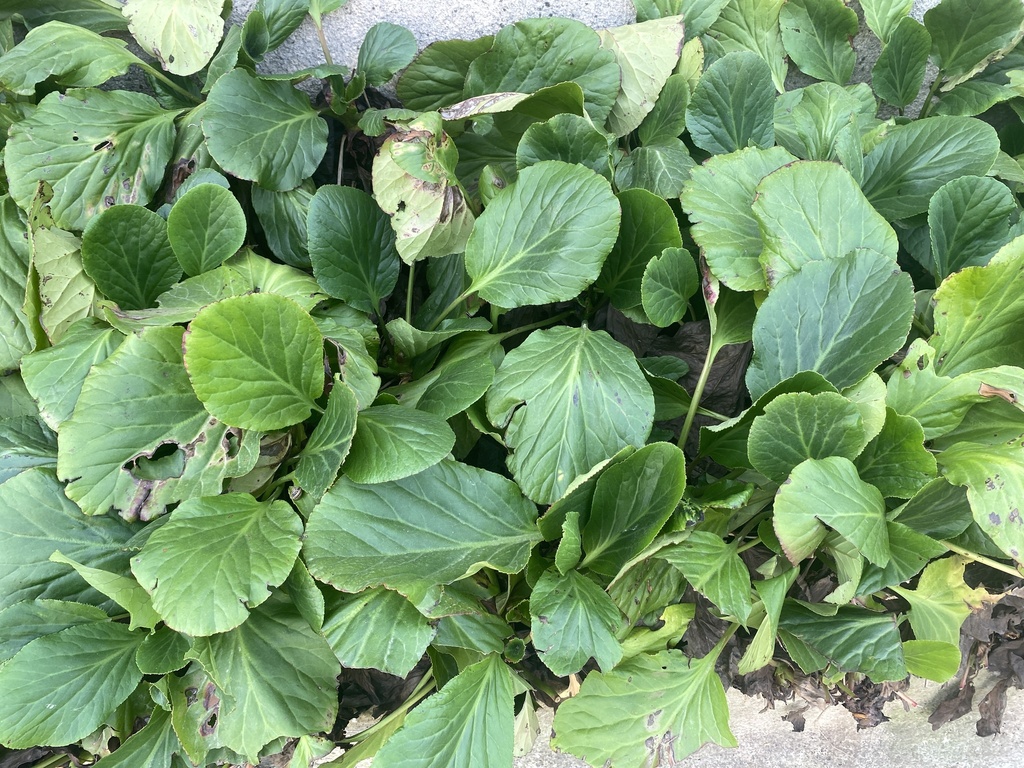
Bergenia is a tough, evergreen perennial that brings lovely texture to shady spots. It is famous for its large, leathery leaves that often turn bronze or purple in the winter. You will love the clusters of bell shaped flowers that pop up in early spring.

En un coup d'œil
- Niveau d'entretien
- Facile
- Type de plante
- Perennial
- Lumière
- Partial shade to full shade
- Lumière en intérieur
- Lumière moyenne
- Arrosage
- Tous les 5 à 10 jours
- Taille adulte
- 12 to 18 inches
- Croissance
- Moyenne
- Rusticité
- USDA 3 à 8
- Floraison
- Early to mid spring
Entretien
Keep the soil consistently moist but never soggy to prevent rot. Watch for wilting leaves which usually signal that the plant needs a drink. Remove any damaged or dead foliage in the spring to keep the plant looking tidy.
- Arrosage
- Water when the top inch of soil feels dry to the touch.
- Engrais
- Apply a balanced liquid fertilizer during the active growing season.
- Taille
- Trim back old or damaged leaves once a year in early spring.
- Rempotage
- Repot only when the rhizomes become too crowded for the container.
- Sol
- Moist, well draining soil
- pH du sol
- 6.0 to 7.5
- Température
- -30 à 30°C
- Humidité
- 40 à 70%
- Résistance à la sécheresse
- Moyenne
- Durée de vie
- Perennial, typically 10 plus years
- Résistance aux chevreuils et lapins
- Élevée
Signes qu'il faut rempoter
- Roots growing out of the drainage holes
- Plant growth slows significantly
- The clump has become too large for the container
Sécurité
- Humains
- The plant is generally considered non-toxic but may cause mild gastrointestinal irritation if ingested.
- Enfants
- The plant is not considered a significant risk to children, though ingestion of any garden plant should be discouraged.
- Allergènes de contact
- The leaves have a leathery texture that rarely causes skin irritation.
- Allergènes aéroportés
- There are no significant reports of respiratory allergies associated with this plant.
- Comestibilité
- While historically used in tea, this plant contains tannins that can cause stomach upset if consumed in large quantities.
Comment l'identifier
- Large leathery evergreen leaves
- Thick fleshy rhizomes
- Clusters of bell shaped flowers
- Leaves turn bronze in winter
- Hauteur
- 0,3 à 0,45m
- Envergure
- 0,3 à 0,6m
- Feuilles
- dark green, bronze, evergreen
- Fleurs
- pink, magenta, 1 à 2cm
Problèmes courants
- Slugs and snails — These pests feed on the thick leaves, leaving behind unsightly holes.
- Leaf spot — Fungal infections can cause dark spots on the foliage in overly damp conditions.
La cultiver
- Multiplication
- division
- Quand planter
- spring, autumn
- Hivernage
- Leave the foliage intact as it provides protection for the crown during winter. Remove any damaged or dead leaves in early spring.
- En pot
- It grows well in containers, provided the pot is at least 30 centimeters wide to accommodate the spreading rhizomes.
Division
- Dig up the entire clump in early spring after flowering.
- Use a sharp spade or knife to cut the rhizomes into sections.
- Ensure each section has at least one healthy bud or rosette of leaves.
- Replant the divisions at the same depth they were previously growing.
- Water thoroughly until established.
Plant in groups of three to five to create a dense, weed suppressing mat that looks great year round.
Bonnes associations
- Hosta — They share similar shade requirements and provide contrasting leaf textures.
- Polystichum — The delicate fronds of ferns look lovely against the bold, leathery leaves of the bergenia.
Espèces similaires
- Bergenia cordifolia — It is very similar but features heart shaped leaves instead of the more oval leaves of B. crassifolia.
Science
- Famille
- Saxifragaceae
- Genre
- Bergenia
- Ordre
- Saxifragales
- Classe
- Magnoliopsida
- Région d'origine
- Central Asia, specifically Siberia and Mongolia.
- Préservation
- This plant is not of conservation concern and is widely cultivated.
It thrives in rocky, mountainous areas where its thick leaves help it retain moisture and survive temperature extremes.
- Intérêt pour la faune
- early season nectar source
- Pollinisateurs
- abeilles, papillons
- Utilisations
- groundcover, winter interest, rock gardens, border edging
Au fil des saisons
Repères écologiques
- Salinité
- 2/9
- Réaction du sol
- 5/9
- Lumière
- 4/9
- Température
- 3/9
- Humidité
- 5/9
- Nutriments
- 5/9
Taxonomie vérifiée avec le GBIF.
Ce qu'on demande souvent
- Why are my leaves turning red?
- This is a natural response to cold temperatures and is a desirable trait for winter interest.
- How often should I divide it?
- Divide every 3 to 5 years in the spring to keep the clump vigorous.
D'où vient le nom
The genus honors German botanist Karl August von Bergen, while the species name crassifolia refers to the thick, fleshy leaves.
Bon à savoir
- It is commonly known as elephant ears due to the large, leathery shape of the leaves.
- The leaves are very tough and can withstand significant cold and snow cover.
- It is native to the harsh climates of Siberia and Mongolia.
Aussi dans
Ta plante a mauvaise mine ?
Cette page est un guide général. Pocket Botanist diagnostique les problèmes directement à partir d'une photo de ta plante, adapte l'arrosage à sa luminosité et te prévient quand il faut t'en occuper.
Ce guide a été généré par IA et vérifié avec la taxonomie du GBIF. Il s'agit d'informations générales, et non de conseils horticoles ou vétérinaires. Découvre comment nous concevons ces guides.