 Pocket Botanist
Plant guide
Tuberous Begonia.
Begonia boliviensis
Pronounced beh-GOH-nee-uh boh-liv-ee-EN-sis
Also known as Bolivian begonia, tuberous begonia



Scan with your phone's camera to get the app
Or go to pocketbotanist.app/get on your phone
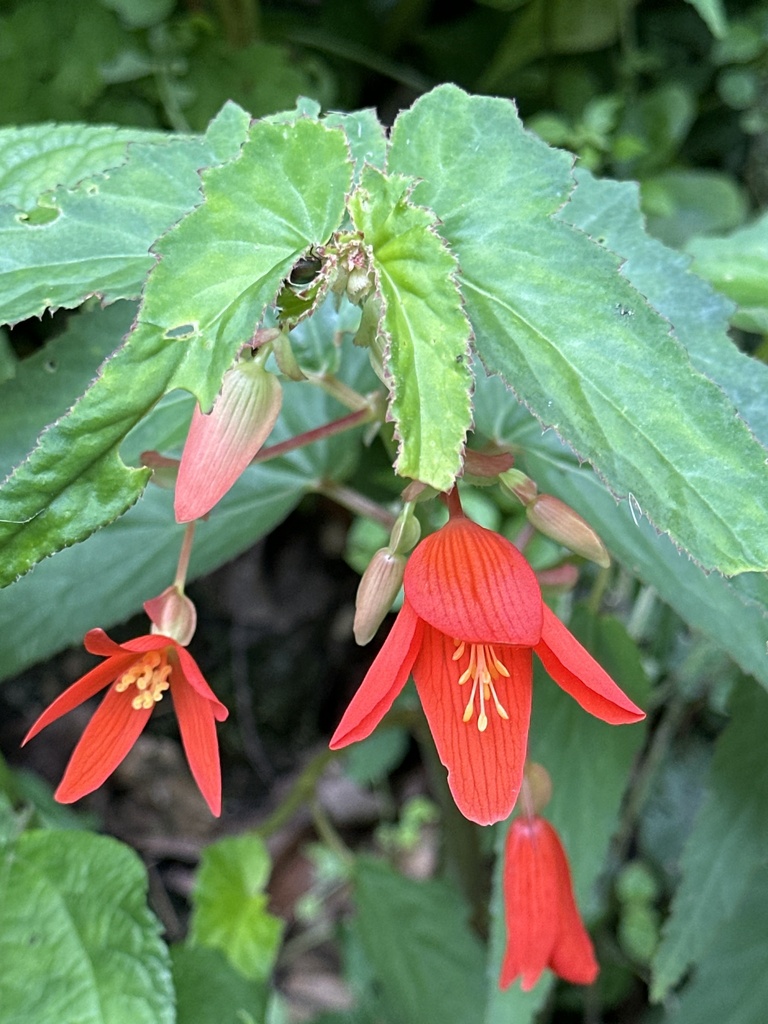
This beautiful plant is famous for its cascading habit and vibrant, bell shaped flowers. It grows from a tuber and loves a spot with filtered light. You will find it makes a stunning addition to hanging baskets.
At a glance
- Care level
- Moderate
- Plant type
- Tuberous perennial
- Light
- Partial shade to bright indirect light
- Indoor light
- Bright indirect
- Water
- Every 3 to 7 days
- Mature size
- 12 to 18 inches
- Growth rate
- Medium
- Hardiness
- USDA 10 to 11
- Bloom time
- Late spring to early autumn
Care
Keep the soil consistently moist but never soggy to prevent tuber rot. Watch for yellowing leaves which often signal overwatering or poor drainage. Provide plenty of air circulation to keep fungal issues at bay.
- Watering
- Water when the top inch of soil feels dry to the touch.
- Feeding
- Use a balanced liquid fertilizer diluted to half strength during the growing season.
- Pruning
- Pinch back spent blooms and leggy stems to encourage a bushier shape.
- Repotting
- Repot in the spring just as new growth begins to emerge from the tuber.
- Soil
- Well draining, peat based potting mix
- Soil pH
- 5.5 to 6.5
- Temperature
- 10 to 28°C
- Humidity
- 50 to 70%
- Drought tolerance
- Low
- Lifespan
- Perennial, typically 3 to 5 years with proper tuber care.
- Deer and rabbits
- Moderate
Signs it needs repotting
- Roots growing out of the drainage holes.
- Water running straight through the pot without soaking in.
- Stunted growth during the active season.
Safety
- People
- The plant contains insoluble calcium oxalates, most concentrated in the tubers, that can cause mouth and throat irritation if eaten.
- Pets
- This plant is toxic to cats and dogs if ingested.
- Children
- Keep this plant away from small children as the leaves and stems can cause discomfort if chewed.
- Contact allergens
- The sap can cause mild skin irritation in sensitive individuals.
- Airborne allergens
- There are no notable airborne allergen risks associated with this plant.
- Edibility
- This plant is not intended for consumption and may cause irritation if ingested.
How to identify it
- Long, pointed, serrated green leaves
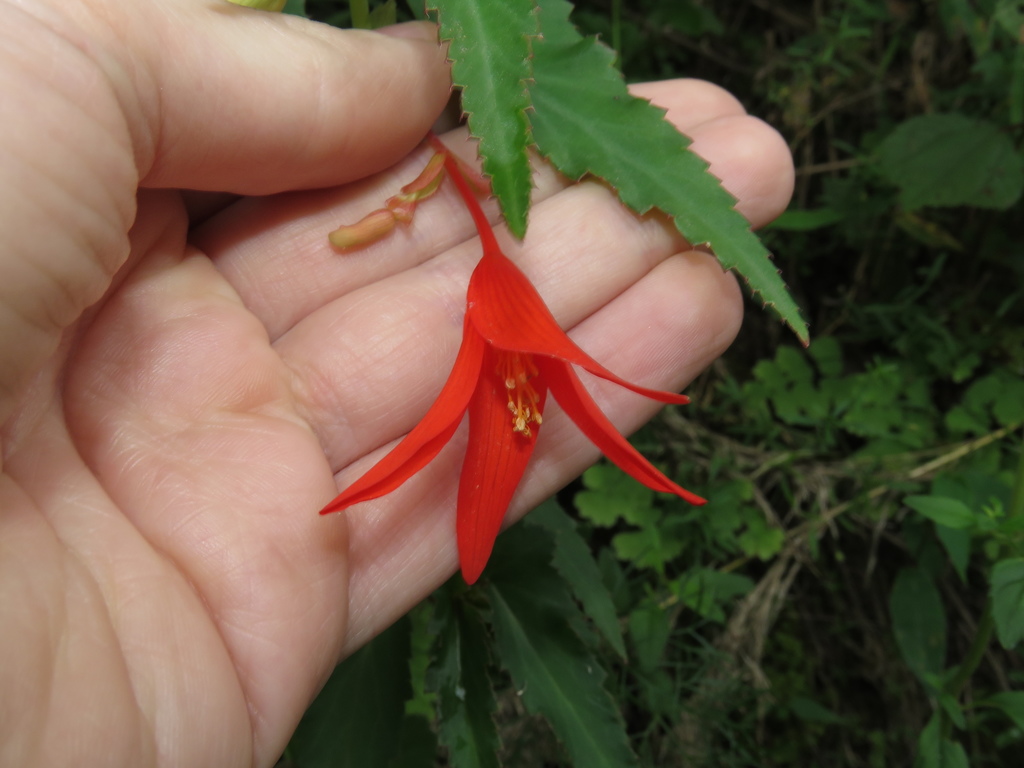
- Bright orange or red bell shaped flowers
- Cascading stems with a trailing habit
- Grows from a thickened underground tuber
- Height
- 0.3 to 0.45m
- Spread
- 0.3 to 0.45m
- Leaves
- green, bronze, deciduous
- Flowers
- red, orange, 3 to 5cm
Problems to watch for
- Botrytis BlightCommon
- Gray MoldCommon
- Powdery MildewCommon
- AphidsUncommon
- MealybugsUncommon
- Root RotUncommon
- Slugs and SnailsUncommon
- Tuber RotUncommon
Check your tuberous begonia from a photo
Pocket Botanist looks at a photo of your plant and tells you what's wrong and what to try first.
Scan with your phone's camera to get the app
Or go to pocketbotanist.app/get on your phone
Growing it
- Propagation
- cuttings, seed
- When to plant
- spring
- Overwintering
- Lift the tubers from the soil after the foliage dies back in autumn. Clean them, let them dry for a few days, and store in peat moss in a cool, dark, frost free location until spring.
- In containers
- It is excellent for containers, requiring at least a 25 cm wide pot for a single plant.
Stem Cuttings
- 1. Take a 10 cm cutting from a healthy stem.
- 2. Remove the lower leaves.
- 3. Place in moist potting mix or water until roots form.
Pair this begonia with plants that enjoy consistent moisture to simplify your watering routine.
Grows well with
Similar species
- Tuberous Begonia · These hybrids share the same tuberous growth habit and flower structure.
Science
- Family
- Begoniaceae
- Genus
- Begonia
- Order
- Cucurbitales
- Class
- Magnoliopsida
- Native range
- Bolivia and Argentina
- Conservation
- It is not currently considered threatened in its native habitat.
It grows on rocky, shaded cliffs in the Andes where it benefits from high humidity and well drained soil.
- Value to wildlife
- nectar source
- Pollinators
- bees, hummingbirds
- Uses
- hanging baskets, container gardens, bedding plants
Through the year
Ecological indicators
- Salinity
- 2/9
- Soil reaction
- 5/9
- Light
- 5/9
- Temperature
- 7/9
- Moisture
- 6/9
- Nutrients
- 5/9
Taxonomy resolved against GBIF.
Questions people ask
- Does it need full sun?
- It prefers partial shade but can handle more sun in cooler climates.
- How do I overwinter it?
- Bring the tubers indoors before the first frost and store them in a cool, dry place.
Where the name comes from
The genus honors Michel Begon, a French patron of botany, while the species epithet refers to its native Bolivia.
Good to know
- It was discovered in the Bolivian Andes in 1864.
- The plant has a naturally cascading habit that makes it perfect for elevated planters.
- It is much more heat tolerant than many other tuberous begonia varieties.
Also in
Keep your tuberous begonia growing
This page is a general guide. Save your plant in Pocket Botanist and you get care reminders timed for this plant, plus a care history that shows what worked.
Scan with your phone's camera to get the app
Or go to pocketbotanist.app/get on your phone
This guide was generated with AI on and checked against GBIF taxonomy. It is general information, not horticultural or veterinary advice. Read about how we build these guides.