 Pocket Botanist
Plant guide
Hart's tongue fern.
Asplenium scolopendrium
Pronounced as-PLEE-nee-um sko-lo-PEN-dree-um
Also known as Hart's tonguefern, Hart's-tongue, hart's-tongue fern, hartstonque


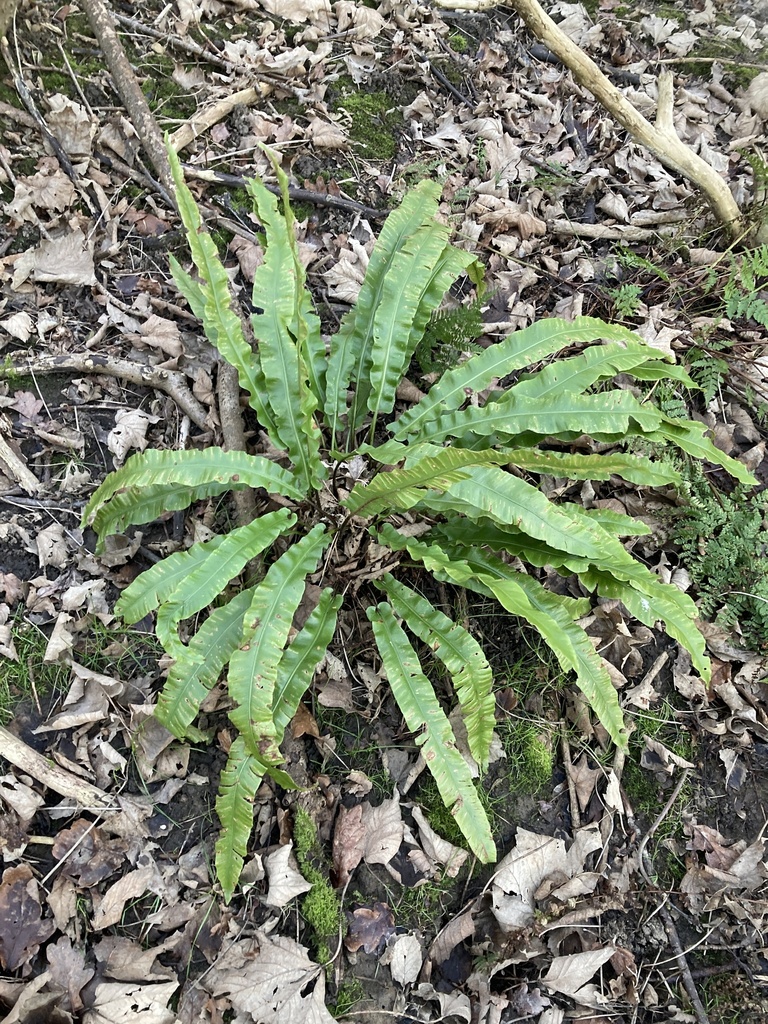
The Hart's tongue fern is a unique evergreen plant with long, strap shaped fronds that look quite different from typical lacy ferns. It thrives in cool, damp, and shaded spots, making it a lovely choice for a woodland garden or a protected container. You'll love how its bright green foliage adds a touch of elegance to any shady corner.
At a glance
- Care level
- Moderate
- Plant type
- Fern
- Light
- Partial shade to full shade
- Indoor light
- Medium light
- Water
- Every 3 to 7 days
- Mature size
- 1 to 2 feet
- Growth rate
- Slow
- Hardiness
- USDA 5 to 9
- Bloom time
- None, as it is a fern reproducing via spores.
Care
Keep the soil consistently moist but never soggy to mimic its natural rocky, damp habitat. Watch for browning leaf tips, which often signal that the air is too dry or the soil has dried out completely. It prefers cool temperatures and appreciates high humidity, so avoid placing it near heat vents.
- Watering
- Keep the soil evenly moist to the touch at all times.
- Feeding
- Use a balanced liquid fertilizer diluted to half strength during the growing season.
- Pruning
- Trim away any dead or damaged fronds at the base to keep the plant looking tidy.
- Repotting
- Repot only when the plant has clearly outgrown its current container.
- Soil
- Rich, well draining, lime rich soil
- Soil pH
- Neutral to alkaline
- Temperature
- -20 to 30°C
- Humidity
- 60 to 90%
Safety
- People
- There are no known toxic effects from handling this fern.
- Children
- The plant is generally safe, but the fronds can be fragile and should not be handled roughly by small children.
- Contact allergens
- Some individuals may experience mild skin irritation from contact with the spores.
- Airborne allergens
- The fine spores can cause respiratory irritation if inhaled in large quantities.
- Edibility
- This plant is not considered edible and should not be consumed.
How to identify it
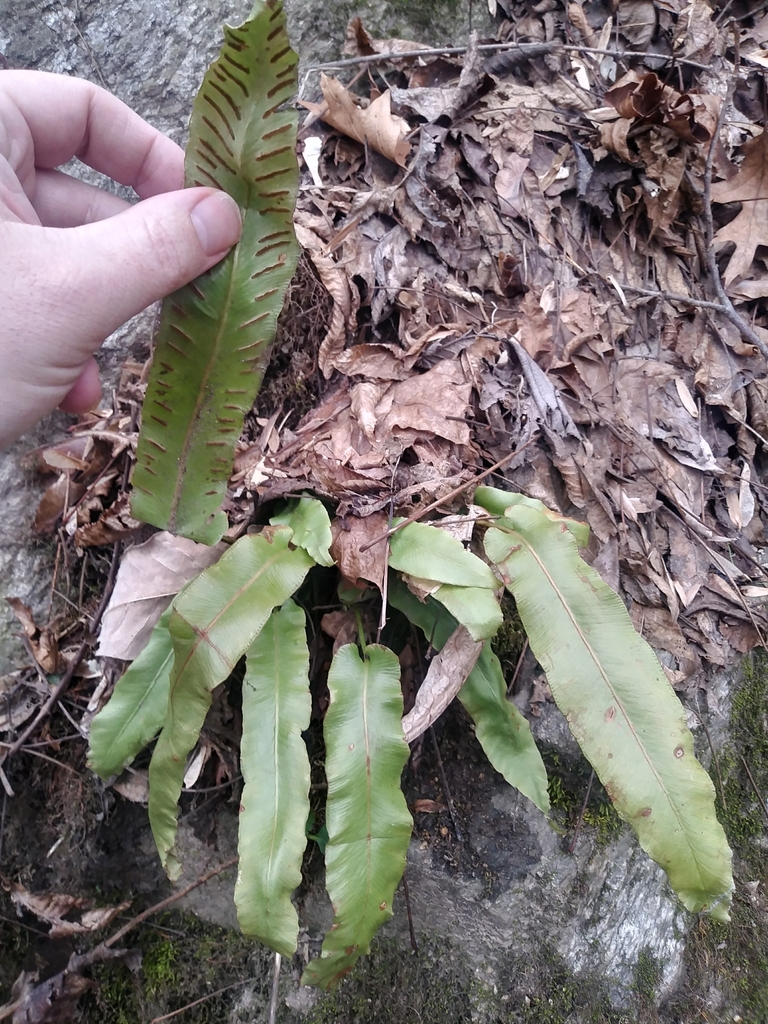
- Long, undivided strap shaped fronds
- Bright green leathery leaf texture
- Wavy or ruffled leaf margins
- Distinctive brown spore lines on undersides
- Height
- 0.3 to 0.6m
- Spread
- 0.3 to 0.6m
- Leaves
- bright green, dark green, evergreen
- Flowers
- 0cm
Common problems
- Slugs and snails — These pests feed on the tender young fronds during wet weather.
- Leaf spot — Fungal infections can occur if the foliage stays wet for too long in poor air circulation.
Growing it
- Propagation
- division, spores
- When to plant
- spring, autumn
Plant this fern in a cool, north-facing spot with plenty of organic matter to mimic its natural limestone habitat.
Grows well with
- Hosta — They share similar shade and moisture requirements.
- Bleeding Heart — It provides a beautiful textural contrast to the strap-like fronds of the fern.
Similar species
- Maidenhair Fern — It is another shade-loving fern that thrives in similar woodland conditions.
Science
- Family
- Aspleniaceae
- Genus
- Asplenium
- Order
- Polypodiales
- Class
- Polypodiopsida
- Native range
- Europe, parts of North America, and Asia.
- Conservation
- It is protected in some parts of its native range due to habitat loss and overcollection.
It typically grows in moist, shaded limestone crevices and woodland floors where it can access cool, humid air.
- Value to wildlife
- provides shelter for small invertebrates
- Uses
- shade garden, rock garden, woodland border
Through the year
Ecological indicators
- Salinity
- 1/9
- Soil reaction
- 8/9
- Light
- 2/9
- Temperature
- 4/9
- Moisture
- 7/9
- Nutrients
- 5/9
Taxonomy resolved against GBIF.
Questions people ask
- Does it need direct sun?
- No, it prefers deep shade and will scorch in direct sunlight.
- How often should I water it?
- Keep the soil consistently moist but never waterlogged.
Where the name comes from
The genus name Asplenium comes from the Greek word for spleen, as it was historically used to treat spleen disorders. The species name scolopendrium refers to the centipede-like arrangement of the spore cases.
Good to know
- It is commonly known as the hart's tongue fern because the fronds resemble a deer's tongue.
- It thrives in alkaline soils, which is unusual for many ferns.
- The plant was once used in traditional medicine to treat liver and spleen ailments.
Also in
Is your hart's tongue fern looking unwell?
This page is a general guide. Pocket Botanist diagnoses problems from a photo of your actual plant, works out watering for your light and conditions, and reminds you when care is due.
This guide was generated with AI and checked against GBIF taxonomy. It is general information, not horticultural or veterinary advice. Read about how we build these guides.