 Pocket Botanist
Plant guide
Mother Fern.
Asplenium daucifolium
Pronounced as-PLEE-nee-um daw-see-FOH-lee-um
Also known as Mauritius spleenwort



Scan with your phone's camera to get the app
Or go to pocketbotanist.app/get on your phone
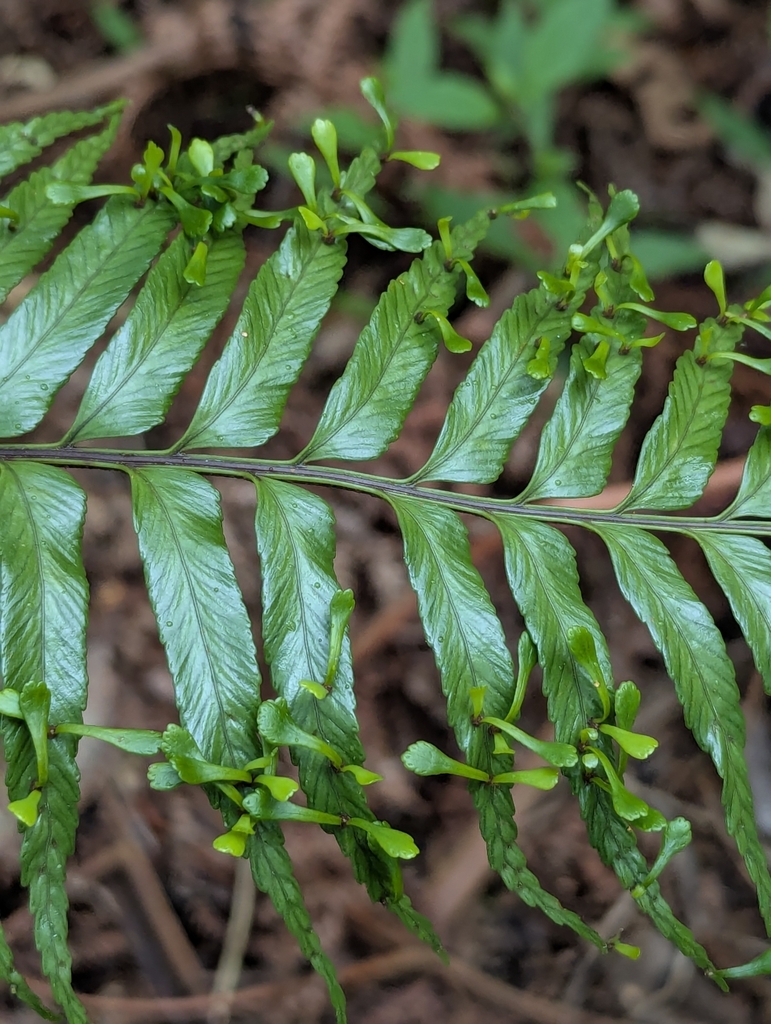
This lovely fern is famous for producing tiny plantlets directly on its fronds. It brings a delicate, lacy texture to any indoor space. You will find it is quite rewarding to watch those little babies grow.
At a glance
- Care level
- Moderate
- Plant type
- Fern
- Light
- Bright indirect light
- Indoor light
- Medium light
- Water
- Every 3 to 7 days
- Mature size
- 1 to 2 feet
- Growth rate
- Medium
- Hardiness
- USDA 10 to 12
Care
Keep the soil consistently moist but never soggy to mimic its natural humid environment. Watch for brown, crispy leaf tips which often signal that the air is too dry. Provide plenty of indirect light to help those little plantlets thrive.
- Watering
- Water when the top inch of soil feels slightly dry to the touch.
- Feeding
- Use a balanced liquid fertilizer diluted to half strength during the growing season.
- Pruning
- Trim away any yellow or damaged fronds at the base to keep the plant looking tidy.
- Repotting
- Move to a slightly larger pot only when the roots have filled the current container.
- Soil
- Peat based potting mix
- Soil pH
- 5.5 to 6.5
- Temperature
- 10 to 24°C
- Humidity
- 60 to 90%
- Drought tolerance
- Low
- Lifespan
- Perennial, typically 5 to 10 years
- Deer and rabbits
- Moderate
Signs it needs repotting
- Roots growing out of the drainage holes.
- Water running straight through the pot without soaking in.
- The plant has stopped producing new fronds during the growing season.
Safety
- People
- There is no evidence of significant toxicity to humans.
- Pets
- This plant is considered non-toxic to cats and dogs.
- Children
- The delicate fronds can be easily damaged by curious hands, but there is no specific danger to children.
- Edibility
- This plant is not considered edible and should not be consumed.
How to identify it
- Finely divided lacy fronds
- Small plantlets growing on leaf tips
- Arching habit with dark green foliage
- Scaly brown rhizomes at base
- Height
- 0.3 to 0.6m
- Spread
- 0.3 to 0.6m
- Leaves
- green, evergreen
- Flowers
- 0cm
Problems to watch for
- Leaf ScorchCommon
- Scale InsectsCommon
- Root RotUncommon
- Spider MitesUncommon
Check your mother fern from a photo
Pocket Botanist looks at a photo of your plant and tells you what's wrong and what to try first.
Scan with your phone's camera to get the app
Or go to pocketbotanist.app/get on your phone
Growing it
- Propagation
- division, plantlets
- When to plant
- spring, summer
- Overwintering
- Keep the plant away from cold drafts and heating vents. Ensure the ambient temperature stays above 10 degrees Celsius throughout the winter months.
- In containers
- It grows very well in containers, provided the pot has excellent drainage and the soil is kept consistently moist.
Plantlet Division
- Wait for the plantlets on the fronds to develop small roots.
- Gently detach the plantlet from the parent frond.
- Place the plantlet on the surface of moist potting mix.
- Cover with a clear lid or bag to maintain high humidity until established.
Group this fern with other moisture loving plants to create a microclimate that keeps humidity levels high.
Grows well with
- Peace Lily · They share similar requirements for high humidity and indirect light.
- Pothos · It provides a nice textural contrast while thriving in similar indoor conditions.
Similar species
- Bird's Nest Fern · It is a related species that also enjoys high humidity but has a different growth habit.
Science
- Family
- Aspleniaceae
- Genus
- Asplenium
- Order
- Polypodiales
- Class
- Polypodiopsida
- Native range
- Mauritius
- Conservation
- It is native to Mauritius and is considered vulnerable in its natural habitat due to environmental changes.
It grows as an epiphyte or lithophyte in humid, shaded tropical environments.
- Uses
- houseplant, terrarium specimen
Through the year
Ecological indicators
- Salinity
- 1/9
- Soil reaction
- 5/9
- Light
- 2/9
- Temperature
- 8/9
- Moisture
- 8/9
- Nutrients
- 4/9
Taxonomy resolved against GBIF.
Questions people ask
- How do I propagate the plantlets?
- Gently press a frond with developed plantlets onto moist soil until they root, then snip the connection.
- Does it need direct sunlight?
- No, it prefers bright, indirect light to avoid burning its delicate foliage.
Where the name comes from
The name Asplenium comes from the Greek word for spleen, as it was historically used to treat spleen ailments, while daucifolium refers to its carrot like leaf shape.
Good to know
- It is commonly known as the Mother Fern because of the baby plants it grows on its leaves.
- The plantlets are essentially clones of the parent plant.
- It thrives in the moist, shaded understory of tropical forests.
Also in
Keep your mother fern growing
This page is a general guide. Save your plant in Pocket Botanist and you get care reminders timed for this plant, plus a care history that shows what worked.
Scan with your phone's camera to get the app
Or go to pocketbotanist.app/get on your phone
This guide was generated with AI on and checked against GBIF taxonomy. It is general information, not horticultural or veterinary advice. Read about how we build these guides.