 Pocket Botanist
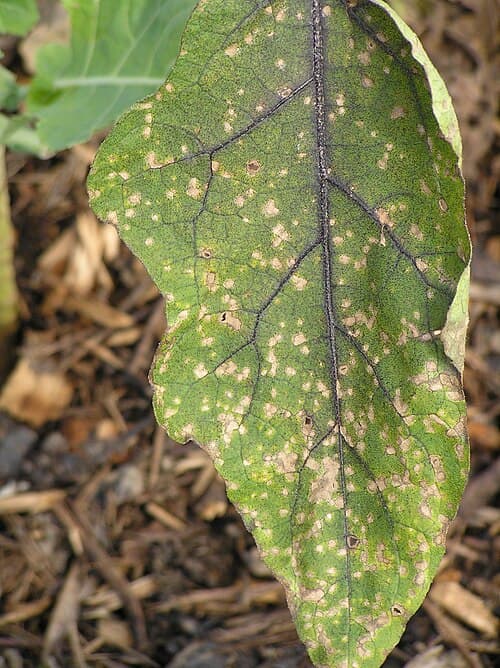

Check these first
- Inspect the undersides of the leaves for tiny insects.
- Check if the soil is staying wet for more than two weeks.
- Examine the plant for signs of sticky residue.
Likely causes
Fungal Leaf Spot
PossibleHow to tell: You will see small brown or black circles with yellow halos on the foliage. This often happens when the plant stays wet for too long.
What to do: Remove the affected leaves immediately to stop the spread. Ensure the plant is in a spot with excellent air circulation and avoid overhead watering.
Aphid Damage
PossibleHow to tell: Look for clusters of tiny yellow or green insects on the stems and new growth. They leave behind sticky residue that can lead to sooty mold spots.
What to do: Spray the aphids off with a strong stream of water from your hose. If they persist, apply insecticidal soap once a week until they are gone.
Find out what's wrong with your antelope horns
The list above covers the usual causes. Pocket Botanist looks at a photo of your actual plant and tells you the likely cause, how serious it is, and what to try first. Identification and a health check are free.



Scan with your phone's camera to get the app
Or go to pocketbotanist.app/get on your phone
When to worry
Worry if the spots are spreading rapidly across the entire plant. A few small marks on older leaves are usually just part of the aging process.
Stopping it coming back
Keep the foliage dry by watering only at the base of the plant. Provide plenty of space between plants to allow for good airflow.
Antelope horns: spots? Check yours with a photo
Every plant is a little different. Take a photo of your antelope horns and Pocket Botanist tells you which cause is most likely, how serious it is, and what to try first. A few checks a day are free. Save the plant and you get care reminders timed for it.
Scan with your phone's camera to get the app
Or go to pocketbotanist.app/get on your phone
Get the app · Or check it from a photo now, free
Questions people ask
- Should I cut off all the spotted leaves?
- Yes, removing them helps prevent the fungus from spreading to healthy parts of the plant. Just make sure to clean your shears between cuts.
- Can I use a fungicide on my Antelope horns?
- It is generally better to fix the environmental conditions first. Fungicides are rarely needed if you provide enough sun and proper drainage.
Guides to these causes
More problems with Antelope horns
- Why are there bugs on my Antelope horns?
- Why is my Antelope horns plant getting so tall and thin?
- Why is my Antelope horns wilting even when the soil is wet?
- Why are my Antelope horns leaves turning yellow?
- Why is my Antelope horns drooping?
- Why is my Antelope horns losing its leaves?
- Why is my Antelope horns not blooming?
- Why are my Antelope horns leaves curling?
Back to the Antelope horns guide
This article was generated with AI on from the plant’s care profile and is general information, not horticultural advice. Read about how we build these guides.