 Pocket Botanist
Plant guide
Silverweed.
Argentina anserina
Pronounced ar-jen-TEE-nah an-ser-EE-nah
Also known as Silverweed, Silverweed Cinquefoil, common silverweed



Scan with your phone's camera to get the app
Or go to pocketbotanist.app/get on your phone

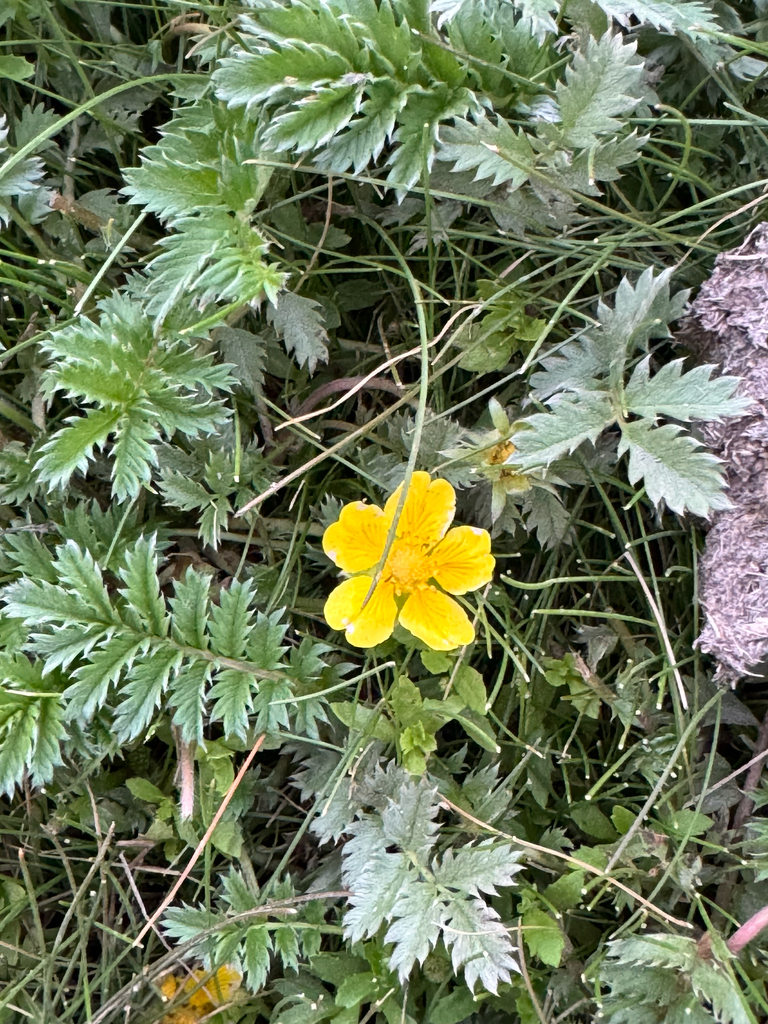
Silverweed is a charming, low growing perennial that spreads through runners. It is native to temperate regions and loves damp, sunny spots. You will often find it thriving in meadows or along the edges of ponds.
At a glance
- Care level
- Easy
- Plant type
- Herbaceous perennial
- Light
- Full sun
- Indoor light
- Direct sun
- Water
- Every 2 to 4 days
- Mature size
- 2 to 6 inches tall
- Growth rate
- Fast
- Hardiness
- USDA 2 to 8
- Bloom time
- Late spring to mid summer
Care
Keep the soil consistently moist, as this plant naturally prefers damp conditions. Watch for wilting if the soil dries out too much during hot weather. It is a vigorous grower, so give it plenty of space to spread.
- Watering
- Keep the soil evenly moist at all times.
- Feeding
- Apply a balanced liquid fertilizer during the active growing season.
- Pruning
- Trim back dead foliage or excessive runners to keep the plant tidy.
- Repotting
- Repot when the plant becomes root bound or stops spreading.
- Soil
- Moist, well draining soil
- Soil pH
- Neutral to slightly acidic
- Temperature
- -30 to 30°C
- Humidity
- 40 to 80%
- Drought tolerance
- Low
- Lifespan
- Perennial, typically 3 to 5 years.
- Deer and rabbits
- Moderate
Signs it needs repotting
- Roots growing out of the drainage holes.
- Stunted growth due to overcrowding.
Safety
- People
- The plant is generally considered non-toxic, but raw consumption should be avoided due to tannin content.
- Children
- No specific risks, though the runners can be a tripping hazard if they grow across paths.
- Contact allergens
- The fine hairs on the leaves may cause mild skin irritation in sensitive individuals.
- Airborne allergens
- Pollen may cause mild reactions in those with severe grass or weed allergies.
- Edibility
- While historically consumed, ensure plants are harvested from clean, non-polluted soil as they can accumulate heavy metals.
How to identify it
- Pinnate leaves with silvery undersides
- Bright yellow five petaled flowers
- Spreads via long red runners
- Toothed leaf margins
- Height
- 0.05 to 0.15m
- Spread
- 0.3 to 1m
- Leaves
- green, silver, deciduous
- Flowers
- yellow, 1 to 2.5cm
Problems to watch for
- AphidsCommon
- RustCommon
- Slugs and SnailsCommon
- Leaf SpotUncommon
- Powdery MildewUncommon
- Root RotUncommon
Check your silverweed from a photo
Pocket Botanist looks at a photo of your plant and tells you what's wrong and what to try first.
Scan with your phone's camera to get the app
Or go to pocketbotanist.app/get on your phone
Growing it
- Propagation
- division, runners
- When to plant
- spring, autumn
- Overwintering
- The plant dies back to the ground in winter. No special protection is needed as it is very cold hardy.
- In containers
- It grows well in wide, shallow containers, but it will quickly outgrow them due to its runners.
Division
- 1. Dig up a section of the plant in early spring.
- 2. Separate the rooted runners from the main clump.
- 3. Replant immediately in moist soil.
Plant silverweed in areas where you need a tough, low-growing ground cover that can handle occasional foot traffic.
Grows well with
- Blue-eyed Grass · They share similar moisture needs and look lovely together in a meadow setting.
- Marsh Marigold · This plant thrives in the same damp soil conditions as silverweed.
Similar species
- Common Cinquefoil · It has a similar growth habit but prefers slightly drier soil.
Science
- Family
- Rosaceae
- Genus
- Argentina
- Order
- Rosales
- Class
- Magnoliopsida
- Native range
- Northern Hemisphere across North America, Europe, and Asia.
- Conservation
- This species is widespread and secure across its native range.
It survives in moist, open habitats by using runners to quickly colonize available space.
- Value to wildlife
- nectar source, ground cover habitat
- Pollinators
- bees, butterflies
- Uses
- ground cover, edible greens, medicinal tea
Through the year
Ecological indicators
- Salinity
- 4/9
- Soil reaction
- 6/9
- Light
- 7/9
- Temperature
- 4/9
- Moisture
- 7/9
- Nutrients
- 5/9
Taxonomy resolved against GBIF.
Questions people ask
- Is silverweed invasive?
- It is a vigorous spreader, but it is native to many regions and usually stays low to the ground.
- How do I stop it from spreading?
- Simply pull up the rooting runners or edge the area with a physical barrier.
Where the name comes from
The genus name Argentina refers to the silvery appearance of the leaves, while anserina means goose-like, likely referring to the leaf shape.
Good to know
- It is commonly known as silverweed because of the silvery underside of its leaves.
- The roots were once a staple food for many indigenous cultures in North America.
- It thrives in disturbed soils and can quickly colonize bare patches of earth.
Keep your silverweed growing
This page is a general guide. Save your plant in Pocket Botanist and you get care reminders timed for this plant, plus a care history that shows what worked.
Scan with your phone's camera to get the app
Or go to pocketbotanist.app/get on your phone
This guide was generated with AI on and checked against GBIF taxonomy. It is general information, not horticultural or veterinary advice. Read about how we build these guides.