 Pocket Botanist
Guía de plantas
Potentilla anserina.
Argentina anserina
Pronunciación ar-jen-TEE-nah an-ser-EE-nah
También se conoce como Potentilla anserina, Potentilla anserina, Potentilla anserina



La Potentilla anserina es una planta perenne encantadora y de bajo crecimiento que se propaga por estolones. Es nativa de regiones templadas y le encantan los lugares húmedos y soleados. A menudo la encontrarás prosperando en prados o en los bordos de los estanques.
De un vistazo
- Nivel de cuidados
- Fácil
- Tipo de planta
- Perenne herbácea
- Luz
- Pleno sol
- Luz en interior
- Sol directo
- Riego
- Cada 2 a 4 días
- Tamaño adulto
- de 15 a 30 cm de altura
- Ritmo de crecimiento
- Rápido
- Rusticidad
- USDA 2 a 8
- Floración
- Late spring to mid summer
Cuidados
Mantén la tierra constantemente húmeda, ya que esta planta prefiere de forma natural las condiciones húmedas. Estate atento a la marchitez si la tierra se seca demasiado durante el clima cálido. Es una planta de crecimiento vigoroso, así que dale mucho espacio para que se extienda.
- Riego
- Mantén la tierra uniformemente húmeda en todo momento.
- Abonado
- Aplica un fertilizante líquido equilibrado durante la temporada de crecimiento activo.
- Poda
- Recorta el follaje muerto o los estolones excesivos para mantener la planta ordenada.
- Trasplante
- Trasplanta cuando la planta esté apretada de raíces o deje de extenderse.
- Suelo
- Tierra húmeda y bien drenada
- pH del suelo
- Neutro a ligeramente ácido
- Temperatura
- -30 a 30°C
- Humedad
- 40 a 80%
- Tolerancia a la sequía
- Baja
- Longevidad
- Perennial, typically 3 to 5 years.
- Resistencia a ciervos y conejos
- Moderada
Señales de que necesita trasplante
- Roots growing out of the drainage holes.
- Stunted growth due to overcrowding.
Seguridad
- Personas
- The plant is generally considered non-toxic, but raw consumption should be avoided due to tannin content.
- Niños
- No specific risks, though the runners can be a tripping hazard if they grow across paths.
- Alérgenos por contacto
- The fine hairs on the leaves may cause mild skin irritation in sensitive individuals.
- Alérgenos en el aire
- Pollen may cause mild reactions in those with severe grass or weed allergies.
- Comestibilidad
- While historically consumed, ensure plants are harvested from clean, non-polluted soil as they can accumulate heavy metals.
Cómo identificarla
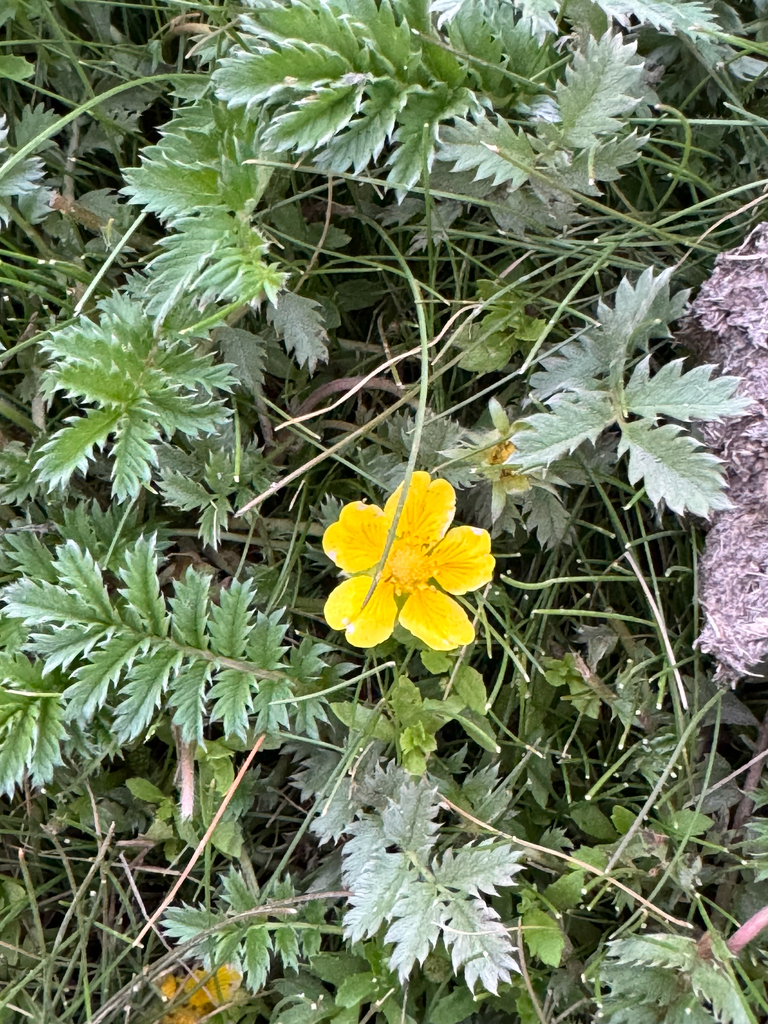
- Hojas pinnadas con envés plateado
- Flores amarillas brillantes de cinco pétalos
- Se propaga por largos estolones rojos
- Márgenes de las hojas dentados
- Altura
- 0,05 a 0,15m
- Anchura
- 0,3 a 1m
- Hojas
- green, silver, deciduous
- Flores
- yellow, 1 a 2,5cm
Problemas frecuentes
- Rust — Fungal spots appear on leaves during periods of high humidity.
Cómo cultivarla
- Propagación
- division, runners
- Cuándo plantar
- spring, autumn
- Cuidados en invierno
- The plant dies back to the ground in winter. No special protection is needed as it is very cold hardy.
- En maceta
- It grows well in wide, shallow containers, but it will quickly outgrow them due to its runners.
Division
- 1. Dig up a section of the plant in early spring.
- 2. Separate the rooted runners from the main clump.
- 3. Replant immediately in moist soil.
Plant silverweed in areas where you need a tough, low-growing ground cover that can handle occasional foot traffic.
Buenas compañeras
- Sisyrinchium angustifolium — They share similar moisture needs and look lovely together in a meadow setting.
- Marsh marigold — This plant thrives in the same damp soil conditions as silverweed.
Especies parecidas
- Potentilla simplex — It has a similar growth habit but prefers slightly drier soil.
Ciencia
- Familia
- Rosaceae
- Género
- Argentina
- Orden
- Rosales
- Clase
- Magnoliopsida
- Distribución natural
- Northern Hemisphere across North America, Europe, and Asia.
- Conservación
- This species is widespread and secure across its native range.
It survives in moist, open habitats by using runners to quickly colonize available space.
- Valor para la fauna
- nectar source, ground cover habitat
- Polinizadores
- abejas, mariposas
- Usos
- ground cover, edible greens, medicinal tea
A lo largo del año
Indicadores ecológicos
- Salinidad
- 4/9
- Reacción del suelo
- 6/9
- Luz
- 7/9
- Temperatura
- 4/9
- Humedad
- 7/9
- Nutrientes
- 5/9
Taxonomía cotejada con GBIF.
Lo que más preguntan
- Is silverweed invasive?
- It is a vigorous spreader, but it is native to many regions and usually stays low to the ground.
- How do I stop it from spreading?
- Simply pull up the rooting runners or edge the area with a physical barrier.
De dónde viene el nombre
The genus name Argentina refers to the silvery appearance of the leaves, while anserina means goose-like, likely referring to the leaf shape.
Bueno saberlo
- It is commonly known as silverweed because of the silvery underside of its leaves.
- The roots were once a staple food for many indigenous cultures in North America.
- It thrives in disturbed soils and can quickly colonize bare patches of earth.
¿Tu potentilla anserina tiene mal aspecto?
Esta página es una guía general. Pocket Botanist diagnostica problemas a partir de una foto de tu propia planta, calcula el riego según tu luz y tus condiciones, y te avisa cuando toca cuidarla.
Esta guía se ha generado con IA y se ha cotejado con la taxonomía de GBIF. Es información general, no asesoramiento botánico ni veterinario. Descubre cómo elaboramos estas guías.