 Pocket Botanist
Plant guide
Pacific madrone.
Arbutus menziesii
Pronounced ar-BYOO-tus men-ZEE-zee-eye
Also known as Arbutus, Arbutus Tree, Laurelwood, Oregon Laurel, Pacific arbutus, Pacific madrone, madrona, refrigerator tree



Scan with your phone's camera to get the app
Or go to pocketbotanist.app/get on your phone

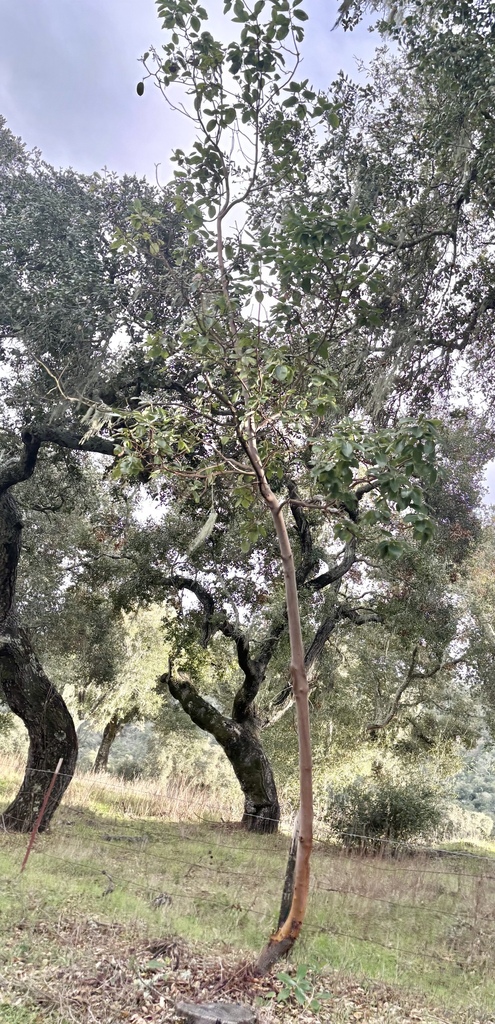
The Pacific madrone is a stunning evergreen tree known for its smooth, peeling bark that reveals rich cinnamon colors underneath. It's a true icon of the Pacific Northwest landscape. You'll love its clusters of white flowers and bright red berries that attract plenty of birds.
At a glance
- Care level
- Moderate
- Plant type
- Evergreen tree
- Light
- Full sun
- Indoor light
- Direct sun
- Water
- Every 7 to 14 days
- Mature size
- 20 to 30 meters
- Growth rate
- Medium
- Hardiness
- USDA 7 to 9
- Bloom time
- Mid to late spring
Care
This tree prefers well-draining soil and struggles with heavy clay or excessive summer moisture. Watch for leaf spots or bark discoloration, which can signal fungal issues from poor drainage. It's best to leave it undisturbed once established, as it dislikes root disturbance.
- Watering
- Water deeply during the first few years, but allow the soil to dry out significantly between waterings once established.
- Feeding
- Generally does not require fertilizer if planted in native soil, but a light application of balanced organic compost in spring can help young trees.
- Pruning
- Prune only to remove dead or diseased branches during the dormant winter season.
- Repotting
- This tree is best planted directly in the ground, as it does not thrive in containers long-term.
- Soil
- Well-draining, rocky, or sandy soil
- Soil pH
- 5.0 to 7.0
- Temperature
- -12 to 35°C
- Humidity
- 40 to 70%
- Drought tolerance
- High
- Lifespan
- Long lived, often reaching over 100 years in ideal conditions.
- Fragrance
- Light
- Deer and rabbits
- Moderate
Signs it needs repotting
- Roots growing out of the drainage holes.
- Water running straight through the pot without soaking in.
Safety
- People
- The plant is not considered toxic, though the berries are unpalatable.
- Children
- The berries are not poisonous, but they are a choking hazard for small children due to their size and texture.
- Contact allergens
- The leaves have a slightly leathery texture that may cause minor irritation to sensitive skin.
- Airborne allergens
- The pollen can be a mild irritant for those with seasonal allergies.
- Edibility
- The berries are technically edible but are mealy and flavorless, so they are generally not recommended for consumption.
How to identify it
- Smooth, reddish, peeling bark
- Leathery, evergreen, oval leaves
- Clusters of white bell-shaped flowers
- Bright red, bumpy, spherical berries
- Height
- 6 to 25m
- Spread
- 5 to 15m
- Leaves
- dark green, glossy, evergreen
- Flowers
- white, creamy, 0.5 to 1cm
- Fruit
- red, orange, Autumn
Problems to watch for
- Madrone Canker · A fungal infection that causes lesions on the bark and can lead to branch dieback.
Check your pacific madrone from a photo
Pocket Botanist looks at a photo of your plant and tells you what's wrong and what to try first.
Scan with your phone's camera to get the app
Or go to pocketbotanist.app/get on your phone
Growing it
- Propagation
- seed, cuttings
- When to plant
- autumn, spring
- Overwintering
- No special winter protection is needed as it is well adapted to cold temperatures within its native range.
- In containers
- It does not do well in containers due to its deep taproot and need for undisturbed soil.
Seed
- Clean the seeds from the ripe berries.
- Cold stratify the seeds in a refrigerator for 60 days.
- Sow in well drained soil and keep barely moist.
Plant this tree in a location where it will not be disturbed by frequent irrigation or soil cultivation.
Grows well with
- Salal · They share similar soil and moisture requirements in coastal forest environments.
- Oregon Grape · This shrub thrives in the same dry, well drained conditions as the madrone.
Similar species
- Strawberry Tree · It is a related species that is much easier to grow in garden settings.
Science
- Family
- Ericaceae
- Genus
- Arbutus
- Order
- Ericales
- Class
- Magnoliopsida
- Native range
- Western North America, from British Columbia down to California.
- Conservation
- It is not currently endangered, but it faces significant threats from habitat loss and fungal diseases in the wild.
It thrives on dry, rocky slopes and is a pioneer species that often colonizes areas after forest fires.
- Value to wildlife
- nectar source, winter food for birds
- Pollinators
- bees, butterflies, hummingbirds
- Uses
- ornamental tree, wildlife garden, coastal landscaping
Through the year
Ecological indicators
- Salinity
- 4/9
- Soil reaction
- 5/9
- Light
- 8/9
- Temperature
- 6/9
- Moisture
- 3/9
- Nutrients
- 3/9
Taxonomy resolved against GBIF.
Questions people ask
- Does it grow well in gardens?
- It is notoriously difficult to transplant and prefers to be left undisturbed in well drained soil.
- How much water does it need?
- Once established, it is very drought tolerant and prefers to stay dry during the summer months.
Where the name comes from
The species is named after Archibald Menzies, a Scottish botanist who first described the tree during the Vancouver Expedition.
Good to know
- The bark peels away in thin, papery strips every year.
- It is the only broadleaf evergreen tree native to Canada.
- Native American tribes traditionally used the berries for food and the bark for medicinal teas.
- The tree is highly adapted to fire and can sprout from its base after a blaze.
Also in
Keep your pacific madrone growing
This page is a general guide. Save your plant in Pocket Botanist and you get care reminders timed for this plant, plus a care history that shows what worked.
Scan with your phone's camera to get the app
Or go to pocketbotanist.app/get on your phone
This guide was generated with AI on and checked against GBIF taxonomy. It is general information, not horticultural or veterinary advice. Read about how we build these guides.