 Pocket Botanist
Plant guide
Kangaroo paw.
Anigozanthos flavidus
Pronounced an-ih-go-ZAN-thos FLAY-vih-dus
Also known as evergreen kangaroo-paw, tall kangaroo paw, tall kangaroo-paw, yellow kangaroo paw



Scan with your phone's camera to get the app
Or go to pocketbotanist.app/get on your phone
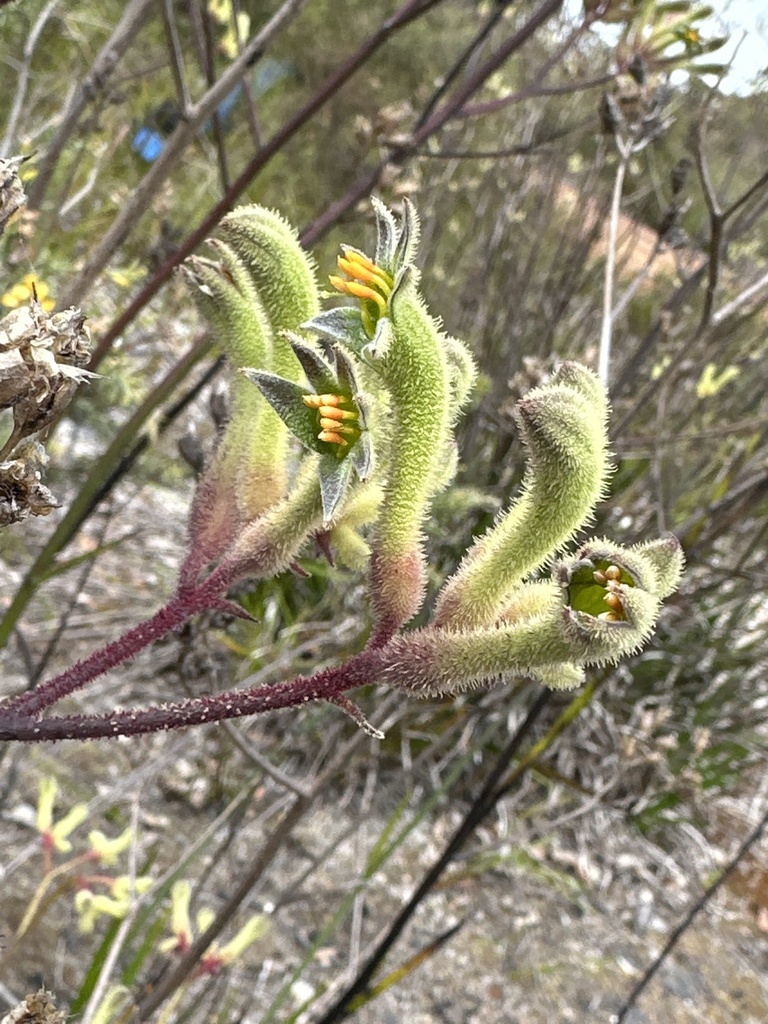
Kangaroo paws are striking Australian natives known for their unique, fuzzy flowers that look just like little animal paws. They bring a distinct architectural flair to any sunny garden or patio. You'll love how their vibrant colors stand out against their strappy, grass like foliage.

At a glance
- Care level
- Moderate
- Plant type
- Perennial
- Light
- Full sun
- Indoor light
- Direct sun
- Water
- Every 7 to 14 days
- Mature size
- 3 to 6 feet
- Growth rate
- Medium
- Hardiness
- USDA 9 to 11
- Bloom time
- Late spring to mid autumn
Care
Plant these in well draining soil to prevent root rot, as they really hate having wet feet. Keep an eye out for black ink spot disease on the leaves, which often happens if the air is too humid or stagnant. They thrive when you give them plenty of space and airflow.
- Watering
- Water deeply when the top inch of soil feels dry to the touch.
- Feeding
- Use a low phosphorus fertilizer during the active growing season.
- Pruning
- Cut back old flower stalks and foliage to the base after flowering finishes.
- Repotting
- Repot only when the plant becomes root bound in its current container.
- Soil
- Sandy, well draining soil
- Soil pH
- Acidic to neutral
- Temperature
- -5 to 35°C
- Humidity
- 20 to 50%
- Drought tolerance
- Moderate
- Lifespan
- Perennial, typically 5 to 8 years.
- Deer and rabbits
- Moderate
Signs it needs repotting
- Roots growing out of the drainage holes.
- Water sitting on the surface for too long.
- Plant growth slowing significantly.
Safety
- People
- The plant is generally considered non-toxic, though the fine hairs on the foliage can cause skin irritation.
- Children
- The stiff, fibrous leaves and fuzzy hairs may cause minor skin irritation if handled by young children.
- Contact allergens
- The fine, woolly hairs on the leaves and stems can cause mechanical skin irritation or contact dermatitis in sensitive individuals.
- Airborne allergens
- The pollen is generally not considered a major airborne allergen.
- Edibility
- This plant is not intended for consumption and may cause digestive upset.
How to identify it
- Fuzzy, tubular flowers
- Fan shaped leaf clusters
- Tall, sturdy flower stalks
- Velvety flower texture
- Height
- 1 to 2m
- Spread
- 0.6 to 1.2m
- Leaves
- green, evergreen
- Flowers
- yellow, green, red, orange, 5 to 10cm
- Fruit
- brown, Late autumn
Problems to watch for
- Ink Spot DiseaseCommon
- Slugs and SnailsCommon
- Leaf SpotUncommon
- Root RotUncommon
Check your kangaroo paw from a photo
Pocket Botanist looks at a photo of your plant and tells you what's wrong and what to try first.
Scan with your phone's camera to get the app
Or go to pocketbotanist.app/get on your phone
Growing it
- Propagation
- division, seed
- When to plant
- spring, autumn
- Overwintering
- Keep the plant dry during winter to prevent crown rot. If temperatures drop below freezing, move containers to a sheltered area.
- In containers
- It grows well in large pots with a minimum diameter of 40 cm using a free draining potting mix.
Division
- 1. Dig up a mature clump in spring.
- 2. Gently pull the rhizomes apart into smaller sections.
- 3. Ensure each section has healthy roots and foliage.
- 4. Replant immediately in well draining soil.
Group plants with similar low nutrient and high drainage needs to ensure all thrive together.
Grows well with
- Grevillea · They share similar soil and water requirements while providing complementary textures.
- Blue Fescue · The blue foliage provides a nice color contrast to the green leaves of the kangaroo paw.
Similar species
- Red and Green Kangaroo Paw · It is a closely related species with more vibrant, contrasting flower colors.
Science
- Family
- Haemodoraceae
- Genus
- Anigozanthos
- Order
- Commelinales
- Class
- Liliopsida
- Native range
- Southwestern Australia
- Conservation
- This species is common and stable in its native range and is not considered threatened.
It grows in sandy, well drained soils and relies on nectar feeding birds for pollination.
- Value to wildlife
- nectar source
- Pollinators
- hummingbirds, bees
- Uses
- ornamental garden plant, cut flower, container plant
Through the year
Ecological indicators
- Salinity
- 2/9
- Soil reaction
- 5/9
- Light
- 8/9
- Temperature
- 7/9
- Moisture
- 3/9
- Nutrients
- 2/9
Taxonomy resolved against GBIF.
Questions people ask
- Does it need a lot of water?
- It prefers regular water during the growing season but requires excellent drainage to prevent root rot.
- Should I prune it?
- Yes, cut the flower stalks back to the base after they finish blooming to encourage new growth.
Where the name comes from
The genus name Anigozanthos comes from Greek words meaning elevated flower, while flavidus refers to the yellowish color of the original species.
Good to know
- The common name kangaroo paw comes from the shape of the flowers which resemble the paws of a kangaroo.
- Its close relative, the red and green kangaroo paw (Anigozanthos manglesii), is the floral emblem of Western Australia.
- The plant is highly adapted to fire prone environments and often blooms vigorously after a burn.
Keep your kangaroo paw growing
This page is a general guide. Save your plant in Pocket Botanist and you get care reminders timed for this plant, plus a care history that shows what worked.
Scan with your phone's camera to get the app
Or go to pocketbotanist.app/get on your phone
This guide was generated with AI on and checked against GBIF taxonomy. It is general information, not horticultural or veterinary advice. Read about how we build these guides.