 Pocket Botanist
Pflanzenratgeber
Känguru-Pfote.
Anigozanthos flavidus
Aussprache an-ih-go-ZAN-thos FLAY-vih-dus
Auch bekannt als evergreen kangaroo-paw, tall kangaroo paw, tall kangaroo-paw, yellow kangaroo paw


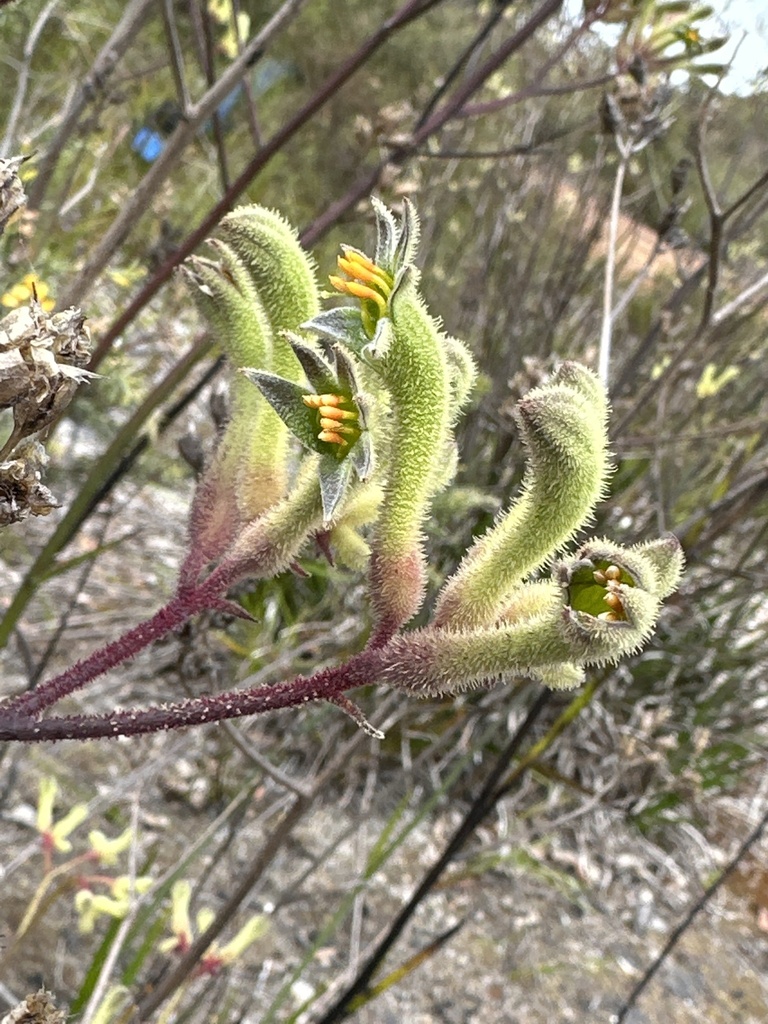
Känguru-Pfoten sind auffällige australische Ureinwohner, bekannt für ihre einzigartigen, flauschigen Blüten, die wie kleine Tierpfoten aussehen. Sie bringen einen ausgeprägten architektonischen Flair in jeden sonnigen Garten oder auf jede Terrasse. Sie werden lieben, wie ihre leuchtenden Farben sich von ihrem riemenartigen, grasähnlichen Laub abheben.

Auf einen Blick
- Pflegestufe
- Mittel
- Pflanzenart
- Mehrjährige Pflanze
- Licht
- Volle Sonne
- Licht im Innenraum
- Direkte Sonne
- Gießen
- Alle 7 bis 14 Tage
- Endgröße
- 3 bis 6 Fuß
- Wachstum
- Mittel
- Winterhärte
- USDA 9 bis 11
- Blütezeit
- Late spring to mid autumn
Pflege
Pflanzen Sie diese in gut durchlässigen Boden, um Wurzelfäule zu vermeiden, da sie nasse Füße wirklich hassen. Achten Sie auf schwarze Tintenfleckenkrankheit an den Blättern, die oft auftritt, wenn die Luft zu feucht oder stagniert ist. Sie gedeihen, wenn Sie ihnen viel Platz und Luftzirkulation geben.
- Gießen
- Tief gießen, wenn sich der oberste Zoll des Bodens trocken anfühlt.
- Düngen
- Verwenden Sie während der aktiven Wachstumsperiode einen phosphorarmen Dünger.
- Schneiden
- Schneiden Sie alte Blütenstiele und Laub nach dem Ende der Blüte bis zum Boden zurück.
- Umtopfen
- Topfen Sie nur um, wenn die Pflanze in ihrem aktuellen Behälter wurzelgebunden ist.
- Boden
- Sandiger, gut durchlässiger Boden
- Boden-pH
- Sauer bis neutral
- Temperatur
- -5 bis 35°C
- Luftfeuchtigkeit
- 20 bis 50%
- Trockenheitstoleranz
- Mittel
- Lebensdauer
- Perennial, typically 5 to 8 years.
- Wildverbiss-Resistenz
- Mittel
Anzeichen fürs Umtopfen
- Roots growing out of the drainage holes.
- Water sitting on the surface for too long.
- Plant growth slowing significantly.
Sicherheit
- Menschen
- The plant is generally considered non-toxic, though the fine hairs on the foliage can cause skin irritation.
- Kinder
- The stiff, fibrous leaves and fuzzy hairs may cause minor skin irritation if handled by young children.
- Kontaktallergene
- The fine, woolly hairs on the leaves and stems can cause mechanical skin irritation or contact dermatitis in sensitive individuals.
- Allergene in der Luft
- The pollen is generally not considered a major airborne allergen.
- Essbarkeit
- This plant is not intended for consumption and may cause digestive upset.
So erkennst du die Pflanze
- Flauschige, röhrenförmige Blüten
- Fächerförmige Blattbüschel
- Hohe, stabile Blütenstiele
- Samtige Blütentextur
- Höhe
- 1 bis 2m
- Breite
- 0,6 bis 1,2m
- Blätter
- green, evergreen
- Blüten
- yellow, green, red, orange, 5 bis 10cm
- Früchte
- brown, Late autumn
Häufige Probleme
- Ink spot disease — Black spots appear on leaves due to fungal infection often triggered by high humidity.
- Snails and slugs — These pests feed on the succulent foliage and flower buds.
Standort und Pflege
- Vermehrung
- division, seed
- Pflanzzeit
- spring, autumn
- Überwinterung
- Keep the plant dry during winter to prevent crown rot. If temperatures drop below freezing, move containers to a sheltered area.
- Im Kübel
- It grows well in large pots with a minimum diameter of 40 cm using a free draining potting mix.
Division
- 1. Dig up a mature clump in spring.
- 2. Gently pull the rhizomes apart into smaller sections.
- 3. Ensure each section has healthy roots and foliage.
- 4. Replant immediately in well draining soil.
Group plants with similar low nutrient and high drainage needs to ensure all thrive together.
Gute Pflanzpartner
- Grevillea — They share similar soil and water requirements while providing complementary textures.
- Blue Fescue — The blue foliage provides a nice color contrast to the green leaves of the kangaroo paw.
Ähnliche Arten
- Anigozanthos manglesii — It is a closely related species with more vibrant, contrasting flower colors.
Botanisches
- Familie
- Haemodoraceae
- Gattung
- Anigozanthos
- Ordnung
- Commelinales
- Klasse
- Liliopsida
- Ursprüngliche Heimat
- Southwestern Australia
- Artenschutz
- This species is common and stable in its native range and is not considered threatened.
It grows in sandy, well drained soils and relies on nectar feeding birds for pollination.
- Nutzen für Wildtiere
- nectar source
- Bestäuber
- Kolibris, Bienen
- Verwendung
- ornamental garden plant, cut flower, container plant
Im Jahresverlauf
Ökologische Zeigerwerte
- Salzgehalt
- 2/9
- Bodenreaktion
- 5/9
- Licht
- 8/9
- Temperatur
- 7/9
- Feuchtigkeit
- 3/9
- Nährstoffe
- 2/9
Taxonomie abgeglichen mit GBIF.
Häufige Fragen
- Does it need a lot of water?
- It prefers regular water during the growing season but requires excellent drainage to prevent root rot.
- Should I prune it?
- Yes, cut the flower stalks back to the base after they finish blooming to encourage new growth.
Woher der Name kommt
The genus name Anigozanthos comes from Greek words meaning elevated flower, while flavidus refers to the yellowish color of the original species.
Gut zu wissen
- The common name kangaroo paw comes from the shape of the flowers which resemble the paws of a kangaroo.
- It is the floral emblem of Western Australia.
- The plant is highly adapted to fire prone environments and often blooms vigorously after a burn.
Probleme mit Känguru-Pfote?
Diese Seite bietet allgemeine Infos. Pocket Botanist erkennt Probleme anhand eines Fotos deiner echten Pflanze, passt das Gießen an dein Licht und deinen Standort an und erinnert dich an die Pflege.
Dieser Ratgeber wurde mit KI erstellt und mit der GBIF-Taxonomie abgeglichen. Er dient zur allgemeinen Information und ersetzt keine gärtnerische oder tierärztliche Beratung. Hier erfährst du, wie wir diese Ratgeber erstellen.