 Pocket Botanist
Plant guide
Ramsons.
Allium ursinum
Pronounced AL-ee-um ur-SEE-num



Scan with your phone's camera to get the app
Or go to pocketbotanist.app/get on your phone
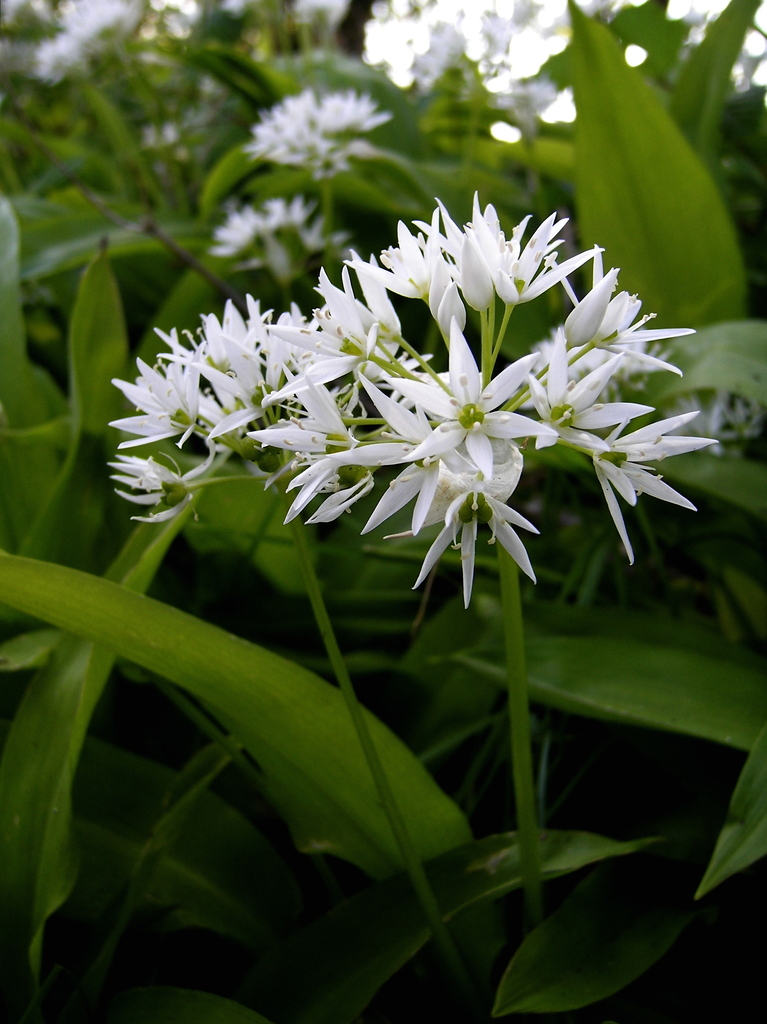
Ramsons are a lovely woodland plant that carpet forest floors in spring with white star shaped flowers. They are famous for their strong garlic scent which fills the air when the leaves are crushed. You will find them happiest in cool, shaded spots with moist soil.
At a glance
- Care level
- Easy
- Plant type
- Bulbous perennial
- Light
- Partial shade to full shade
- Indoor light
- Medium light
- Water
- Every 3 to 7 days
- Mature size
- 12 to 18 inches
- Growth rate
- Medium
- Hardiness
- USDA 4 to 8
- Bloom time
- Mid to late spring
Care
Keep the soil consistently moist and mimic their natural woodland habitat by providing dappled shade. Watch for yellowing leaves which often signal that the plant is entering its summer dormancy period. Ensure the soil stays rich in organic matter to keep them thriving.
- Watering
- Keep the soil damp but not waterlogged throughout the growing season.
- Feeding
- Apply a balanced organic fertilizer once in early spring as new growth appears.
- Pruning
- Simply remove dead or yellowing foliage after the plant finishes flowering and dies back.
- Repotting
- Divide the bulbs every few years if the clump becomes too crowded.
- Soil
- Moist, humus rich, well draining soil
- Soil pH
- Neutral to slightly acidic
- Temperature
- -25 to 30°C
- Humidity
- 50 to 80%
- Drought tolerance
- Low
- Lifespan
- Perennial, long lived in suitable conditions.
- Fragrance
- Strong
- Deer and rabbits
- High
Signs it needs repotting
- Roots growing out of the drainage holes.
- Bulbs becoming too crowded in the pot.
Safety
- People
- This plant is generally safe for humans but can cause digestive upset if consumed in very large quantities.
- Pets
- This plant is toxic to cats and dogs if ingested.
- Children
- Keep away from young children to prevent accidental ingestion of bulbs which may cause stomach discomfort.
- Contact allergens
- Handling the bulbs or crushed leaves may cause skin irritation in sensitive individuals.
- Airborne allergens
- The strong garlic scent can be overwhelming for some people but is not a common allergen.
- Edibility
- Ensure positive identification before consumption as the leaves can be confused with toxic lily of the valley or autumn crocus.
How to identify it
- Broad lance shaped green leaves
- Clusters of white star shaped flowers
- Strong garlic scent when bruised
- Bulbous perennial growth habit
- Height
- 0.2 to 0.45m
- Spread
- 0.15 to 0.3m
- Leaves
- bright green, deciduous
- Flowers
- white, 1 to 2cm
- Fruit
- black, Summer
Problems to watch for
- RustCommon
- Slugs and SnailsCommon
- Bulb RotUncommon
- Onion ThripsUncommon
- White RotRare
Check your ramsons from a photo
Pocket Botanist looks at a photo of your plant and tells you what's wrong and what to try first.
Scan with your phone's camera to get the app
Or go to pocketbotanist.app/get on your phone
Growing it
- Propagation
- division, seed
- When to plant
- autumn, early spring
- Overwintering
- The plant goes dormant in winter, so no special protection is needed for the bulbs underground.
- In containers
- It grows well in pots if kept in a cool, shaded spot with consistently moist soil.
Division
- 1. Dig up clumps after flowering but before leaves die back.
- 2. Gently pull the bulbs apart.
- 3. Replant immediately in moist, organic soil.
Seed
- 1. Collect fresh seeds in summer.
- 2. Sow immediately in pots.
- 3. Keep in a cold frame over winter for germination in spring.
Plant them in groups under deciduous trees to create a natural woodland carpet.
Grows well with
- Bluebell · They share similar woodland habitat requirements and bloom times.
- Wood Anemone · These plants naturally occur together in forest understories.
Similar species
- Lily of the Valley · The leaves look very similar but this plant is highly toxic.
Science
- Family
- Amaryllidaceae
- Genus
- Allium
- Order
- Asparagales
- Class
- Liliopsida
- Native range
- Europe and parts of Asia.
- Conservation
- Wild harvesting is restricted in some regions to protect natural populations.
It thrives in the dappled shade of deciduous forests where it completes its life cycle before the tree canopy fully closes.
- Value to wildlife
- nectar source
- Pollinators
- bees, butterflies
- Uses
- culinary herb, woodland garden plant, ground cover
Through the year
Ecological indicators
- Salinity
- 1/9
- Soil reaction
- 6/9
- Light
- 3/9
- Temperature
- 4/9
- Moisture
- 7/9
- Nutrients
- 6/9
Taxonomy resolved against GBIF.
Questions people ask
- Can I eat the flowers?
- Yes, the flowers are edible and have a mild garlic flavor.
- Does it spread?
- It spreads readily by seed and bulb offsets in ideal conditions.
Where the name comes from
The name ursinum refers to bears, reflecting the old folklore about bears eating the plant. Allium is the classical Latin name for garlic.
Good to know
- It is often called bear garlic because bears are said to eat the bulbs after hibernation.
- The leaves disappear entirely by mid summer.
- It prefers cool, damp, shaded woodland environments.
Also in
Keep your ramsons growing
This page is a general guide. Save your plant in Pocket Botanist and you get care reminders timed for this plant, plus a care history that shows what worked.
Scan with your phone's camera to get the app
Or go to pocketbotanist.app/get on your phone
This guide was generated with AI on and checked against GBIF taxonomy. It is general information, not horticultural or veterinary advice. Read about how we build these guides.