 Pocket Botanist
Plant guide
Chocolate vine.
Akebia quinata
Pronounced uh-KEE-bee-uh kwin-AY-tuh
Also known as Chocolate Vine, Five-leaf, Five-leaf Akebia, Five-leaf chocolate vine, Fiveleaf Akebia, chocolate-vine



Scan with your phone's camera to get the app
Or go to pocketbotanist.app/get on your phone
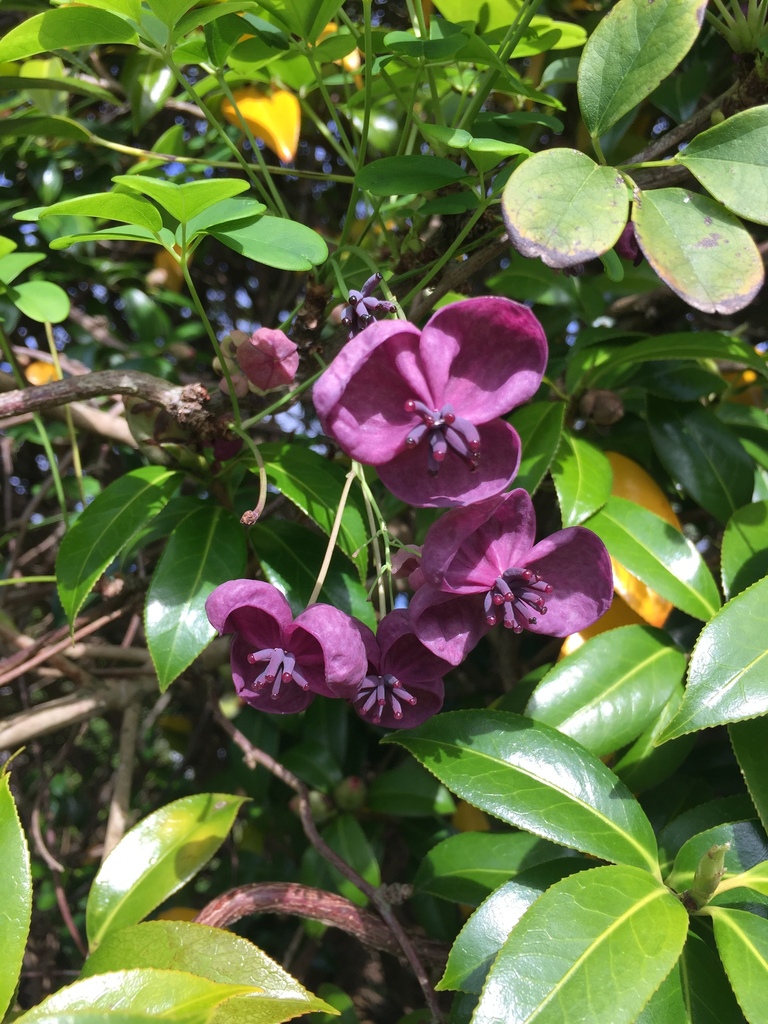
The chocolate vine is a vigorous, semi-evergreen climber known for its unique, fragrant flowers that smell like chocolate. It grows quickly and can easily cover fences or trellises in your garden. You will love how its delicate, five-lobed leaves add a lovely texture to your outdoor space.

At a glance
- Care level
- Easy
- Plant type
- Deciduous or semi-evergreen vine
- Light
- Full sun to partial shade
- Indoor light
- Bright indirect
- Water
- Every 7 to 14 days
- Mature size
- 20 to 40 feet
- Growth rate
- Fast
- Hardiness
- USDA 5 to 9
- Bloom time
- Mid to late spring
Care
Provide a sturdy support structure for this vine to climb as it grows quite rapidly. Keep an eye out for yellowing leaves which might indicate poor drainage or too much shade. Prune back any unruly growth after the plant finishes flowering to keep it tidy.
- Watering
- Keep the soil consistently moist but not waterlogged.
- Feeding
- Apply a balanced fertilizer once in early spring to support new growth.
- Pruning
- Trim back the vine after flowering to control its size and shape.
- Repotting
- Repot only if the plant becomes root-bound in its container.
- Soil
- Well-draining, moist, fertile soil
- Soil pH
- 6.0 to 7.5
- Temperature
- -29 to 35°C
- Humidity
- 40 to 70%
- Drought tolerance
- Moderate
- Lifespan
- Perennial, typically 20 to 50 years
- Fragrance
- Light
- Deer and rabbits
- Moderate
Signs it needs repotting
- Roots growing out of the drainage holes.
- Water running straight through the pot without soaking in.
- Stunted growth during the active season.
Safety
- People
- The plant is generally considered non-toxic, though some people may experience mild irritation from contact with the sap.
- Children
- The fruit is safe to handle, but always supervise young children to prevent choking on the numerous small seeds.
- Contact allergens
- The sap can cause mild skin irritation in sensitive individuals.
- Airborne allergens
- There are no significant reports of respiratory allergies associated with this plant.
- Edibility
- The fruit pulp is edible but contains many small seeds that are best spat out.
How to identify it
- Five-lobed palmately compound leaves
- Fragrant purplish maroon flowers
- Twining woody stems
- Sausage shaped edible fruit pods
- Height
- 6 to 12m
- Spread
- 3 to 6m
- Leaves
- dark green, blue green, semi-evergreen
- Flowers
- purple, maroon, 2 to 3cm
- Fruit
- violet, purple, Late summer to early autumn
Problems to watch for
- Powdery MildewCommon
- AphidsUncommon
- Leaf SpotUncommon
- Root RotUncommon
Check your chocolate vine from a photo
Pocket Botanist looks at a photo of your plant and tells you what's wrong and what to try first.
Scan with your phone's camera to get the app
Or go to pocketbotanist.app/get on your phone
Growing it
- Propagation
- cuttings, layering, seed
- When to plant
- spring, autumn
- Overwintering
- In colder regions, the vine may lose most of its leaves, but it is hardy and will return in spring. No special winter protection is needed for established plants.
- In containers
- It can grow in large containers, but it is very vigorous and will eventually require a massive pot or ground planting.
Stem Cuttings
- 1. Take a 15 cm cutting in late summer.
- 2. Remove the lower leaves.
- 3. Dip the end in rooting hormone.
- 4. Place in a moist potting mix.
- 5. Keep in a bright, humid spot until rooted.
Plant this vine with other vigorous climbers, but ensure you have a very strong support system to hold their combined weight.
Grows well with
Similar species
- Akebia trifoliata · This species has three leaflets instead of five but shares similar growth habits.
Science
- Family
- Lardizabalaceae
- Genus
- Akebia
- Order
- Ranunculales
- Class
- Magnoliopsida
- Native range
- Central and eastern China, Japan, and Korea.
- Conservation
- It is considered invasive in several parts of the United States, so check local regulations before planting.
It thrives in woodland edges where it can climb into the canopy to reach sunlight.
- Value to wildlife
- nectar source
- Pollinators
- bees, butterflies
- Uses
- ornamental vine, privacy screen, edible fruit
Through the year
Ecological indicators
- Salinity
- 2/9
- Soil reaction
- 6/9
- Light
- 6/9
- Temperature
- 5/9
- Moisture
- 5/9
- Nutrients
- 5/9
Taxonomy resolved against GBIF.
Questions people ask
- Is Akebia quinata invasive?
- Yes, it is listed as invasive in many regions because it grows aggressively and can crowd out native plants.
- Does it need a trellis?
- Yes, it is a twining vine that requires a sturdy support structure to climb effectively.
Where the name comes from
The name Akebia is a Latinized version of the Japanese name for the plant, while quinata refers to the five leaflets on each leaf.
Good to know
- Akebia is also known as the chocolate vine due to its fragrant flowers.
- The stems are flexible and have been used in traditional basket weaving.
- It is a vigorous grower that can quickly cover fences or trellises.
- The fruit resembles a small, purple sausage when ripe.
Keep your chocolate vine growing
This page is a general guide. Save your plant in Pocket Botanist and you get care reminders timed for this plant, plus a care history that shows what worked.
Scan with your phone's camera to get the app
Or go to pocketbotanist.app/get on your phone
This guide was generated with AI on and checked against GBIF taxonomy. It is general information, not horticultural or veterinary advice. Read about how we build these guides.