 Pocket Botanist
Guía de plantas
Enredadera de chocolate.
Akebia quinata
Pronunciación uh-KEE-bee-uh kwin-AY-tuh
También se conoce como Enredadera de chocolate, Akebia de cinco hojas


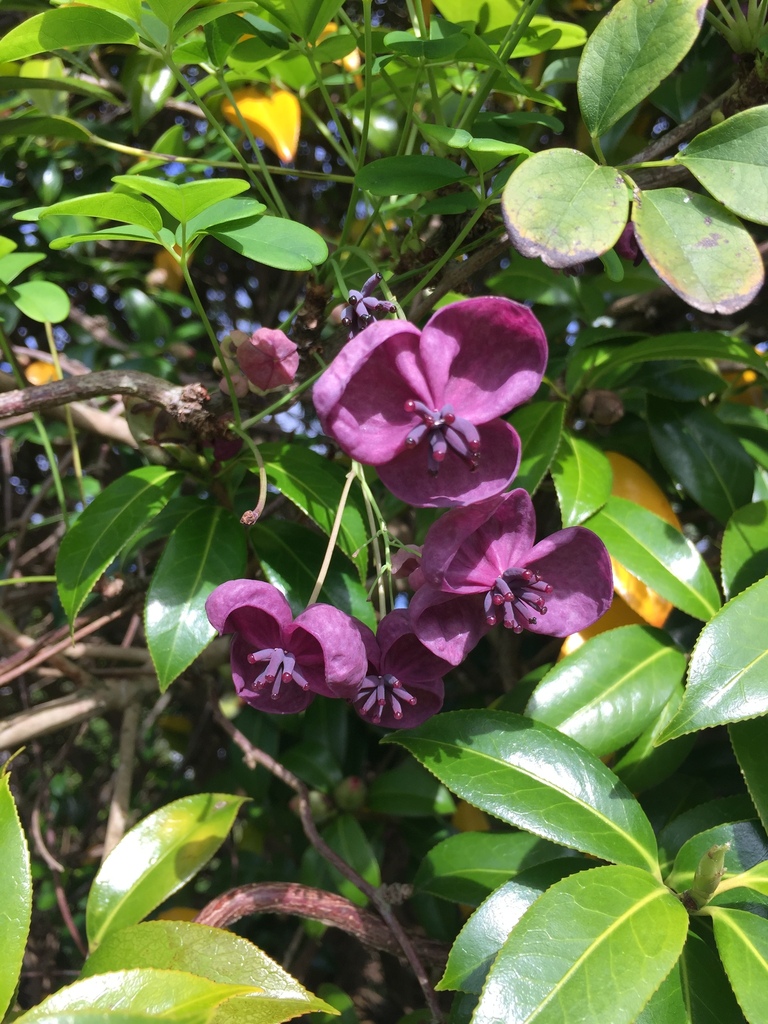
La enredadera de chocolate es una planta trepadora vigorosa y semiperenne, conocida por sus flores únicas y fragantes que huelen a chocolate. Crece rápidamente y puede cubrir fácilmente cercas o enrejados en tu jardín. Te encantará cómo sus delicadas hojas de cinco lóbulos añaden una textura encantadora a tu espacio exterior.

De un vistazo
- Nivel de cuidados
- Fácil
- Tipo de planta
- Enredadera de hoja caduca o semiperenne
- Luz
- Sol pleno a sombra parcial
- Luz en interior
- Luz indirecta brillante
- Riego
- Cada 7 a 14 días
- Tamaño adulto
- 6 a 12 metros
- Ritmo de crecimiento
- Rápido
- Rusticidad
- USDA 5 a 9
- Floración
- Mid to late spring
Cuidados
Proporciona una estructura de soporte robusta para que esta enredadera trepe, ya que crece bastante rápido. Vigila las hojas amarillentas, que podrían indicar mal drenaje o demasiada sombra. Poda cualquier crecimiento rebelde después de que la planta termine de florecer para mantenerla ordenada.
- Riego
- Mantén la tierra constantemente húmeda pero no encharcada.
- Abonado
- Aplica un fertilizante equilibrado una vez a principios de primavera para favorecer el nuevo crecimiento.
- Poda
- Poda la enredadera después de la floración para controlar su tamaño y forma.
- Trasplante
- Trasplanta solo si la planta se ha quedado sin espacio en su contenedor.
- Suelo
- Tierra bien drenada, húmeda y fértil
- pH del suelo
- 6.0 a 7.5
- Temperatura
- -20 a 35°C
- Humedad
- 40 a 70%
- Tolerancia a la sequía
- Moderada
- Longevidad
- Perennial, typically 20 to 50 years
- Fragancia
- Suave
- Resistencia a ciervos y conejos
- Moderada
Señales de que necesita trasplante
- Roots growing out of the drainage holes.
- Water running straight through the pot without soaking in.
- Stunted growth during the active season.
Seguridad
- Personas
- The plant is generally considered non-toxic, though some people may experience mild irritation from contact with the sap.
- Niños
- The fruit is safe to handle, but always supervise young children to prevent choking on the numerous small seeds.
- Alérgenos por contacto
- The sap can cause mild skin irritation in sensitive individuals.
- Alérgenos en el aire
- There are no significant reports of respiratory allergies associated with this plant.
- Comestibilidad
- The fruit pulp is edible but contains many small seeds that are best spat out.
Cómo identificarla
- Hojas palmadas compuestas de cinco lóbulos
- Flores fragantes de color marrón rojizo púrpura
- Tallos leñosos retorcidos
- Vainas de frutas comestibles con forma de salchicha
- Altura
- 6 a 12m
- Anchura
- 3 a 6m
- Hojas
- dark green, blue green, semi-evergreen
- Flores
- purple, maroon, 2 a 3cm
- Frutos
- violet, purple, Late summer to early autumn
Problemas frecuentes
- Powdery mildew — A white fungal growth on leaves caused by poor air circulation.
Cómo cultivarla
- Propagación
- cuttings, layering, seed
- Cuándo plantar
- spring, autumn
- Cuidados en invierno
- In colder regions, the vine may lose most of its leaves, but it is hardy and will return in spring. No special winter protection is needed for established plants.
- En maceta
- It can grow in large containers, but it is very vigorous and will eventually require a massive pot or ground planting.
Stem Cuttings
- 1. Take a 15 cm cutting in late summer.
- 2. Remove the lower leaves.
- 3. Dip the end in rooting hormone.
- 4. Place in a moist potting mix.
- 5. Keep in a bright, humid spot until rooted.
Plant this vine with other vigorous climbers, but ensure you have a very strong support system to hold their combined weight.
Buenas compañeras
- Clematis — They share similar light and moisture needs and look lovely when grown together on a trellis.
- Hortensia de hoja grande — The shrub provides a sturdy base for the vine to climb.
Especies parecidas
- Akebia trifoliata — This species has three leaflets instead of five but shares similar growth habits.
Ciencia
- Familia
- Lardizabalaceae
- Género
- Akebia
- Orden
- Ranunculales
- Clase
- Magnoliopsida
- Distribución natural
- Central and eastern China, Japan, and Korea.
- Conservación
- It is considered invasive in several parts of the United States, so check local regulations before planting.
It thrives in woodland edges where it can climb into the canopy to reach sunlight.
- Valor para la fauna
- nectar source
- Polinizadores
- abejas, mariposas
- Usos
- ornamental vine, privacy screen, edible fruit
A lo largo del año
Indicadores ecológicos
- Salinidad
- 2/9
- Reacción del suelo
- 6/9
- Luz
- 6/9
- Temperatura
- 5/9
- Humedad
- 5/9
- Nutrientes
- 5/9
Taxonomía cotejada con GBIF.
Lo que más preguntan
- Is Akebia quinata invasive?
- Yes, it is listed as invasive in many regions because it grows aggressively and can crowd out native plants.
- Does it need a trellis?
- Yes, it is a twining vine that requires a sturdy support structure to climb effectively.
De dónde viene el nombre
The name Akebia is a Latinized version of the Japanese name for the plant, while quinata refers to the five leaflets on each leaf.
Bueno saberlo
- Akebia is also known as the chocolate vine due to its fragrant flowers.
- The stems are flexible and have been used in traditional basket weaving.
- It is a vigorous grower that can quickly cover fences or trellises.
- The fruit resembles a small, purple sausage when ripe.
¿Tu enredadera de chocolate tiene mal aspecto?
Esta página es una guía general. Pocket Botanist diagnostica problemas a partir de una foto de tu propia planta, calcula el riego según tu luz y tus condiciones, y te avisa cuando toca cuidarla.
Esta guía se ha generado con IA y se ha cotejado con la taxonomía de GBIF. Es información general, no asesoramiento botánico ni veterinario. Descubre cómo elaboramos estas guías.