 Pocket Botanist
Guía de plantas
Hortensia de hoja grande.
Hydrangea macrophylla (Thunb.) Ser.
Pronunciación hy-DRAN-jee-uh mak-ro-FIL-uh
También se conoce como Hortensia de hoja grande, Hoja dulce china, Hortensia francesa, Hortensia, Hortensia común, hortensia


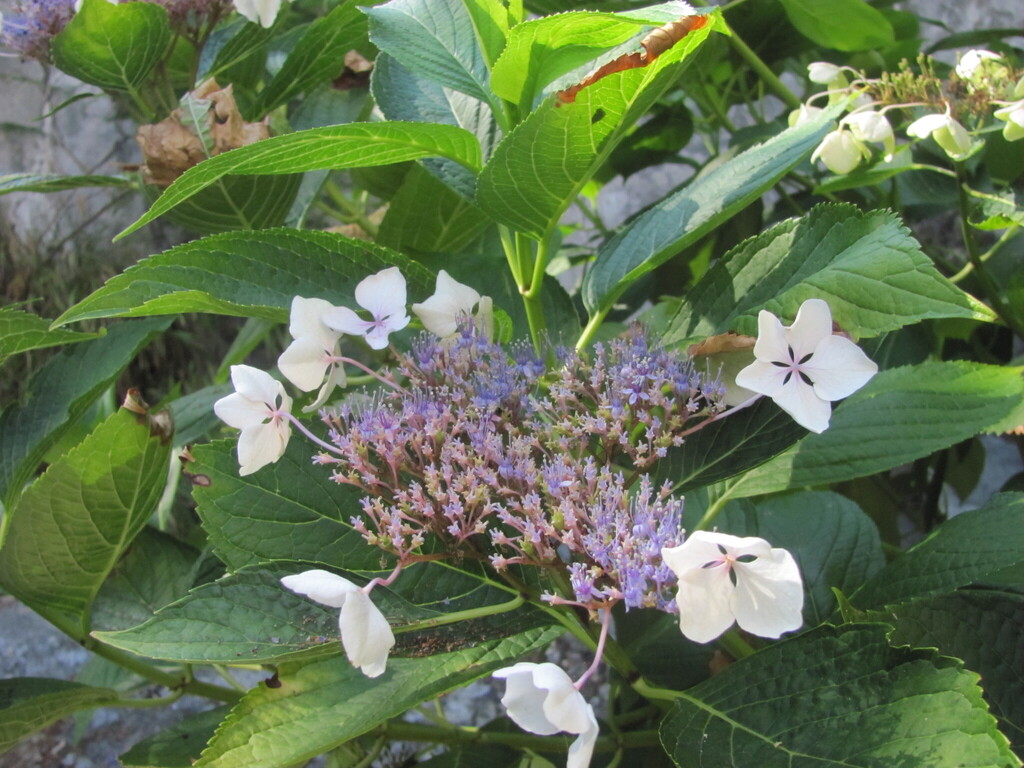
Las hortensias de hoja grande son muy apreciadas por sus enormes y llamativas cabezas de flores que cambian de color según la acidez del suelo. Aportan una sensación clásica y exuberante a cualquier espacio del jardín. Estos arbustos prosperan cuando reciben mucha humedad y protección del sol abrasador de la tarde.

De un vistazo
- Nivel de cuidados
- Media
- Tipo de planta
- Arbusto de hoja caduca
- Luz
- Sol de mañana y sombra de tarde
- Luz en interior
- Luz indirecta brillante
- Riego
- Cada 2 a 4 días
- Tamaño adulto
- 3 a 6 pies
- Ritmo de crecimiento
- Medio
- Rusticidad
- USDA 5 a 9
- Floración
- Finales de primavera hasta finales de verano
Cuidados
Mantén la tierra constantemente húmeda, pero nunca empapada para prevenir problemas en las raíces. Estate atento a las hojas marchitas durante las tardes calurosas, lo que indica que la planta necesita un trago. Puedes influir en el color de las flores ajustando el pH del suelo con enmiendas.
- Riego
- Riega profundamente cada vez que la pulgada superior de la tierra se sienta seca al tacto.
- Abonado
- Aplica un fertilizante equilibrado una vez a principios de primavera y de nuevo a finales de primavera.
- Poda
- Poda inmediatamente después de la floración para evitar cortar los capullos del año siguiente.
- Trasplante
- Trasplanta solo si la planta se ha quedado sin espacio en la maceta o necesita un recipiente más grande para una mejor retención de humedad.
- Suelo
- Tierra rica, orgánica y bien drenada
- pH del suelo
- 5.0 a 7.0
- Temperatura
- -15 a 35°C
- Humedad
- 50 a 70%
- Tolerancia a la sequía
- Baja
- Longevidad
- Perenne, típicamente de 10 a 20 años
- Resistencia a ciervos y conejos
- Baja
Señales de que necesita trasplante
- Raíces que crecen fuera de los agujeros de drenaje
- El agua pasa directamente a través de la maceta
- Crecimiento atrofiado durante la temporada activa
Seguridad
- Personas
- Todas las partes de la planta contienen glucósidos cianogénicos que son tóxicos si se comen.
- Mascotas
- Esta planta es tóxica para gatos y perros si se ingiere, ya que contiene glucósidos cianogénicos.
- Niños
- Mantén esta planta alejada de los niños pequeños, ya que la ingestión de hojas o flores puede provocar malestar estomacal.
- Alérgenos por contacto
- El manejo del follaje puede causar irritación leve de la piel en personas sensibles.
- Alérgenos en el aire
- El polen generalmente no se considera un alérgeno aéreo significativo.
- Comestibilidad
- Esta planta no está destinada al consumo y puede causar malestar gastrointestinal si se ingiere.
Cómo identificarla
- Hojas grandes, ovaladas y dentadas
- Flores vistosas tipo pompón o cordón
- Hábito de arbusto leñoso y multi-tallo
- Las flores cambian de color con el pH del suelo
- Altura
- 0,9 a 1,8m
- Anchura
- 0,9 a 1,8m
- Hojas
- verde, caducifolio
- Flores
- azul, rosa, púrpura, blanco, 10 a 25cm
Problemas a vigilar
- OídioComún
- PulgonesComún
- Quemadura foliarComún
- BotritisPoco común
- ClorosisPoco común
- Podredumbre radicularPoco común
Por síntoma
Revisa tu hortensia de hoja grande con una foto
Pocket Botanist mira una foto de tu planta y te dice qué le pasa y qué probar primero.
Cómo cultivarla
- Propagación
- esquejes, división
- Cuándo plantar
- primavera, otoño
- Cuidados en invierno
- Aplica una capa gruesa de mantillo alrededor de la base para proteger las raíces de las temperaturas de congelación. Si vives en una zona muy fría, envuelve los tallos en arpillera para proteger los capullos de las flores.
- En maceta
- Crecen bien en macetas grandes, siempre que utilices un contenedor de al menos 40 centímetros de diámetro con buen drenaje.
Esquejes de madera blanda
- Toma un esqueje de 10 centímetros de un tallo no florido a principios de verano.
- Retira las hojas inferiores y sumerge el extremo en hormona de enraizamiento.
- Coloca en una mezcla de tierra húmeda y cubre con una bolsa de plástico para mantener la humedad.
- Mantén a la luz brillante e indirecta hasta que se formen las raíces.
Combina con otras plantas perennes amantes de la sombra que aprecian la humedad constante para crear un aspecto exuberante de bosque.
Buenas compañeras
- Lirio de plátano — Comparten requisitos similares de sombra y humedad.
- Barba de chivo falsa — Estos proporcionan un buen contraste textural en bordes sombreados.
Especies parecidas
- Hydrangea quercifolia — Ofrece un follaje distintivo y mejor tolerancia a la sequía.
- Hydrangea arborescens — Esta especie florece en madera nueva, lo que facilita su manejo.
Ciencia
- Familia
- Hydrangeaceae
- Género
- Hydrangea
- Orden
- Cornales
- Clase
- Magnoliopsida
- Distribución natural
- Japón y Asia Oriental
- Conservación
- Esta especie no es actualmente de preocupación para la conservación.
Prospera en los bordes frescos, húmedos y sombreados del bosque, donde puede acceder a una humedad constante del suelo.
- Valor para la fauna
- fuente de néctar
- Polinizadores
- abejas, mariposas
- Usos
- arbusto ornamental, flores cortadas, plantación de cimientos
A lo largo del año
Indicadores ecológicos
- Salinidad
- 1/9
- Humedad
- 7/9
- Nutrientes
- 6/9
- Reacción del suelo
- 5/9
- Luz
- 4/9
- Temperatura
- 5/9
Taxonomía cotejada con GBIF.
Lo que más preguntan
- ¿Por qué mis hortensias no florecen?
- Esto suele deberse a las heladas tardías de primavera que matan los capullos o a una poda inadecuada.
- ¿Cómo las podo?
- Poda inmediatamente después de la floración para evitar cortar los capullos del año siguiente.
De dónde viene el nombre
El nombre del género Hydrangea deriva de las palabras griegas que significan "vaso de agua", mientras que macrophylla significa "hoja grande".
Bueno saberlo
- Las hortensias son nativas de Japón y se introdujeron en Europa en el siglo XVIII.
- El nombre proviene de las palabras griegas para agua y recipiente, refiriéndose a las vainas de las semillas.
- Puedes cambiar el color de tus flores añadiendo sulfato de aluminio o cal al suelo.
También en
Que tu hortensia de hoja grande siga creciendo
Esta página es una guía general. Guarda tu planta en Pocket Botanist y tendrás recordatorios de cuidado pensados para esta planta, además de un historial de cuidados que muestra qué ha funcionado.
Esta guía se ha generado con IA y se ha cotejado con la taxonomía de GBIF. Es información general, no asesoramiento botánico ni veterinario. Descubre cómo elaboramos estas guías.