 Pocket Botanist
Plant guide
Tree Aeonium.
Aeonium arboreum 'Zwartkop'
Pronounced ee-OH-nee-um ar-BOR-ee-um
Also known as Aeonium arboreum 'Zwartkop', Tree Aeonium, Tree aenium



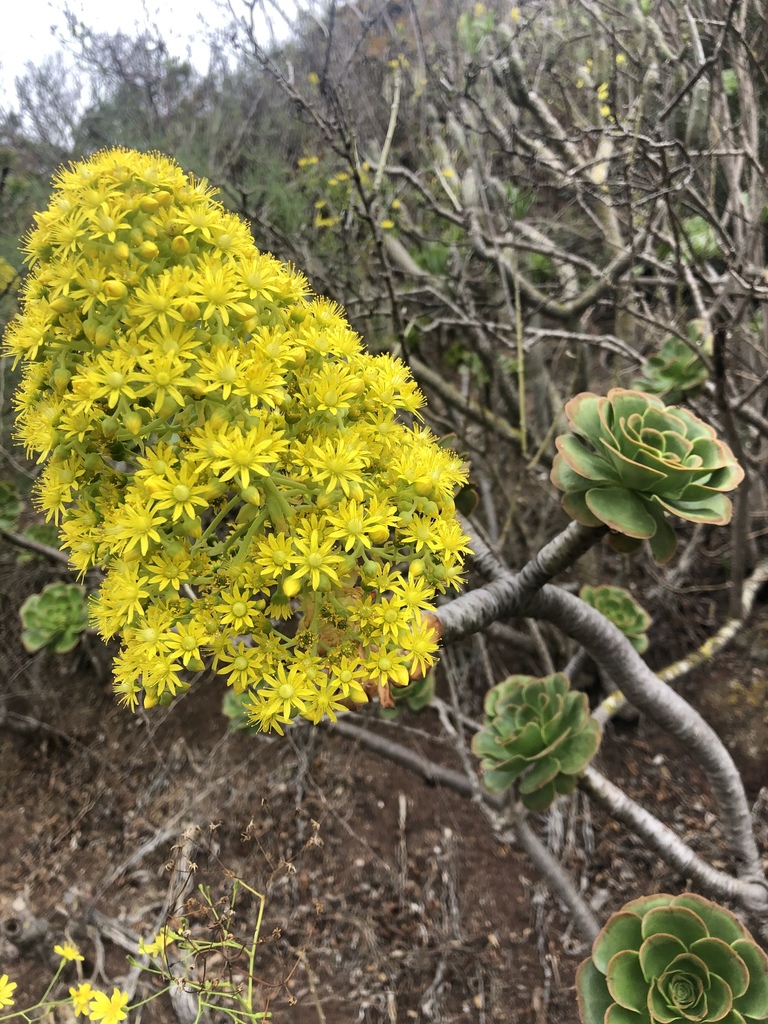
This striking succulent grows in a beautiful rosette pattern atop woody stems. It is a fantastic choice for adding architectural interest to your sunny indoor spaces. You will love how easy it is to keep happy with just a bit of light and care.
At a glance
- Care level
- Easy
- Plant type
- Succulent
- Light
- Full sun to partial shade
- Indoor light
- Direct sun
- Water
- Every 10 to 21 days
- Mature size
- 3 feet tall
- Growth rate
- Medium
- Hardiness
- USDA 9 to 11
- Bloom time
- Late winter to early spring
Care
Let the soil dry out completely between waterings to keep the roots healthy. Watch for shriveling leaves as a sign that the plant needs a drink. Ensure it gets plenty of sunlight to maintain its compact shape and vibrant colors.
- Watering
- Always check that the soil is fully dry before you add more water.
- Feeding
- Feed with a balanced liquid fertilizer diluted to half strength during the growing season.
- Pruning
- Trim back leggy stems in the spring to encourage a bushier growth habit.
- Repotting
- Move to a slightly larger pot only when the plant becomes root bound.
- Soil
- Well draining cactus and succulent mix
- Soil pH
- 6.0 to 7.5
- Temperature
- 4 to 35°C
- Humidity
- 20 to 50%
- Drought tolerance
- High
- Lifespan
- Perennial, typically 3 to 5 years per rosette.
- Deer and rabbits
- Moderate
Signs it needs repotting
- Roots growing out of the drainage hole.
- The plant becomes top heavy and unstable.
- Water runs straight through the pot without soaking in.
Safety
- People
- The plant is generally considered non-toxic, but the sap can cause mild skin irritation in sensitive individuals.
- Pets
- This plant is generally considered non-toxic to cats and dogs.
- Children
- Keep away from small children as the succulent leaves can be a choking hazard if swallowed.
- Contact allergens
- The milky sap may cause mild contact dermatitis for some people.
- Airborne allergens
- There are no significant reports of airborne allergens.
- Edibility
- This plant is not considered edible and may cause stomach upset if ingested.
How to identify it
- Rosettes of fleshy spoon shaped leaves
- Sturdy woody branching stems
- Bright green to deep purple foliage
- Small yellow star shaped flowers
- Height
- 0.6 to 1.5m
- Spread
- 0.3 to 0.6m
- Leaves
- green, purple, burgundy, evergreen
- Flowers
- yellow, 1 to 2cm
Problems to watch for
- Mealybugs — Small white cottony insects that feed on plant juices.
- Root rot — Occurs when the soil stays too wet for too long.
By symptom
Check your tree aeonium from a photo
Pocket Botanist looks at a photo of your plant and tells you what's wrong and what to try first.
Growing it
- Propagation
- cuttings, seed
- When to plant
- spring, early summer
- Overwintering
- Move containers indoors before the first frost. Keep the soil mostly dry during the winter months to prevent rot.
- In containers
- It thrives in containers, provided the pot has excellent drainage and is at least 15 cm wide.
Stem Cuttings
- 1. Cut a healthy rosette with a few inches of stem.
- 2. Let the cut end callous for 2 to 3 days.
- 3. Plant the cutting in well draining succulent soil.
- 4. Keep the soil lightly moist until roots form.
Group plants with identical water needs to prevent rot in your succulent collection.
Grows well with
Similar species
- Aeonium haworthii — It has a similar growth habit but smaller rosettes.
Science
- Family
- Crassulaceae
- Genus
- Aeonium
- Order
- Saxifragales
- Class
- Magnoliopsida
- Native range
- Canary Islands and Morocco.
- Conservation
- Not currently of conservation concern.
It grows on rocky slopes where it survives by storing water in its fleshy leaves.
- Value to wildlife
- nectar source
- Pollinators
- bees, butterflies
- Uses
- container plant, rock garden, succulent display
Through the year
Ecological indicators
- Salinity
- 2/9
- Soil reaction
- 6/9
- Light
- 7/9
- Temperature
- 7/9
- Moisture
- 2/9
- Nutrients
- 3/9
Taxonomy resolved against GBIF.
Questions people ask
- Why are the leaves curling?
- Curling leaves often indicate the plant is thirsty and needs a drink.
- Does it need full sun?
- It prefers bright light but appreciates some afternoon shade in very hot climates.
Where the name comes from
The name Aeonium comes from the Greek word aionios, meaning everlasting, while arboreum refers to its tree-like growth habit.
Good to know
- It is often called the tree aeonium because of its branching habit.
- The dark purple varieties are highly sought after for their dramatic color contrast.
- It originates from the Canary Islands and North Africa.
Also in
Keep your tree aeonium growing
This page is a general guide. Save your plant in Pocket Botanist and you get care reminders timed for this plant, plus a care history that shows what worked.
This guide was generated with AI and checked against GBIF taxonomy. It is general information, not horticultural or veterinary advice. Read about how we build these guides.