 Pocket Botanist
Plant guide
Goutweed.
Aegopodium podagraria
Pronounced ee-go-PO-dee-um po-da-GRA-ree-uh
Also known as Ashweed, Bishop's goutweed, Bishop's-weed, Bishops Goutweed, Bishopweed, English Masterwort, Goutweed, Ground-Elder



Scan with your phone's camera to get the app
Or go to pocketbotanist.app/get on your phone
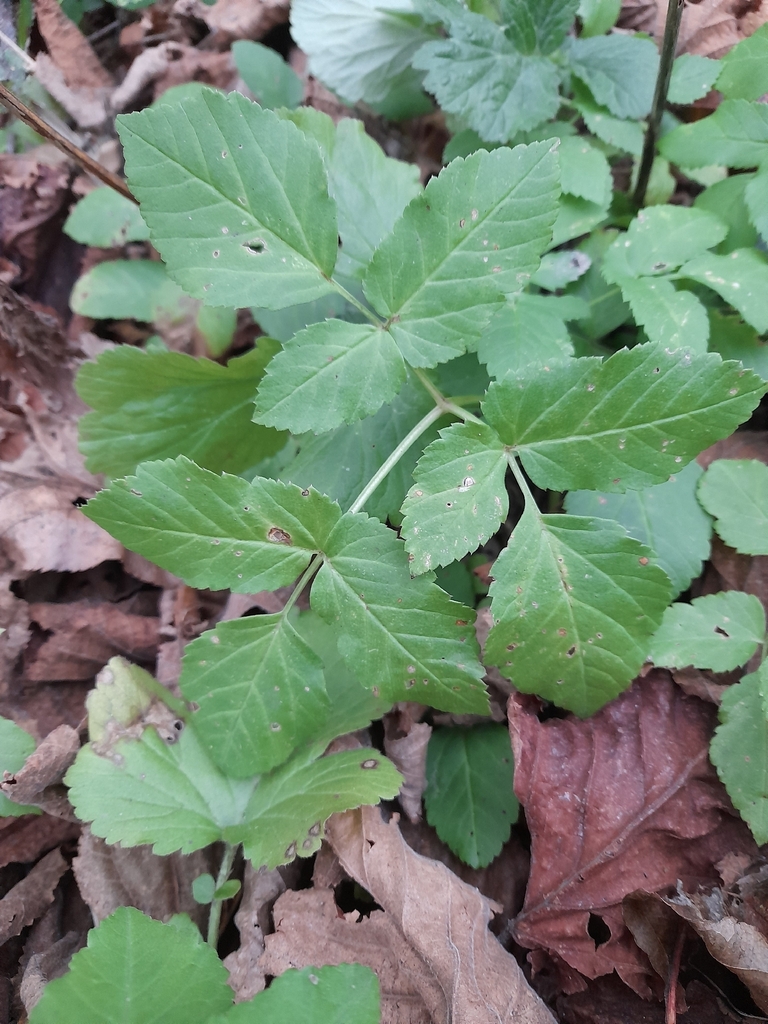
Goutweed is a vigorous, low growing perennial that spreads rapidly through underground rhizomes. It is often used as a groundcover in difficult areas where other plants struggle to thrive. Be aware that it can become quite invasive in garden settings.
At a glance
- Care level
- Easy
- Plant type
- Herbaceous perennial
- Light
- Partial shade to full shade
- Indoor light
- Medium light
- Water
- Every 3 to 7 days
- Mature size
- 30 to 45 cm tall
- Growth rate
- Fast
- Hardiness
- USDA 3 to 9
- Bloom time
- Late spring to early summer
Care
This plant is incredibly hardy and requires very little maintenance once established. Keep an eye on its spread, as it will quickly colonize surrounding areas if not contained. If you notice it encroaching on other plants, simply dig up the unwanted sections.
- Watering
- Keep the soil consistently moist but not waterlogged.
- Feeding
- A light application of balanced fertilizer in early spring is sufficient.
- Pruning
- Cut back foliage in late autumn or early spring to refresh the plant.
- Repotting
- Divide the rhizomes every few years to manage size and maintain vigor.
- Soil
- Moist, well-draining soil
- Soil pH
- Neutral to slightly acidic
- Temperature
- -30 to 30°C
- Humidity
- 40 to 80%
- Drought tolerance
- Moderate
- Lifespan
- Perennial, indefinite with rhizome spread.
- Deer and rabbits
- High
Signs it needs repotting
- Roots growing out of drainage holes
- Stunted growth
- Soil drying out too quickly
Safety
- People
- The plant is generally considered non-toxic, though it is not recommended for consumption due to potential misidentification risks.
- Pets
- Goutweed is generally considered non-toxic to cats and dogs.
- Children
- There is no specific danger to children, but the plant is invasive and should not be encouraged in play areas.
- Contact allergens
- Some individuals may experience mild skin irritation from handling the foliage.
- Airborne allergens
- The pollen can cause mild allergic reactions in sensitive individuals.
- Edibility
- While young leaves are sometimes eaten, they are easily confused with toxic lookalikes and can cause digestive upset if not properly identified.
How to identify it
- Compound leaves with three leaflets
- Leaflets have serrated margins
- Small white flowers in umbels
- Spreads via underground rhizomes
- Variegated foliage with creamy white edges
- Height
- 0.3 to 1m
- Spread
- 0.6 to 3m
- Leaves
- green, white, deciduous
- Flowers
- white, 0.5 to 0.8cm
- Fruit
- brown, Late summer
Problems to watch for
- Leaf SpotCommon
- Slugs and SnailsCommon
- Powdery MildewUncommon
- Root RotUncommon
Check your goutweed from a photo
Pocket Botanist looks at a photo of your plant and tells you what's wrong and what to try first.
Scan with your phone's camera to get the app
Or go to pocketbotanist.app/get on your phone
Growing it
- Propagation
- division, seed
- When to plant
- spring, autumn
- Overwintering
- The foliage will die back completely in winter. No special protection is needed as the rhizomes are very hardy.
- In containers
- It grows very well in containers, which is the best way to enjoy it without the risk of it becoming invasive.
Division
- 1. Dig up a clump in spring or autumn.
- 2. Separate the rhizomes into smaller sections.
- 3. Replant immediately in moist soil.
Keep this plant isolated in a container or a restricted area to prevent it from taking over your entire landscape.
Grows well with
- Hostas · They share similar shade requirements and can hold their own against aggressive spreaders.
Similar species
- Cow Parsley · It has a similar umbel flower structure but lacks the aggressive rhizomatous spread.
Science
- Family
- Apiaceae
- Genus
- Aegopodium
- Order
- Apiales
- Class
- Magnoliopsida
- Native range
- Europe and temperate Asia.
- Conservation
- It is considered an invasive species in many parts of North America and should be managed carefully.
It thrives in damp, shaded woodland edges where it forms dense colonies that outcompete other ground flora.
- Value to wildlife
- nectar source
- Pollinators
- bees, butterflies, beetles
- Uses
- ground cover, shade garden filler
Through the year
Ecological indicators
- Soil reaction
- 6/9
- Temperature
- 5/9
- Moisture
- 6/9
- Salinity
- 1/9
- Light
- 3/9
- Nutrients
- 7/9
Taxonomy resolved against GBIF.
Questions people ask
- How do I stop it from spreading?
- You must remove the entire root system, as even small fragments left in the soil will regrow.
- Can I grow it in a pot?
- Yes, it is safer to grow it in a container to prevent it from escaping into your garden beds.
Where the name comes from
The name Aegopodium comes from Greek words meaning goat and foot, referring to the leaf shape, while podagraria refers to its historical use for gout.
Good to know
- It was historically used to treat gout, which is reflected in its scientific name.
- The variegated form is often sold as a garden ornamental despite its invasive nature.
- It can grow in almost any soil type from heavy clay to sandy loam.
Also in
Keep your goutweed growing
This page is a general guide. Save your plant in Pocket Botanist and you get care reminders timed for this plant, plus a care history that shows what worked.
Scan with your phone's camera to get the app
Or go to pocketbotanist.app/get on your phone
This guide was generated with AI on and checked against GBIF taxonomy. It is general information, not horticultural or veterinary advice. Read about how we build these guides.