 Pocket Botanist
Plant guide
Red baneberry.
Actaea rubra
Pronounced ak-TEE-uh ROO-bruh
Also known as Baneberry, Red Baneberry, Snakeberry, western baneberry, western red baneberry



Scan with your phone's camera to get the app
Or go to pocketbotanist.app/get on your phone
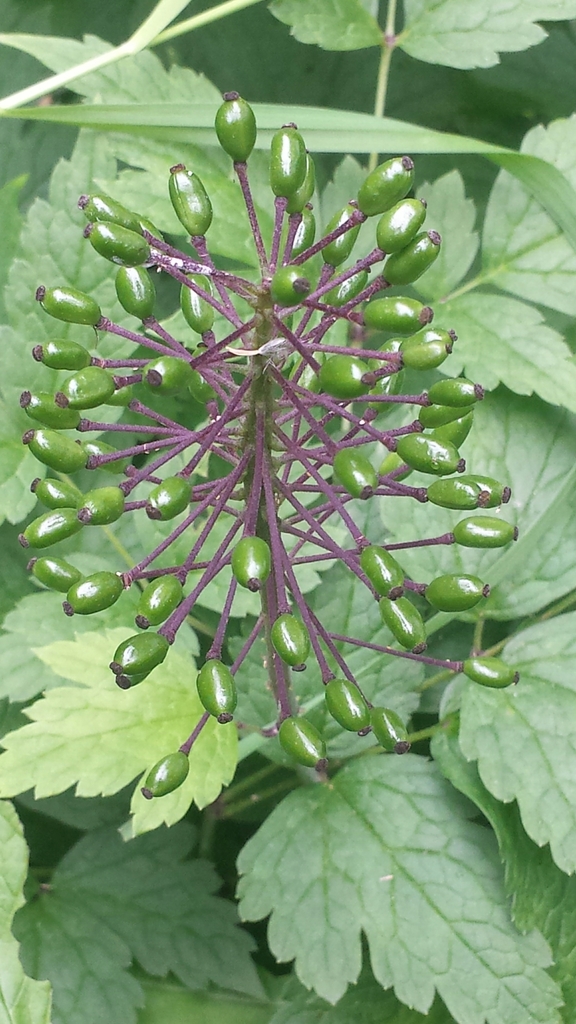
Red baneberry is a charming woodland perennial that produces lovely white flowers in spring. It is best known for its striking, bright red berries that appear later in the season. This plant thrives in cool, shaded spots where it can mimic its natural forest floor habitat.

At a glance
- Care level
- Moderate
- Plant type
- Perennial
- Light
- Partial shade to full shade
- Indoor light
- Medium light
- Water
- Every 3 to 7 days
- Mature size
- 3 feet
- Growth rate
- Medium
- Hardiness
- USDA 3 to 7
- Bloom time
- Late spring to early summer
Care
Keep the soil consistently moist and avoid letting it dry out completely. Watch for wilting during hot spells, which indicates the plant needs more shade or water. Ensure the soil is rich in organic matter to keep it happy.
- Watering
- Keep the soil evenly moist but never waterlogged.
- Feeding
- Apply a balanced organic fertilizer once in early spring.
- Pruning
- Cut back dead foliage in late autumn after the plant goes dormant.
- Repotting
- Repot only if the plant becomes rootbound or needs division.
- Soil
- Moist, rich, well-draining soil
- Soil pH
- Neutral to slightly acidic
- Temperature
- -35 to 25°C
- Humidity
- 40 to 70%
- Drought tolerance
- Low
- Lifespan
- Perennial, typically 10 plus years
- Fragrance
- Light
- Deer and rabbits
- High
Signs it needs repotting
- Roots growing out of the drainage holes
- Stunted growth during the spring season
Safety
- People
- The entire plant contains protoanemonin and is considered poisonous to humans.
- Pets
- This plant is toxic to cats and dogs if ingested, as all parts contain cardiogenic toxins.
- Children
- Keep this plant away from children because the attractive red berries are highly toxic if eaten.
- Contact allergens
- The sap can cause skin irritation or blistering in sensitive individuals.
- Airborne allergens
- There are no notable respiratory allergens associated with this plant.
- Edibility
- All parts of this plant are toxic if ingested, especially the berries which can cause cardiac arrest.
How to identify it
- Compound leaves with serrated edges
- Small white flowers in terminal clusters
- Glossy bright red berries
- Sturdy stems reaching up to three feet
- Height
- 0.45 to 0.8m
- Spread
- 0.3 to 0.6m
- Leaves
- green, deciduous
- Flowers
- white, 0.5 to 1cm
- Fruit
- red, Late summer
Problems to watch for
- Leaf spot · Fungal infections can cause dark spots on foliage during humid weather.
Check your red baneberry from a photo
Pocket Botanist looks at a photo of your plant and tells you what's wrong and what to try first.
Scan with your phone's camera to get the app
Or go to pocketbotanist.app/get on your phone
Growing it
- Propagation
- seed, division
- When to plant
- spring, autumn
- Overwintering
- The foliage will die back naturally in autumn, so simply clear away the dead stems once they turn brown. No special protection is needed as it is very cold hardy.
- In containers
- It is not well suited for containers as it requires cool, consistent soil temperatures that are hard to maintain in pots.
Seed
- Collect ripe berries in late summer.
- Clean the seeds of all pulp.
- Sow immediately in a cold frame to allow for natural stratification.
Division
- Wait until the plant is dormant in early spring.
- Carefully lift the root clump with a spade.
- Divide the clump into smaller sections and replant immediately.
Group this plant with other moisture loving woodland species to create a self sustaining shade garden.
Grows well with
- Wild Ginger · They share similar requirements for shade and moist soil.
- Maidenhair Fern · This fern provides a beautiful textural contrast in woodland settings.
Similar species
- White Baneberry · It is closely related but features white berries on thicker stalks.
Science
- Family
- Ranunculaceae
- Genus
- Actaea
- Order
- Ranunculales
- Class
- Magnoliopsida
- Native range
- Northern and western North America.
- Conservation
- This plant is secure in its native range and is not currently listed as endangered.
It grows in the understory of moist forests where it relies on shade and consistent soil moisture.
- Value to wildlife
- nectar source, provides food for birds
- Pollinators
- bees, butterflies
- Uses
- woodland garden, shade border, native plant garden
Through the year
Ecological indicators
- Salinity
- 1/9
- Soil reaction
- 6/9
- Light
- 2/9
- Temperature
- 3/9
- Moisture
- 7/9
- Nutrients
- 5/9
Taxonomy resolved against GBIF.
Questions people ask
- Is Actaea rubra safe for pets?
- No, it is toxic to both cats and dogs if ingested.
- Does it need full sun?
- No, it prefers partial to full shade.
Where the name comes from
The genus name Actaea comes from the Greek word for elder, referring to the leaf shape, while rubra means red in Latin.
Good to know
- The berries are technically poisonous to humans but are eaten by various birds.
- It thrives in the deep shade of deciduous forests.
- The plant is a member of the buttercup family.
Also in
Keep your red baneberry growing
This page is a general guide. Save your plant in Pocket Botanist and you get care reminders timed for this plant, plus a care history that shows what worked.
Scan with your phone's camera to get the app
Or go to pocketbotanist.app/get on your phone
This guide was generated with AI on and checked against GBIF taxonomy. It is general information, not horticultural or veterinary advice. Read about how we build these guides.