 Pocket Botanist
Guide botanique
thymeleaf speedwell.
Veronica serpyllifolia
Prononciation veh-RON-ih-kuh ser-pill-ih-FOH-lee-uh
Aussi appelée Thyme Leaved Speedwell, Thyme Speedwell, Thyme-leaf Speedwell, Thyme-leaved Speedwell, Thymeleaf Speedwell, Turf speedwell


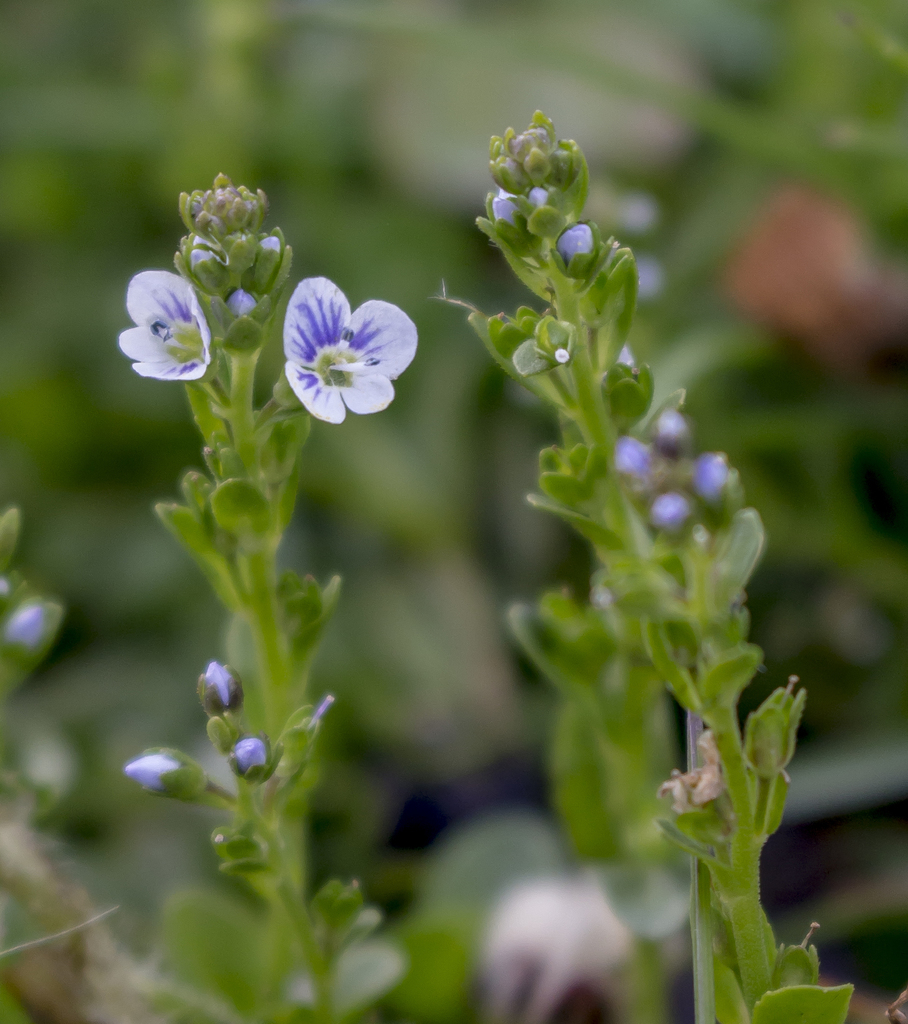
This charming little ground cover is a common sight in lawns and damp meadows. It spreads by creeping stems that root at the nodes. You will love its tiny, delicate flowers that appear in late spring.

En un coup d'œil
- Niveau d'entretien
- Facile
- Type de plante
- Perennial herb
- Lumière
- Partial shade to full sun
- Lumière en intérieur
- Lumière vive indirecte
- Arrosage
- Tous les 3 à 7 jours
- Taille adulte
- 4 to 8 inches tall
- Croissance
- Rapide
- Rusticité
- USDA 3 à 9
- Floraison
- Mid to late spring
Entretien
Keep the soil consistently moist as this plant prefers damp conditions. Watch for wilting if the soil dries out too much during hot weather. It thrives in cool, shaded areas of the garden.
- Arrosage
- Keep the soil evenly moist but never waterlogged.
- Engrais
- Apply a balanced liquid fertilizer during the active growing season.
- Taille
- Trim back after flowering to keep the patch tidy.
- Rempotage
- Repot if the plant becomes root bound or the soil loses its structure.
- Sol
- Moist, well draining soil
- pH du sol
- 6.0 to 7.5
- Température
- -25 à 30°C
- Humidité
- 40 à 70%
- Résistance à la sécheresse
- Faible
- Durée de vie
- Perennial, typically 3 to 5 years.
- Résistance aux chevreuils et lapins
- Moyenne
Signes qu'il faut rempoter
- Roots growing out of drainage holes
- Plant growth slows significantly
- Soil becomes compacted and drains poorly
Sécurité
- Humains
- There are no significant reports of human toxicity for this species.
- Enfants
- The plant is not known to be a choking hazard or toxic if handled by children.
- Allergènes de contact
- There is no evidence of skin irritation from handling this plant.
- Allergènes aéroportés
- The pollen may cause minor reactions in sensitive individuals during the flowering season.
- Comestibilité
- This plant is not considered edible and should be avoided for consumption.
Comment l'identifier
- Opposite oval leaves
- Creeping stems rooting at nodes
- Small white or pale blue flowers
- Flowers have dark purple veins
- Hauteur
- 0,05 à 0,2m
- Envergure
- 0,15 à 0,4m
- Feuilles
- green, semi-evergreen
- Fleurs
- white, pale blue, 0,5 à 1cm
Problèmes courants
- Powdery mildew — A fungal infection that appears as white dusty patches on the leaves during humid weather.
La cultiver
- Multiplication
- division, seed
- Quand planter
- spring, autumn
- Hivernage
- It remains semi-evergreen in mild climates and requires no special protection, though it may die back slightly in harsh freezes.
- En pot
- It grows well in shallow, wide containers at least 10 cm deep to accommodate its creeping root system.
Division
- 1. Dig up a clump in spring.
- 2. Gently pull the rooted stems apart.
- 3. Replant immediately in moist soil.
Pair this plant with other moisture-loving ground covers to create a consistent, low-maintenance carpet.
Bonnes associations
- Lysimachia nummularia — Both plants enjoy similar moist soil conditions and provide a lush ground cover.
- Bugle — They share similar growth habits and thrive in partially shaded, damp spots.
Espèces similaires
- germander speedwell — It has a similar appearance but features larger, more vibrant blue flowers.
Science
- Famille
- Plantaginaceae
- Genre
- Veronica
- Ordre
- Lamiales
- Classe
- Magnoliopsida
- Région d'origine
- Widespread across temperate regions of Europe, Asia, and North America.
- Préservation
- It is a common and widespread species with no special conservation concerns.
It thrives in moist, open habitats where it can outcompete other small plants by forming dense, low-growing mats.
- Intérêt pour la faune
- nectar source
- Pollinisateurs
- abeilles, papillons
- Utilisations
- ground cover, rock garden filler, lawn weed
Au fil des saisons
Repères écologiques
- Salinité
- 1/9
- Réaction du sol
- 5/9
- Lumière
- 6/9
- Température
- 4/9
- Humidité
- 7/9
- Nutriments
- 5/9
Taxonomie vérifiée avec le GBIF.
Ce qu'on demande souvent
- Is this plant a weed?
- It is often considered a lawn weed because it spreads rapidly in moist, low-cut turf.
- Can I grow it in a pot?
- Yes, it makes a lovely, low-maintenance ground cover for shallow containers.
D'où vient le nom
The genus name Veronica honors Saint Veronica, while the species name serpyllifolia means thyme-leaved.
Bon à savoir
- It is commonly known as thyme-leaved speedwell because its leaves resemble those of thyme.
- The plant spreads by creeping stems that root at the nodes.
- It is often found growing in damp, grassy areas across the northern hemisphere.
Ta plante a mauvaise mine ?
Cette page est un guide général. Pocket Botanist diagnostique les problèmes directement à partir d'une photo de ta plante, adapte l'arrosage à sa luminosité et te prévient quand il faut t'en occuper.
Ce guide a été généré par IA et vérifié avec la taxonomie du GBIF. Il s'agit d'informations générales, et non de conseils horticoles ou vétérinaires. Découvre comment nous concevons ces guides.