 Pocket Botanist
Guide botanique
germander speedwell.
Veronica chamaedrys
Prononciation veh-RON-ih-kah kam-EE-driss
Aussi appelée Birdseye Speedwell, Germander Speedwell, bird's-eye


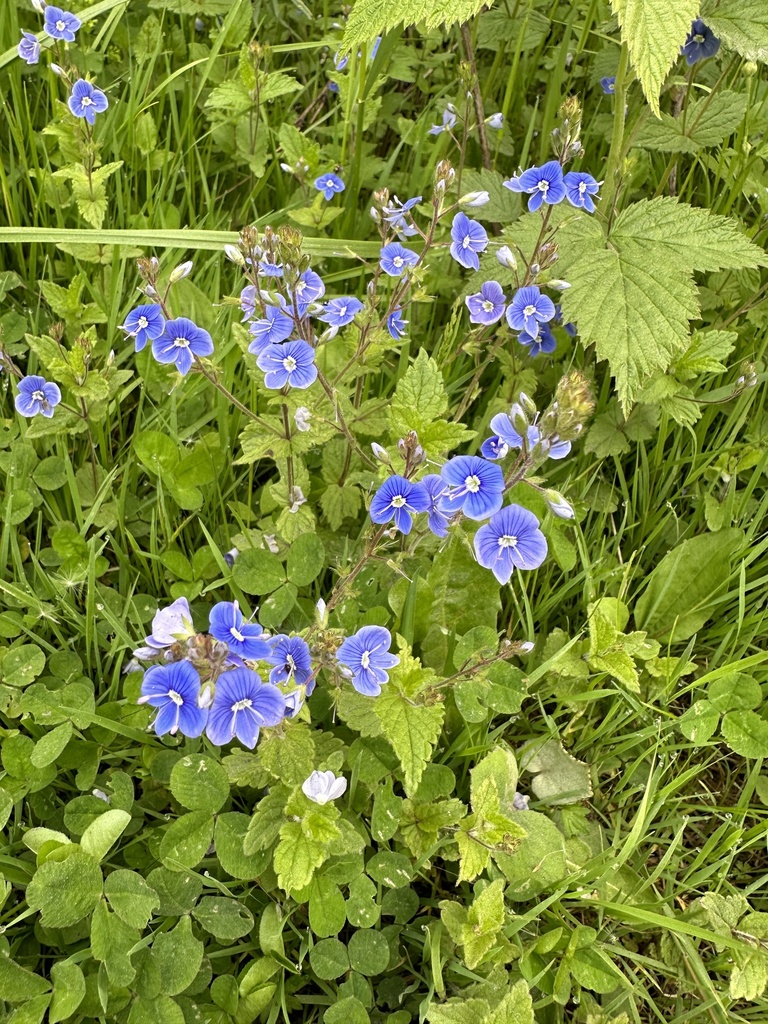
This charming perennial is a favorite for its bright blue flowers that appear in late spring. It spreads nicely to form a low carpet in your garden. You'll love how it adds a splash of color to shaded areas.
En un coup d'œil
- Niveau d'entretien
- Facile
- Type de plante
- perennial
- Lumière
- partial shade to full sun
- Lumière en intérieur
- Lumière vive indirecte
- Arrosage
- Tous les 3 à 7 jours
- Taille adulte
- 12 to 18 inches
- Croissance
- Rapide
- Rusticité
- USDA 4 à 8
- Floraison
- Late spring to early summer
Entretien
Keep the soil consistently moist but not waterlogged to mimic its natural woodland habitat. Watch for wilting during dry spells, as this plant prefers steady moisture. It is quite hardy and generally resists most pests.
- Arrosage
- Water whenever the top inch of soil begins to feel dry to the touch.
- Engrais
- Apply a balanced liquid fertilizer once during the spring growth spurt.
- Taille
- Trim back the foliage after the main flowering period to encourage a tidy appearance.
- Rempotage
- Refresh the soil or move to a larger container if the plant becomes root bound.
- Sol
- moist, well drained soil
- pH du sol
- 6.0 to 7.5
- Température
- -25 à 30°C
- Humidité
- 40 à 70%
- Résistance à la sécheresse
- Moyenne
- Durée de vie
- Perennial, typically 3 to 5 years.
- Résistance aux chevreuils et lapins
- Moyenne
Signes qu'il faut rempoter
- Roots growing out of the drainage holes
- Water sitting on the surface of the soil
Sécurité
- Humains
- There are no known reports of significant human toxicity for this species.
- Enfants
- No specific safety concerns for children, though it is best to discourage eating any garden plant.
- Comestibilité
- This plant is not considered edible and should not be consumed.
Comment l'identifier
- Bright blue four petaled flowers
- Opposite ovate leaves with serrated edges
- Hairy stems with two lines of hairs
- Low growing creeping habit
- Hauteur
- 0,1 à 0,3m
- Envergure
- 0,3 à 0,6m
- Feuilles
- green, deciduous
- Fleurs
- blue, white, 0,5 à 1,5cm
Problèmes courants
- Powdery mildew — A fungal infection that creates a white dusty coating on the leaves.
La cultiver
- Multiplication
- division, seed, cuttings
- Quand planter
- spring, autumn
- Hivernage
- The foliage may die back in cold winters, so simply clear away any dead debris in early spring.
- En pot
- It grows well in wide, shallow containers as a trailing plant.
Division
- 1. Dig up a clump in spring or autumn.
- 2. Gently pull the root mass apart into smaller sections.
- 3. Replant the divisions immediately at the same depth.
Pair this with other low growing woodland plants to create a dense ground cover that suppresses weeds.
Bonnes associations
- Bugle — They share similar moisture needs and make a lovely low carpet.
- Fraisier des bois — They grow well together in woodland garden settings.
Espèces similaires
- thymeleaf speedwell — It has a similar growth habit but smaller, paler flowers.
Science
- Famille
- Plantaginaceae
- Genre
- Veronica
- Ordre
- Lamiales
- Classe
- Magnoliopsida
- Région d'origine
- Europe and western Asia.
- Préservation
- This plant is common and not of conservation concern.
It thrives in meadows and woodland edges where it can creep through low vegetation.
- Intérêt pour la faune
- nectar source
- Pollinisateurs
- abeilles, papillons
- Utilisations
- ground cover, rock garden, pollinator garden
Au fil des saisons
Repères écologiques
- Salinité
- 1/9
- Réaction du sol
- 5/9
- Lumière
- 5/9
- Température
- 4/9
- Humidité
- 5/9
- Nutriments
- 5/9
Taxonomie vérifiée avec le GBIF.
Ce qu'on demande souvent
- Is it invasive?
- It can spread quickly in ideal conditions but is generally considered manageable.
- Does it need full sun?
- It prefers partial shade but will tolerate full sun if the soil stays moist.
D'où vient le nom
The name Veronica is thought to be a reference to Saint Veronica, while chamaedrys comes from Greek words meaning ground oak.
Bon à savoir
- It is often called germander speedwell.
- The name speedwell comes from the wish for a traveler to speed well on their journey.
- It spreads by creeping stems that root at the nodes.
Ta plante a mauvaise mine ?
Cette page est un guide général. Pocket Botanist diagnostique les problèmes directement à partir d'une photo de ta plante, adapte l'arrosage à sa luminosité et te prévient quand il faut t'en occuper.
Ce guide a été généré par IA et vérifié avec la taxonomie du GBIF. Il s'agit d'informations générales, et non de conseils horticoles ou vétérinaires. Découvre comment nous concevons ces guides.